
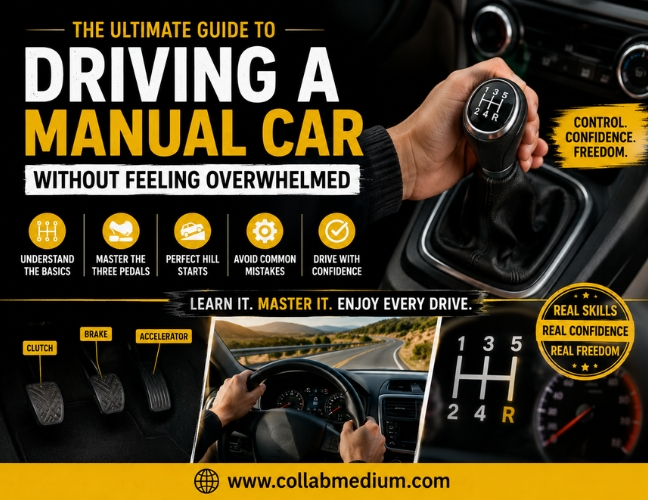
Learning to drive a manual car feels impossible at first. The clutch bites, the engine stalls, and you roll backward at every red light. Sound familiar? You are not alone. Millions of American drivers avoid stick shift simply because nobody ever broke it down in plain language.
This guide changes that. I will walk you through everything you need to know about mastering a stick shift — from understanding the basic mechanics to avoiding the mistakes that trip up most beginners.
Why Manual Cars Still Matter in 2025
Automatic transmissions dominate the U.S. market today. According to the Alliance for Automotive Innovation, fewer than 2% of new cars sold in America come with a manual gearbox. Despite that, stick shift driving remains a valuable skill.
Here is why it still matters:
- Fuel efficiency: Manual transmissions can improve fuel economy by up to 5–15% compared to older automatics, according to the U.S. Department of Energy.
- Lower maintenance costs: Manual gearboxes have fewer mechanical components. Repairs typically cost less over the long run.
- Global travel: Many rental cars in Europe, Latin America, and Asia are still manual. Knowing how to drive one opens up your options.
- Driver engagement: Many driving enthusiasts prefer the feel and control a stick shift delivers.
- Job opportunities: Some logistics, construction, and military jobs require manual transmission proficiency.
Brands like Mazda, Honda, Toyota, and Jeep still offer manual options in select models. Sports cars from Ford (Mustang), Subaru (WRX), and Porsche continue to attract buyers who want direct control.
Understanding the Basics Before You Start
Before you even touch the ignition, you need to understand what makes a manual car different.
The Three Pedals
A manual car has three pedals instead of two:
| Pedal | Position | Function |
| Clutch | Far left | Disconnects the engine from the gearbox |
| Brake | Middle | Slows or stops the vehicle |
| Accelerator | Far right | Controls engine speed (RPM) |
The clutch is the key that unlocks everything. Press it down fully to disengage the engine before shifting. Release it slowly to re-engage and move.
The Gear Shift Pattern
Most manual cars use a 5 or 6-speed H-pattern gearbox. Neutral sits in the center. Reverse varies by make and model, so always check your owner’s manual.
A typical 6-speed layout looks like this:
1 – 3 – 5
| | |
2 – 4 – 6
R (Reverse — varies by car)
How to Drive a Manual Car: Step-by-Step
Learning how to drive a manual car takes patience. Most people need 10 to 15 hours of practice before they feel confident. Here is a practical breakdown.
Step 1: Get Familiar with the Clutch Bite Point
The bite point is where the clutch begins to engage. Every car has a slightly different bite point. Finding yours is the first real skill you develop.
Sit in a safe, flat parking lot. Press the clutch fully to the floor. Shift into first gear. Slowly raise your left foot while keeping the car in neutral (with the brake on). You will hear the engine note drop slightly and feel a gentle vibration. That is your bite point. Practice this until it feels natural.
Step 2: Move from a Stop
This is where most beginners stall. Follow this sequence:
- Press the clutch down completely.
- Shift into first gear.
- Lightly press the accelerator until the engine revs reach about 1,500 to 2,000 RPM.
- Slowly release the clutch until you feel the bite point.
- Hold that position for a second, then gradually release the clutch the rest of the way.
Do not release the clutch too fast. That is the number one reason cars stall.
Step 3: Shift Up Through the Gears
As your speed increases, you shift up to avoid over-revving the engine. A general guide:
| Gear | Approximate Speed (MPH) |
| 1st | 0–10 |
| 2nd | 10–20 |
| 3rd | 20–35 |
| 4th | 35–50 |
| 5th | 50–65 |
| 6th | 65+ |
These ranges vary by car and driving conditions. Use your ears as much as your eyes. If the engine sounds strained or is revving too high, shift up.
Step 4: Downshift Smoothly
Downshifting is how you match the right gear to your current speed. When slowing down or tackling a steep hill, you shift to a lower gear.
Press the clutch, move the shifter to the lower gear, and release the clutch smoothly. Some drivers use a technique called heel-toe or rev-matching to make downshifts buttery smooth, but that comes with practice.
Step 5: Stopping Safely
To stop, press the brake first to slow down. As the engine speed drops below about 1,000 RPM, press the clutch before the car stalls. Apply the brake fully. Shift into neutral before releasing the clutch.
How to Drive a Manual Car on a Hill
Hill starts are the hardest part for beginners. The car can roll backward before you get moving. Here are two reliable methods.
Method 1: Use the Handbrake
Apply the handbrake after stopping. Find the bite point with your clutch. Give a little gas. Release the handbrake. Move forward smoothly.
Method 2: Brake-to-Clutch Transition
Hold the brake with your right foot while finding the bite point. Quickly move your right foot from the brake to the accelerator as you release the clutch. This takes fast footwork but becomes second nature over time.
Common Mistakes to Avoid
I have seen new stick shift drivers make the same errors over and over. Avoiding these will save you a lot of frustration.
Riding the clutch: Keeping your left foot resting lightly on the clutch pedal while driving. This causes premature clutch wear. Keep your foot completely off the pedal when not shifting.
Shifting too early: Moving to a higher gear when the engine does not have enough power. The car bogs down and feels sluggish. Wait for adequate RPMs.
Releasing the clutch too fast from a stop: Causes a stall almost every time. Patience with the clutch pedal is everything.
Looking down at the shifter: You should feel the shifter position, not look at it. Practice blind shifting in a safe area.
Using the wrong gear on the highway: Some drivers stay in 4th gear at 65 MPH. Use 5th or 6th to reduce engine wear and improve fuel economy.
Panic-stalling at an intersection: This happens. Stay calm. Put it in neutral, restart the car, and go. No harm done.
Pro Tips From Experience
After years of driving stick shifts, here is what actually helps:
Practice in an empty parking lot first. Shopping centers early on Sunday mornings are perfect. Flat ground and no traffic pressure.
Learn the sounds your car makes. The engine note tells you when to shift. This is faster and more intuitive than watching the tachometer.
Do not grip the shifter constantly. Rest your hand on the wheel between shifts. Keeping a hand on the shifter puts pressure on the transmission forks.
Check out resources like the <u>Driving Test Success</u> platform for guided manual driving tutorials and hazard perception practice. It is especially useful for visual learners.
Try a car with a forgiving clutch first. Older Hondas, Mazda Miatas, and base-model Jeep Wranglers are known for having approachable clutch pedals. Avoid high-performance sports cars when just starting out.
Drive in low-traffic areas during off-peak hours. Early mornings on weekends give you space to practice without stress.
Manual vs. Automatic: Which Is Right for You?
Neither option is universally better. It depends on your lifestyle and goals.
| Factor | Manual | Automatic |
| Driver engagement | High | Low to moderate |
| Learning curve | Steep initially | Minimal |
| Maintenance cost | Generally lower | Can be higher |
| Fuel economy (modern cars) | Comparable | Comparable or better (CVT) |
| Resale value | Varies | Typically broader market |
| Availability (USA) | Limited | Widely available |
Modern automatic transmissions, especially dual-clutch and CVT designs in cars like the Honda Civic CVT or Ford Bronco Sport, have largely closed the fuel economy gap. But if you love driving, a manual car delivers a connection to the road that automatics simply cannot replicate.
Recommended Cars to Learn On
If you are shopping for a beginner-friendly stick shift, these models are widely praised:
- Mazda Miata MX-5 — light, responsive, forgiving clutch
- Honda Civic Si — smooth gearbox, widely available used
- Subaru Impreza (manual trim) — all-wheel drive, practical
- Toyota GR86 — sporty but approachable for a new driver
- Jeep Wrangler Sport — rugged, simple drivetrain, great visibility
All of these offer genuine driver feedback without punishing you for small mistakes.
Frequently Asked Questions
Q: How long does it take to learn how to drive a manual car?
Most people develop basic competence in 5 to 10 hours of practice. Full confidence on varied roads, including hills and heavy traffic, typically comes after 15 to 30 hours. The timeline depends on how often you practice and the guidance you receive.
Q: Is it bad to ride the clutch while driving a manual car?
Yes. Riding the clutch means keeping your foot lightly resting on the clutch pedal while driving. This creates partial engagement, generates heat, and causes premature wear on the clutch disc and pressure plate.
Q: What does it mean when a manual car stalls?
A stall happens when the engine speed drops too low to keep running, typically because the clutch is released too quickly at low RPM. The car stops, but no damage occurs. Simply press the clutch, shift to neutral, restart the engine, and try again.
Q: Can driving a manual car save money?
It can. Manual transmissions typically have lower repair and replacement costs compared to automatic gearboxes. Manual cars often carry a lower purchase price on the used market in the U.S. because demand is lower. However, modern automatics and CVTs have largely matched manual fuel economy.