
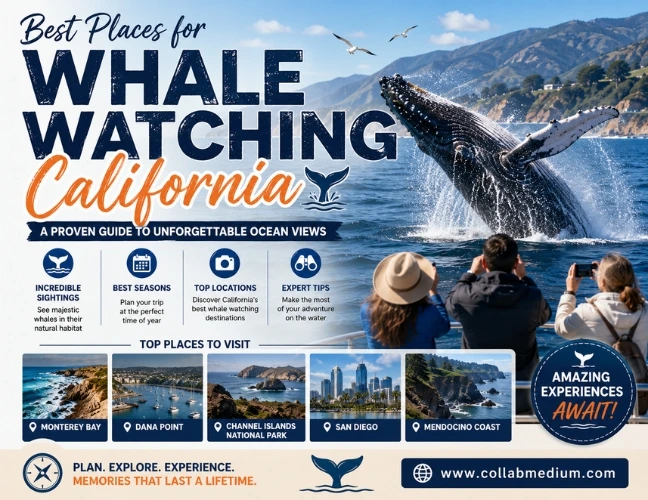
Planning a whale watching trip sounds simple. But once you start researching, the options multiply fast. You want a spot with strong sighting odds. You also want an experience that feels genuinely memorable. That tension is exactly what confuses most travelers searching for the best places for whale watching California has to offer.
I have spent years covering coastal travel and testing boat tours along this coastline. The same frustrations come up again and again. People pick a tour based on price alone. They skip the seasonal research entirely. They end up on a crowded boat with no whales in sight.
This guide fixes that. We will walk through the best places for whale watching California offers. We will also cover the right season for each spot and the mistakes that ruin otherwise promising trips.
Why California Ranks Among the Best Places for Whale Watching
California sits directly along the Pacific migration corridor. Gray whales travel roughly 10,000 miles round trip between Alaska and Baja California each year. That figure comes from the National Oceanic and Atmospheric Administration. That migration route hugs the California coastline for nearly its entire length.
This single fact makes the state one of the best places for whale watching anywhere in the world. Humpback whales, blue whales, and orcas also pass through seasonally. Few coastlines pack this much diversity into one stretch of water.
Peak Whale Watching Seasons You Need to Know
Timing controls everything in this hobby. Gray whale migration runs from mid-December through April. Blue and humpback whales show up June through October, especially off Monterey Bay. Orca sightings cluster around spring, particularly near Monterey Bay and the Channel Islands.
Knowing these windows separates a lucky trip from a planned one. It also explains why some of the best places for whale watching California offers change dramatically by season.
The Core Problem: Why Most Whale Watching Trips Fall Short
Here is the mistake I see constantly. A traveler books the cheapest boat tour they find online. They do not check the season for their target species. They show up expecting orcas in August and find none.
Weeks of planning go to waste on a single overlooked detail. The boat was fine. The captain was friendly. But the whales simply were not there that month. This is the single biggest reason people leave disappointed.
Crowded tour boats create a second problem. Popular harbors sell out fast during peak gray whale season. A rushed, overbooked trip rarely delivers the calm, immersive experience most travelers actually want.
How to Avoid the Most Common Mistakes
Start with the species you want to see, not the harbor closest to your hotel. Match your travel dates to that species’ known migration window. Booking two to three weeks ahead secures better boats and smaller groups.
Choose operators with certified naturalists onboard. A knowledgeable guide transforms a simple boat ride into genuine education. Ask about sighting rates before you book, since many companies publish recent success percentages.
Top Best Places for Whale Watching California in 2026
Here is a breakdown of the state’s most rewarding destinations. This table compares each of the best places for whale watching California by season, species, and ideal traveler.
| Location | Best Season | Common Species | Best For |
| Monterey Bay | Year-round, peak June-Oct | Blue, humpback, gray, orca | Species diversity |
| Dana Point | Dec-Apr and Jun-Sep | Gray, blue, humpback, dolphins | First-time visitors |
| Channel Islands National Park | Apr-Oct | Blue, humpback, common dolphins | Quiet, remote settings |
| San Diego | Dec-Mar | Gray whale migration | Winter migration viewing |
| Mendocino Coast | Mar-Apr | Gray whale (northbound) | Scenic coastal drives |
Monterey Bay: The Diversity Champion
Monterey Bay is widely considered one of the best places for whale watching California can offer, largely because of its underwater canyon. The Monterey Submarine Canyon plunges over 10,000 feet, pulling nutrient-rich water close to shore.
That depth draws blue whales, the largest animals on Earth, within a few miles of the harbor. Humpbacks, gray whales, and even orcas show up depending on the month. Few single locations offer this level of year-round variety.
Dana Point: Whale Watching Capital of the West Coast
Dana Point has earned its nickname honestly. Local tour operators here report some of the highest sighting rates on the entire coast. The harbor sits close to deep offshore water, which shortens travel time to active feeding grounds.
Families love this stop because trips run nearly year-round. Dolphins frequently join the show, adding energy to shorter tours. This remains one of the best places to visit for anyone new to whale watching.
Channel Islands National Park: The Remote Escape
The Channel Islands deliver a quieter, wilder experience. Boat traffic stays lighter than mainland harbors, and the setting feels genuinely untouched. Blue whales gather here in impressive numbers during summer months.
This spot ranks among the best places for whale watching California has for travelers who want fewer crowds. Pair it with a hike on Santa Cruz Island for a full day outdoors.
San Diego: Best for Winter Migration Viewing
San Diego sits along the southern edge of the gray whale migration path. December through March brings steady sightings as whales head toward Baja California lagoons to calve.
Half-day boat tours depart frequently from the harbor. Land-based viewing from Point Loma also works well on clear days, and it costs nothing.
Mendocino Coast: The Scenic Alternative
Mendocino offers a slower, more scenic version of whale watching. Northbound gray whales pass close to the rugged cliffs each spring. Many visitors watch entirely from land, using nothing more than binoculars.
This stretch of coast pairs beautifully with a broader road trip. It belongs firmly among the best places for whale watching California travelers often overlook.
Tools and Platforms That Make Whale Watching Easier
Finding the best places for whale watching in California has gotten easier with the right tools. A handful of platforms make planning far simpler than it used to be.
The NOAA Fisheries West Coast whale watching guidelines outline safe viewing distances and current migration data for the entire coast.
Happy Whale is a free platform that tracks individual whales using photo identification. Travelers can search recent sightings near any harbor before booking a tour.
Booking platforms run by operators like Capt. Dave’s and the Condor Express show live availability and recent trip results. Checking these before committing saves real disappointment on the water.
Common Mistakes to Avoid
Do not book the very cheapest tour without checking recent reviews. Do not travel during off-peak months for your target species. Do not skip motion sickness precautions on rougher ocean days.
Do not forget layers, since ocean temperatures at the best places for whale watching California drop fast even on warm days. Do not assume every tour includes a certified naturalist onboard, since some budget operators skip this entirely.
Pro Tips From Years of Planning These Trips
Tip 1: Book morning tours: Ocean conditions are calmer, and wildlife tends to be more active earlier in the day.
Tip 2: Check the swell forecast: Rough seas cancel more trips than any other single factor.
Tip 3: Bring polarized sunglasses: They cut glare off the water and make spotting whales significantly easier.
Tip 4: Choose smaller boats when possible: Smaller groups mean better viewing angles and less noise to spook nearby whales.
Tip 5: Combine your trip with nearby attractions: Many of the best places for whale watching California offers sit near excellent coastal towns worth an extra day.
Pairing Whale Watching With Luxury Travel Planning
A whale watching trip pairs naturally with broader luxury travel plans. Travelers building a longer California itinerary often lean on a luxury vacation rental guidebook to find beachfront homes near Monterey or Dana Point.
Flights matter too. Checking the best low cost airlines in 2026 can free up budget for better boat tours and nicer accommodations. That savings adds up fast on a multi-stop coastal trip.
Motivation matters as much as logistics. Reading up on travel motivation before a big trip helps travelers commit to the early mornings that whale watching often requires. The best sightings happen before most people are even awake.
Anyone planning a broader West Coast trip should also look at our luxury travel guide. It covers advisor recommendations and higher-end stays that pair well with a coastal itinerary.
Frequently Asked Questions
What are the best places for whale watching in California?
Monterey Bay, Dana Point, and the Channel Islands rank among the best places for whale watching California travelers search for most. Each offers strong sighting rates and different species depending on the season.
When is the best time to go whale watching in California?
Gray whale migration peaks from December through April. Blue and humpback whales are most active from June through October, especially near Monterey Bay.
Do I need a boat tour to see whales in California?
No, land-based viewing works well at spots like Point Loma and the Mendocino coastline. Boat tours simply offer closer, more reliable sightings during peak season.
How much does a whale watching tour cost in California?
Most whale watching tours range from $45 to $90 per person for a half-day trip. Prices rise slightly during peak gray whale and blue whale season.