
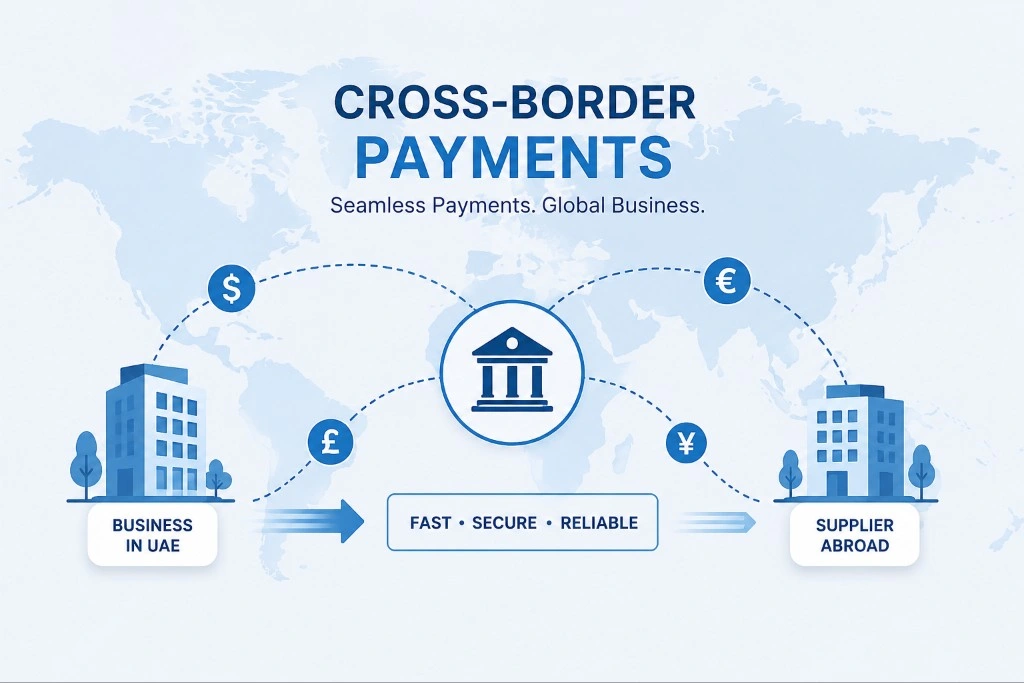
International business is no longer reserved for multinational corporations. Today, manufacturers source materials from overseas suppliers, software companies hire remote talent across continents, ecommerce brands sell to customers worldwide, and digital platforms pay creators and sellers in dozens of countries. As businesses expand beyond their home markets, moving money internationally becomes a routine part of day-to-day operations.
This is where cross-border payments play a critical role. They enable businesses to pay suppliers, contractors, partners, subsidiaries, and customers across different countries while managing multiple currencies, banking systems, and regulatory requirements.
However, not every international payment looks the same. A manufacturer paying a supplier in Vietnam has very different requirements from an online marketplace distributing earnings to thousands of sellers or a SaaS company paying remote developers every month. Understanding these different use cases helps businesses choose payment solutions that improve efficiency, reduce costs, and simplify financial operations.
In this guide, we’ll explore how businesses use cross-border payments in real-world scenarios, the benefits they provide, and what companies should consider when managing international payment workflows.
What Are Cross-Border Payments?
A cross-border payment is any transfer of funds where the sender and recipient are located in different countries. These payments may also involve different currencies, banking systems, or regulatory jurisdictions.
While many people associate cross-border payments with international wire transfers, the reality is much broader. Businesses use them for a wide range of financial activities, including supplier payments, contractor payouts, customer refunds, marketplace settlements, and treasury transfers between global offices.
For finance teams, international payments often involve more than simply moving money. They require managing foreign exchange, complying with local regulations, ensuring accurate payment details, and reconciling transactions across different financial systems.
As companies continue expanding globally, efficient cross-border payment processes have become an essential part of modern financial operations.
Why Businesses Rely on Cross-Border Payments
Businesses today operate in increasingly global supply chains and digital markets. Products may be designed in one country, manufactured in another, and sold to customers across several more. Similarly, many companies now hire employees, freelancers, and consultants regardless of where they live.
These changes have made international payments a normal part of doing business.
Some of the most common reasons businesses send money across borders include:
- Purchasing inventory from overseas suppliers.
- Paying international contractors and freelancers.
- Distributing earnings to marketplace sellers.
- Collecting payments from customers in multiple countries.
- Moving funds between regional offices or subsidiaries.
- Managing global business expansion.
Instead of viewing cross-border payments as occasional transactions, many organizations now treat them as an important component of their financial infrastructure.
Lets discuss some of the use cases:
Use Case 1: Paying International Suppliers
One of the most common cross-border payment use cases is paying overseas suppliers.
Consider a furniture manufacturer in Germany that purchases raw materials from Vietnam. Every shipment requires payment in accordance with agreed contract terms, often in US dollars or the supplier’s local currency.
The finance team must ensure payments arrive on time, exchange rates are competitive, and suppliers receive the full invoice amount without unexpected deductions.
If payments are delayed or inaccurate, production schedules can be disrupted, supplier relationships may suffer, and businesses may incur additional costs.
Modern cross-border payment solutions help simplify this process by providing transparent exchange rates, payment tracking, and more predictable settlement times.
Use Case 2: Paying International Contractors
Remote work has transformed how businesses build teams.
Instead of hiring locally, companies increasingly work with developers, designers, consultants, marketers, and customer support professionals located across different countries.
For example, a technology startup in the UAE may employ developers in India, designers in Eastern Europe, and marketing specialists in Southeast Asia.
Some UAE-based businesses holding digital assets or converting large sums also settle these payouts through a crypto OTC desk in Dubai before distributing funds in local currency to their global team.
Managing these payments manually each month can quickly become time-consuming.
Businesses need a consistent process that allows them to pay contractors accurately, in the correct currency, while maintaining proper records for accounting and compliance.
Reliable payment infrastructure reduces administrative work, minimizes payment errors, and helps businesses deliver a better experience for their global workforce.
Use Case 3: Marketplace and Platform Payouts
Online marketplaces handle payments very differently from traditional businesses.
Rather than sending occasional international transfers, they often process hundreds or thousands of payouts every day.
An ecommerce marketplace, for example, may collect customer payments in one country while paying sellers located across Asia, Europe, Latin America, and the Middle East.
In these environments, payment efficiency directly affects the user experience.
Late payouts can reduce seller satisfaction, increase customer support requests, and create operational challenges for finance teams.
Many platforms therefore automate payout processes through integrated payment infrastructure that supports multiple currencies, local payment methods, and standardized reporting.
Use Case 4: Cross-Border Ecommerce Payments
Selling internationally creates two separate payment journeys.
The first involves accepting payments from customers across different countries.
The second involves handling refunds, returns, and settlements while managing multiple currencies.
Imagine an online retailer based in Singapore selling products to customers in Australia, Canada, and the United Kingdom.
Customers expect to pay using familiar payment methods and see prices in their local currency.
Meanwhile, the retailer must reconcile incoming payments, convert currencies where necessary, and process refunds without creating accounting complications.
Efficient cross-border payment systems help businesses simplify these workflows while improving both customer experience and internal financial operations.
Key Benefits of Modern Cross-Border Payments
International payments are about much more than simply sending money overseas. When businesses adopt efficient payment processes, they can improve financial operations, strengthen relationships with partners, and support long-term global growth.
Faster International Transactions
Traditional international bank transfers can sometimes take several business days depending on the countries, currencies, and intermediary banks involved.
Modern payment solutions help businesses reduce unnecessary delays by using optimized payment routes, local banking networks, and better payment infrastructure where available.
Faster payments improve cash flow, help suppliers receive funds on time, and reduce uncertainty for both finance teams and recipients.
Better Cost Transparency
International payments often involve multiple costs, including foreign exchange margins, transfer fees, intermediary bank charges, and payment repair costs.
Without clear visibility, businesses may struggle to understand the true cost of sending money internationally.
Modern payment providers typically offer greater transparency by displaying exchange rates, expected fees, and settlement amounts before payments are processed. This allows finance teams to make better-informed decisions and manage international payment costs more effectively.
Improved Cash Flow Management
Predictable payment schedules make it easier for businesses to plan their finances.
Knowing when payments will leave the business and when recipients are expected to receive funds helps finance teams forecast cash requirements with greater accuracy.
Improved visibility also supports budgeting, working capital management, and financial planning across multiple markets.
Stronger Relationships with Global Partners
Reliable payments build trust.
Suppliers prefer customers who consistently pay invoices on time. Contractors expect predictable payment schedules, while marketplace sellers value platforms that distribute earnings without unnecessary delays.
When businesses establish dependable payment processes, they strengthen relationships with suppliers, partners, and service providers, creating a more stable foundation for long-term growth.
Easier Reconciliation and Financial Reporting
As international payment volumes increase, manual reconciliation becomes increasingly difficult.
Finance teams often spend significant time matching invoices, verifying payment references, identifying foreign exchange differences, and resolving payment exceptions.
Modern payment infrastructure helps streamline reconciliation by providing standardized payment data, transaction references, detailed reporting, and integration with existing accounting or ERP systems.
This reduces manual work while improving the accuracy of financial reporting.
What to Look for in a Cross-Border Payment Solution
Every business has different payment requirements, so there is no single solution that fits every organization.
When evaluating a cross-border payment provider, businesses should consider several important factors.
Geographic Coverage
Ensure the provider supports the countries, currencies, and payment methods your business uses today while also supporting future expansion plans.
Foreign Exchange Transparency
Understand how exchange rates are calculated and whether pricing is clearly disclosed. Transparent FX pricing helps businesses avoid unexpected costs and compare providers more accurately.
Settlement Speed
Payment times often vary depending on the destination country and payment method. Reviewing corridor-specific settlement expectations can help businesses plan more effectively.
Payment Visibility
Tracking international payments should be straightforward. Real-time status updates and payment confirmations reduce uncertainty and minimize support requests from suppliers, contractors, and customers.
Compliance and Security
International payments involve regulatory requirements that differ across countries. Businesses should choose providers that maintain strong compliance standards, beneficiary verification, sanctions screening, and secure payment processes.
Integration with Existing Systems
Payment solutions that integrate with accounting software, ERP platforms, or treasury systems can reduce manual work while improving reconciliation and financial reporting.
Conclusion
Cross-border payments have become an essential part of modern business operations. Whether companies are paying overseas suppliers, managing remote teams, supporting online marketplaces, or expanding into new markets, the ability to move money efficiently across borders directly impacts operational performance.
The most effective payment strategy is not simply about finding the lowest transaction fee. It is about selecting payment infrastructure that provides transparency, predictable settlement, strong compliance, and the flexibility to support international growth.
As global commerce continues to evolve, businesses that invest in efficient cross-border payment processes will be better positioned to improve cash flow, strengthen global partnerships, and operate with greater confidence across international markets.
For organizations looking to simplify international payment operations, many platforms provide businesses with modern cross-border payment infrastructure that supports multiple currencies, payment corridors, and treasury workflows through a single platform, helping finance teams manage global payments with greater efficiency and visibility.