
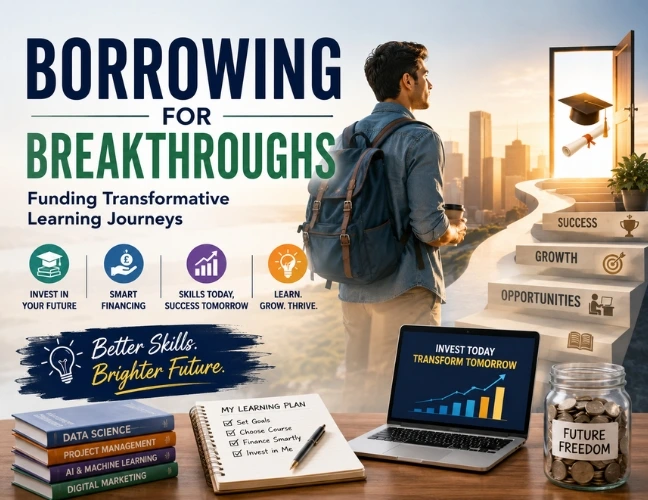
Professionals today grapple with relentless pressure to upgrade skills as technology evolves at breakneck speed. Many lean on targeted borrowing to unlock premium training without wrecking their budgets. Framing education as an investment, rather than a sunk cost, lets people chase demanding programs that produce tangible gains in expertise and prospects. With automation and AI reshaping industries, ongoing learning now serves as a core survival strategy. Borrowers frequently discover that focused study lifts earnings quickly while also shielding them from future market shocks.
Take the case of financing a six-month coding bootcamp at the General Assembly. Participants compare upfront costs against expected income jumps once new abilities land freelance gigs. Handled wisely, these moves speed up progress in fields such as software development. One graduate moved from routine admin work to building custom sites for local retailers and cleared an extra £1,500 each month inside twelve months. Stories like this show how deliberate loans close the distance between present skills and in-demand expertise.
Strategic use of personal loans fits naturally into these plans by providing lump-sum access to capital for tuition, travel, or materials. Lenders evaluate credit profiles to determine eligibility and rates, making preparation essential before applying. This preparation might include boosting loan approval odds through reviewing credit reports for errors, reducing existing debt ratios, or gathering documentation of stable income sources to strengthen applications.
Recent Which? analysis flags critical points on eligibility, repayment schedules, and how these personal loans stack up against alternatives. The guidance lets readers judge fit with their own learning aims. The report also stresses watching variable rates and how inflation might stretch repayment timelines over years.
Identifying High-Value Learning Opportunities
Not every program merits debt. Standout options deliver credentials that employers recognize and that translate straight into paid roles. Think advanced project-management certificates or targeted AI ethics courses that unlock positions at major firms. The Project Management Professional (PMP) credential, for instance, often lifts salaries by 20 percent or more, while AI ethics training readies graduates for compliance work at companies like Google. Learners should favor courses backed by recognized accreditors so the qualification carries weight.
Many participants land faster promotions or switch into emerging roles after finishing focused training. Results hinge on picking providers that publish strong employment data and maintain active alumni networks. Those networks regularly open doors to hiring managers, converting classroom time into concrete leads. Six-month job-placement rates posted on program sites offer a solid gauge of real value.
Immersive language courses abroad add another route. These combine cultural immersion with business communication skills that global employers prize. A supply-chain manager who spent three months studying Mandarin in Shanghai later negotiated deals with Asian suppliers, turning linguistic gains into career leverage.
Assessing Personal Financial Readiness for Educational Loans
Before signing any loan, a clear-eyed review of current finances is essential. Calculate what remains after fixed costs, then test scenarios where expected pay rises fall short. Personal-finance apps can model repayment under different rates and flag weak spots early.
Key variables include emergency reserves, existing debts, and employment stability. Freelancers with uneven income often need bigger cushions to cover study periods without missing payments. A quick conversation with a financial adviser can tailor the plan to individual circumstances.
Building a Repayment Plan Before Borrowing
Start with grounded projections of new income tied to the qualification. Map monthly payments against expected raises or fresh revenue from side projects. Someone counting on an £8,000 annual increase might schedule full repayment inside two years through automatic transfers.
Small spending tweaks create room to breathe. Redirecting even modest cuts—such as £200–£300 saved from fewer meals out—can speed principal reduction. Bonuses or tax refunds directed straight at the balance shorten the term further.
Key Market Insights on Personal Borrowing
| Metric | Figure | Notes |
| Adults with unsecured personal loan debt | 7% | Reflects steady uptake for various purposes |
| Adults considering a new loan in next 12 months | 13% | Indicates growing interest amid economic pressures |
| UK consumer lending total (April 2026) | £35.83 billion | Excludes student loans; shows overall market scale |
These numbers confirm borrowing stays common for personal growth. Mintel and official data give useful context, though individual results vary. Uptake has risen notably among professionals aged 35–50 seeking digital skills after the pandemic.
Comparing Options Across Lenders
Rates and fees differ sharply by credit score and loan size. Fixed-rate loans deliver certainty that matches fixed course timelines. Variable options suit borrowers expecting swift income growth, yet they introduce risk if rates climb.
Comparison sites let applicants view multiple offers side by side and spot hidden fees. APR figures that fold in all costs give the clearest basis for choice. Early-settlement terms also matter: lenders that waive penalties preserve flexibility when new earnings arrive sooner than planned.
Understanding Regulatory Protections for Borrowers
UK rules give borrowers concrete safeguards. The Financial Conduct Authority demands lenders check affordability before approval. Knowing cooling-off windows and complaint routes helps people move through agreements with confidence.
Further protections cover unfair contract terms and data handling during credit checks. Staying aware of these standards reduces exposure and aligns decisions with responsible lending practices.
Real-World Scenarios and Risk Management
A marketing specialist borrowed for a data-analytics certificate and moved into a new role within six months, with the raise covering repayments comfortably. Programs that publish placement stats and require capstone projects give the strongest signals of likely success.
Overly optimistic income forecasts remain the main pitfall. Keeping a cash buffer and lining up flexible work during study reduces pressure if transitions stretch longer than hoped. Conservative scenario modeling helps surface those risks in advance.
An entrepreneur used a short accelerator loan to join a cohort that paired founders with mentors and investors. Follow-up outreach to those contacts later produced pilot contracts that repaid the loan ahead of schedule.
Guidance on optimal personal loans uses illustrates how education loans slot into wider financial plans. The final choice always rests on personal numbers and solid research. Treating borrowed capital as growth fuel, not everyday spending, tends to deliver stronger results over time.
Frequently Asked Questions
What are personal loans for education?
Personal loans for education are unsecured loans used to pay for tuition, boot camps, or certifications. They differ from student finance because approval depends on your credit and income, not your enrolment status.
Are personal loans for education a good idea?
Personal loans for education can be a smart investment when they fund high-demand skills. Research job placement rates and total loan cost before committing to any programme.
How much do personal loans for education cost?
Rates typically range from about 7 percent to 28 percent APR depending on your credit score. Compare multiple lenders to find the lowest total cost for your situation.
Can I get a personal loan for education with bad credit?
Yes, though your rate will be higher than a borrower with strong credit. Some lenders weigh factors beyond credit score, such as work history and income stability.