
Finding a unique vintage dress that fits well, suits your style, and does not cost a fortune is genuinely hard. Most people spend hours scrolling Depop or wandering thrift stores and walk away empty-handed or with something they wear exactly once.
I have been in this space long enough to know that the problem is rarely the lack of great pieces. The problem is strategy. Without one, vintage dress shopping feels like luck. With one, it becomes one of the most rewarding parts of building a personal style.
This guide covers everything from where to look and what to avoid, to pro-level tips that make the entire process faster, smarter, and more successful.
Why the Demand for Unique Vintage Dresses Is Growing Fast
This is not a niche trend anymore. According to ThredUp’s 2024 Resale Report, the secondhand fashion market is projected to reach $73 billion in the USA alone by 2028. Dresses, especially formal and occasion wear, are among the top-searched categories on resale platforms like Poshmark and Depop.
More women are actively choosing vintage dresses over fast fashion for several reasons:
- They want something nobody else at the event will be wearing
- Vintage construction quality far exceeds most modern retail options
- Buying secondhand reduces environmental impact significantly
- Rare vintage finds often hold or increase in monetary value over time
A 2023 survey by GlobalData found that 52% of US consumers actively look for secondhand options before purchasing new clothing. That number is even higher among shoppers aged 18 to 34.
The appetite is real. The challenge is knowing how to shop smart.
The Core Problem: Why Vintage Dress Shopping Feels So Frustrating
Here is what I see constantly. Someone decides they want a beautiful vintage dress for a special occasion. They open five browser tabs, check a few apps, and immediately feel overwhelmed by the sheer volume of listings.
Then one of three things happens:
They buy something impulsively without checking measurements and it does not fit. They overpay for a reproduction that is being marketed as authentic vintage. Or they find something they love but talk themselves out of it, only to see it sell to someone else an hour later.
The vintage dress market moves fast. Great pieces disappear quickly. And sizing, condition descriptions, and era labeling vary wildly across sellers.
This is especially true when shopping for a vintage prom dress. Prom season creates a spike in demand every spring, and prices on platforms like eBay and Poshmark reflect that. Knowing when and where to shop can save you hundreds of dollars.
Practical Solutions: A Smarter Way to Shop for Vintage Dresses
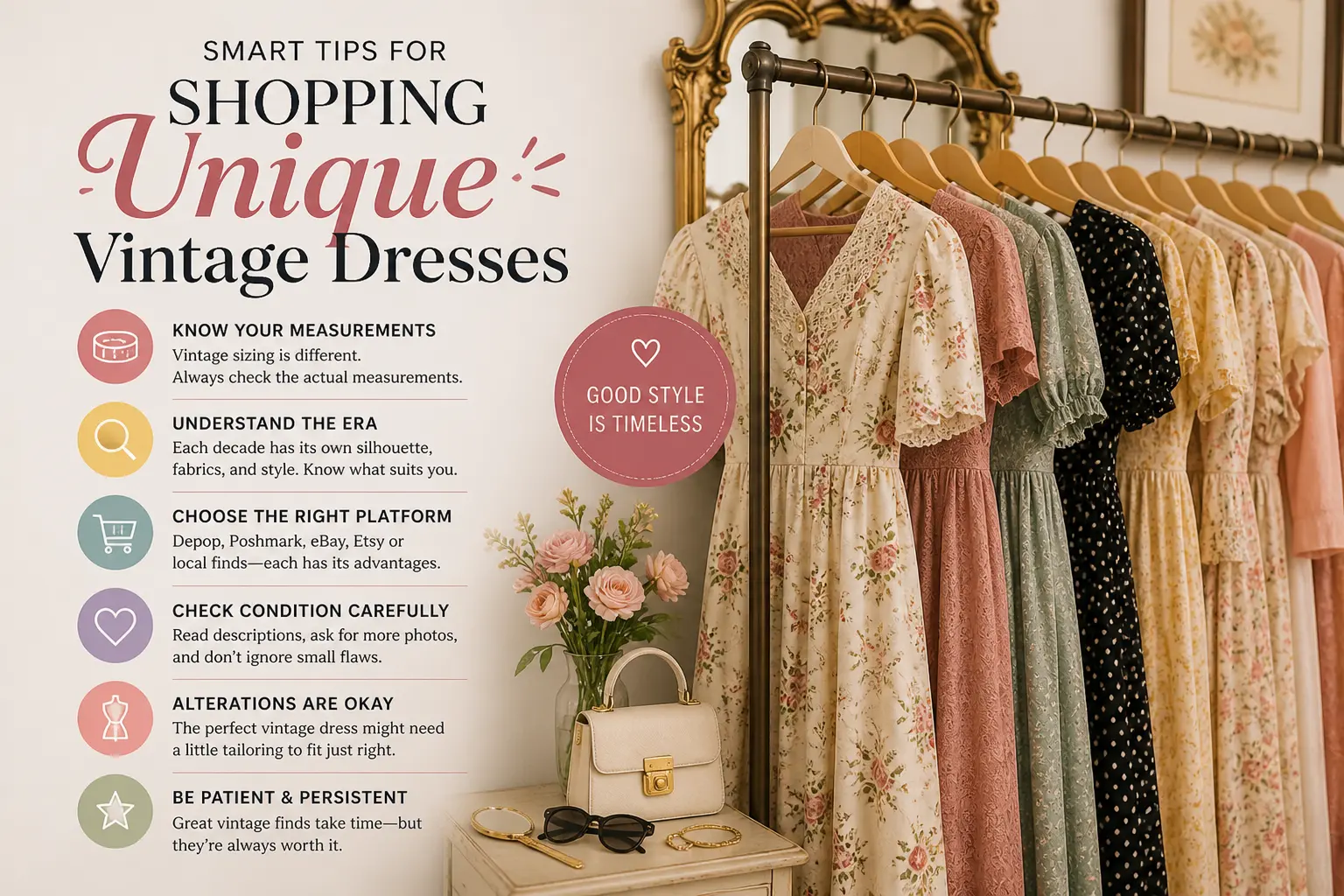
Know Your Measurements Before Anything Else
Vintage sizing is completely different from modern US sizing. A dress labeled “size 12” from the 1960s fits more like a modern size 6 or 8. This trips up almost every new vintage shopper.
Before you search a single listing, measure:
- Bust: Around the fullest part of your chest
- Waist: Around your natural waist, not your hips
- Hips: Around the fullest part of your hips
- Shoulder width: Across the back from shoulder seam to shoulder seam
- Length: From your natural waist to where you want the dress to fall
Save these numbers somewhere you can quickly reference them. Most reputable vintage sellers list actual garment measurements, not size labels. Matching your measurements to garment measurements is the single most important skill in vintage shopping.
Understand the Era You Are Shopping like Unique Vintage Dress
Different decades produced dramatically different dress silhouettes, fabrics, and construction styles. Knowing basic era characteristics helps you spot authentic pieces and shop with confidence.
| Era | Silhouette | Typical Fabrics | Best For |
| 1950s | Full skirt, fitted bodice, nipped waist | Cotton, taffeta, organza | Formal events, garden parties |
| 1960s | Shift dress, A-line, mod patterns | Polyester blends, wool | Casual outings, office wear |
| 1970s | Maxi lengths, wrap styles, boho flow | Chiffon, jersey, velvet | Festivals, casual evenings |
| 1980s | Power shoulders, puff sleeves, dramatic volume | Satin, sequins, lace | Formal events, parties |
| 1990s | Slip dress, mini, minimalist cuts | Satin, silk, rayon | Nights out, casual events |
For a vintage prom dress specifically, the 1950s and 1980s eras deliver the most dramatic and memorable looks. Full tulle skirts from the 50s and structured satin gowns from the 80s photograph beautifully and stand out in a sea of identical modern prom styles.
Use the Right Platforms for Your Specific Needs
Not every platform serves the same purpose. Here is how I recommend dividing your search:
Depop works best for curated, aesthetically presented vintage dresses. Sellers here tend to skew younger and focus on 90s and Y2K styles. Great for slip dresses, mini dresses, and streetwear-adjacent vintage.
Poshmark covers a wider range. You will find everything from everyday vintage dresses for women to formal gowns and rare designer pieces. The search filters are strong and the seller community is active.
eBay remains the largest single marketplace for vintage clothing. Rare finds, deadstock pieces, and authenticated designer vintage all live here. Learning to use advanced search filters on eBay is a genuine competitive advantage.
Etsy hosts many small vintage boutiques. Quality varies, but the best Etsy vintage sellers curate carefully and describe pieces in excellent detail. Prices tend to run slightly higher but the reliability is often better.
Local estate sales and flea markets are still the most underutilized channel. Estate sales especially tend to surface pre-1970s pieces at prices far below resale market value. Apps like EstateSales.net help you find sales in your area every weekend.
For vintage dresses for women looking for everyday options rather than occasion wear, local thrift stores like Goodwill and Savers remain unbeatable for budget-friendly finds. Dedicated vintage boutiques in your city offer a curated experience if you prefer in-person shopping with expert guidance.
Common Mistakes That Cost Shoppers Time and Money
Ignoring the condition grade. Most serious vintage sellers use condition descriptions like Excellent, Very Good, Good, and Fair. Never skip this detail. A dress listed as “Fair” likely has visible flaws that photographs can hide. Always ask for extra photos in natural lighting before buying anything above $50.
Forgetting about alterations in your budget. A stunning vintage dress that fits 90% of the way there is often worth buying if you have a good tailor. But alteration costs add up. A zipper replacement runs $15 to $30. Taking in a seam costs $20 to $50 depending on the dress complexity. Factor this in before you decide something is a bargain.
Trusting size labels over measurements. I have said this once and I will say it again because it matters this much. Always compare your body measurements to the garment measurements. Labels will mislead you every single time.
Buying without checking the seller’s return policy. Most vintage sellers on Depop and Etsy do not accept returns. Know this before you buy. If a seller offers no returns, you need to ask every question you have before purchasing, not after.
Shopping during peak season without extra lead time. If you need a unique vintage dress for prom, a wedding, or any spring or summer event, start shopping at least two to three months in advance. Prices spike in March and April on platforms like Poshmark and eBay as prom season approaches.
Pro Tips That Genuinely Change How You Shop
Save searches and set alerts. On eBay, Poshmark, and Depop, you can save specific searches and receive notifications when new matching items are listed. Set up alerts for your measurements, preferred eras, and specific keywords. The best pieces sell within hours of listing.
Follow top vintage sellers directly. Find three to five sellers on your preferred platform whose taste closely matches yours. Follow their shops and check them weekly. Sellers who specialize in a particular era tend to source consistently within that niche, so their new stock aligns with what you already love.
Ask about bundling. Many vintage sellers offer discounts when you buy multiple items. If you spot a few pieces you like in one shop, reach out and ask for a bundle price. You can often save 15 to 25% by combining items.
Learn to date garments yourself. Union labels, care label laws, country of origin stamps, and zipper types all help you verify the era of a piece. The <u>Vintage Fashion Guild Label Resource (vintagefashionguild.org/label-resource)</u> is the most thorough free guide available online for authenticating vintage clothing by tag and construction details.
Photograph your existing wardrobe. Before shopping, take photos of the key pieces in your wardrobe. When you find a potential vintage dress, hold it up against your phone screen. Does it actually work with what you own? This one habit alone cuts impulse buying dramatically.
Think about the occasion before you open an app. The best vintage shoppers I know always shop with a specific occasion or outfit gap in mind. “I need a knee-length dress with sleeves for a fall wedding” is a search with direction. “I want something vintage” is a search that leads to a closet full of beautiful things you never wear.
FAQs About Unique Vintage Dresses
Q: What makes a dress officially “vintage”?
A dress is considered vintage when it is at least 20 years old and reflects the style of the era in which it was made. Anything over 100 years old is classified as antique.
Q: How do I find a vintage prom dress that actually fits?
Always request the seller’s exact garment measurements (bust, waist, hips, length) and compare them directly to your own measurements. Vintage sizing labels do not match modern US sizing.
Q: Are vintage dresses for women good quality compared to modern options?
Yes. Pre-1980s dresses in particular were constructed with higher-quality fabrics and stronger stitching than most modern fast fashion. Natural fibers like cotton, silk, and wool were standard in earlier decades.
Q: What is the best platform to find unique vintage dresses online?
eBay offers the largest selection, Depop is best for curated Y2K and 90s styles, and Poshmark works well for a wide range of vintage dresses across all eras and price points.