
Most homeowners spend thousands of dollars improving the inside of their home and completely forget about the space right outside the back door. A neglected patio, an overgrown yard, or a bare deck represents one of the biggest missed opportunities in home design today.
Here is the truth: outdoor living spaces are no longer a luxury reserved for high-end properties. With the right planning, the right materials, and a solid design approach, almost any outdoor space — large or small — can become the most-used and most-loved area of your entire home.
Whether you are starting from scratch with a blank backyard or refreshing an existing setup, this guide walks you through everything you need to know to design outdoor living spaces that are beautiful, functional, and built to last.
Why So Many Homeowners Struggle With Outdoor Design
The core problem is not budget. It is not space. It is the lack of a clear starting point.
Most people walk outside, look at the empty yard or bare patio, and feel overwhelmed. They browse Pinterest for hours, save hundreds of images, and still cannot translate inspiration into a cohesive plan. Without a framework, outdoor design decisions feel disconnected — a furniture set that does not match the flooring, lighting that does not reach the dining area, or a layout that looks great in theory but feels awkward to actually use.
A 2023 report by the American Institute of Architects found that outdoor living space additions ranked as the third most requested home improvement among U.S. homeowners, trailing only kitchen and bathroom remodels. Yet the same report noted that fewer than 30% of homeowners who started an outdoor project completed it without significant design changes midway through. That course-correction cost time, money, and frustration.
The good news is that a structured approach eliminates almost all of that mid-project chaos.
Start With Function Before Aesthetics
Before you pick a single piece of furniture or choose a color palette, define how you want to actually use your outdoor space. This is the single most important step in the entire process, and it is the one most people skip.
Ask yourself these questions first:
Do you host large dinner parties or prefer quiet evenings with your family? Do you want a dedicated area for grilling and outdoor cooking? Do you need a space where kids or pets can play freely? Is relaxation or entertainment your priority?
Your answers shape every decision that follows — layout, furniture scale, lighting type, shade solutions, and flooring material all connect directly back to how the space gets used.
I always recommend sketching a basic zone map before buying anything. Divide your outdoor area into functional zones on paper. A dining zone, a lounging zone, a cooking zone, and possibly a play or garden zone. Even rough zones on a napkin sketch prevent the most common and costly outdoor design mistake: buying furniture first and then trying to make it fit.
How to Design Outdoor Living Spaces: A Room-by-Room Approach
Think of your outdoor space exactly the way you think about interior rooms. Each zone deserves the same intentionality you would bring to a living room or kitchen design.
Designing the Outdoor Dining Area Of Living Spaces
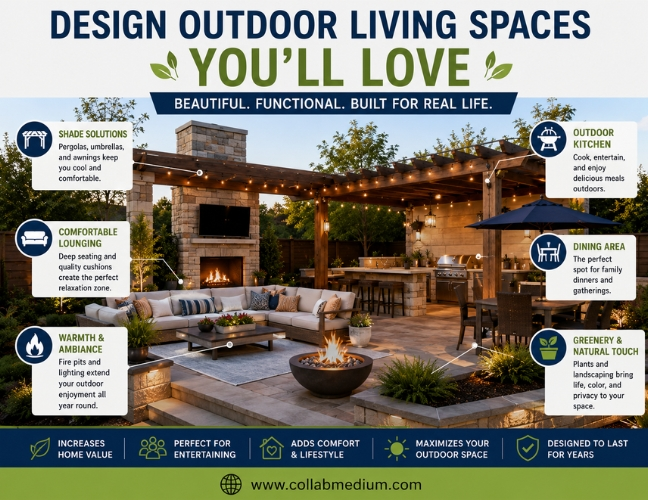
The outdoor dining area is often the anchor of the entire space. It needs to be positioned close to the kitchen or grill for convenience, and it needs adequate shade for daytime use.
A dining table for six needs at least a 12 x 12-foot area to allow comfortable chair movement. Going smaller creates a cramped feel that discourages use. Invest in a quality outdoor dining set from brands like Restoration Hardware, Pottery Barn Outdoor, or Article — all of which offer durable materials built for weather exposure.
For shade, a large market umbrella works for modest budgets, while a pergola with a retractable canopy provides the most flexible and aesthetically impressive solution for larger spaces.
Designing the Outdoor Lounge Area
A well-designed lounge zone invites people to linger. Deep seating — sofas and chairs with thick cushions — creates a relaxed, interior-style comfort level that standard patio chairs simply cannot match.
Brands like Restoration Hardware, West Elm Outdoor, and CB2 offer outdoor upholstered pieces that hold up to sun, rain, and temperature fluctuations. Look for solution-dyed acrylic fabrics, which resist fading and mold far better than standard polyester.
Add a coffee table at the right height, a side table for drinks, and an outdoor rug to define the zone visually. An outdoor rug anchors the furniture arrangement the same way an interior rug would — and it instantly makes a space feel more designed and intentional.
Designing the Outdoor Kitchen or Grill Station
Outdoor kitchens are one of the fastest-growing categories in home improvement. According to the Hearth, Patio and Barbecue Association (HPBA), outdoor kitchen installations increased by over 20% between 2020 and 2023 in the United States.
Even without a full built-in kitchen, a well-organized grill station dramatically improves the outdoor cooking experience. Position your grill downwind from the dining and lounge areas. Include a prep surface, a mini fridge if budget allows, and adequate task lighting for evening cooking.
For built-in outdoor kitchens, Kalamazoo Outdoor Gourmet, Twin Eagles, and Lynx are among the top professional-grade brands trusted by designers and contractors across the country.
Choosing the Right Materials for Every Climate
Material selection is where a lot of outdoor living space projects go wrong. Beautiful choices made without considering your local climate lead to warped decking, faded cushions, and rusted frames within a few seasons.
| Material | Best Climate | Maintenance Level | Lifespan |
| Teak wood | All climates | Medium | 20–75 years |
| Aluminum frame | All climates | Very Low | 15–20 years |
| Wrought iron | Dry climates | High | 20+ years with care |
| Composite decking | All climates | Very Low | 25–30 years |
| Natural stone pavers | All climates | Low | 30–50+ years |
| Concrete pavers | All climates | Low | 20–30 years |
| Cedar wood | Mild to moderate | Medium | 15–20 years |
| Wicker/rattan | Dry climates only | Medium | 5–10 years |
For most U.S. homeowners, aluminum-framed furniture with solution-dyed cushions sitting on composite or stone pavers is the lowest-maintenance combination with the highest long-term value.
Lighting: The Element That Transforms Everything
Outdoor lighting is the single most underestimated element in the design of living spaces. Most homeowners install one overhead light and call it done. That approach creates a flat, uninviting atmosphere the moment the sun goes down.
Layered lighting changes everything. Think in three layers:
Ambient lighting sets the overall mood. String lights, overhead pendants in covered areas, and low-voltage path lighting all contribute to ambient warmth.
Task lighting serves functional needs. Grill area lighting, step lighting, and dining area lighting need to be bright enough for actual use — not just atmosphere.
Accent lighting adds drama and dimension. Up lights on trees or architectural features, underwater lighting in water features, and lit planters create visual interest after dark.
Smart outdoor lighting systems from Philips Hue and Hampton Bay allow you to control mood and brightness from your phone and program different settings for different occasions.
The Best Tools and Platforms to Plan Your Outdoor Space
You do not need to hire a designer to create a well-planned outdoor space. Several tools make the planning process significantly easier and more accurate.
Planner 5D and Room Sketcher both offer outdoor design features that let you lay out furniture, test flooring materials, and visualize the finished space in 3D before spending a dollar.
Houzz is the most comprehensive platform for outdoor design inspiration, product shopping, and connecting with local landscape designers and contractors.
Pinterest boards work well for mood boarding and style definition, especially early in the planning process when you are still narrowing down your aesthetic direction.
Common Mistakes to Avoid When Designing Outdoor Living Spaces
Learning from other people’s mistakes is far less expensive than making your own. These are the errors that consistently derail outdoor living space projects.
Buying furniture before finalizing the layout. It seems obvious, but this is the most common mistake I see. Measure your space, sketch your zones, and confirm dimensions before purchasing a single piece.
Underestimating shade needs. A beautiful dining area with no shade becomes unusable in summer months across most of the country. Plan your shade solution — umbrella, pergola, or shade sail — as a core design element, not an afterthought.
Ignoring privacy. An outdoor lounge area that feels exposed to neighbors rarely gets used comfortably. Fencing, tall planters, privacy screens, or strategic landscaping all solve this without major construction.
Choosing the wrong scale of furniture. Oversized furniture in a small patio crowds the space and restricts movement. Undersized furniture in a large area feels lost and disconnected. Scale matters outdoors just as much as indoors.
Skipping weatherproofing. Even “outdoor” furniture needs protection in harsh climates. Investing in quality furniture covers, proper storage solutions for cushions, and sealant for natural wood surfaces significantly extends the life of your investment.
Forgetting electrical planning. Outdoor outlets, dedicated circuits for outdoor appliances, and low-voltage landscape lighting wiring all need to be planned before hardscaping goes in. Retrofitting electrical after the fact is expensive and disruptive.
Pro Tips From Experience
After helping plan and design a wide range of outdoor spaces — from compact urban patios to sprawling suburban backyards — these are the tips that consistently produce the best results.
Start with the floor. Your flooring or decking material sets the tone for everything else. It is the largest visual surface in space. Getting it right first makes every other decision easier and more cohesive.
Go one size larger on the outdoor rug. In outdoor spaces, rugs almost always look better one size up from what you initially think you need. A larger rug grounds the furniture grouping and makes the space feel more intentional and designed.
Invest in one statement piece. Instead of spreading your budget evenly across every element, allocate a meaningful portion to one standout piece — a sculptural fire pit, a high-quality dining table, or a stunning pendant light over the seating area. One great piece elevates the entire space.
Plan for evening use from day one. If you want to actually use your outdoor space regularly, it needs to be comfortable and inviting after dark. Lighting, outdoor heaters, and possibly a fire feature extend usable hours dramatically across every season.
Add living elements last. Plants, potted trees, and planters are the finishing touches that bring warmth, texture, and color to the designed space. Waiting until the furniture and lighting are in place lets you fill gaps and add life exactly where it is needed.
Frequently Asked Questions
How do I start designing an outdoor living space from scratch?
Begin by defining how you want to use the space, then sketch basic zones on paper before purchasing anything. Establish your layout, choose durable materials suited to your climate, and build your design outward from the flooring and largest furniture pieces first.
What are the most important elements of a well-designed outdoor living space?
A functional layout with defined zones, weather-appropriate materials, layered lighting, and adequate shade are the four most critical elements. Together they determine whether an outdoor space gets used consistently or sits empty.
How much does it typically cost to design an outdoor living space?
Costs vary widely based on size and scope, but a mid-range outdoor living space in the U.S. typically runs between $5,000 and $20,000 for furniture, lighting, flooring, and shade. Full outdoor kitchens and built-in features can push costs significantly higher.
What outdoor furniture materials last the longest?
Teak wood, powder-coated aluminum, and natural stone consistently offer the best combination of durability and low maintenance across most U.S. climates. Aluminum with solution-dyed acrylic cushions is the top choice for homeowners who want quality with minimal upkeep.