
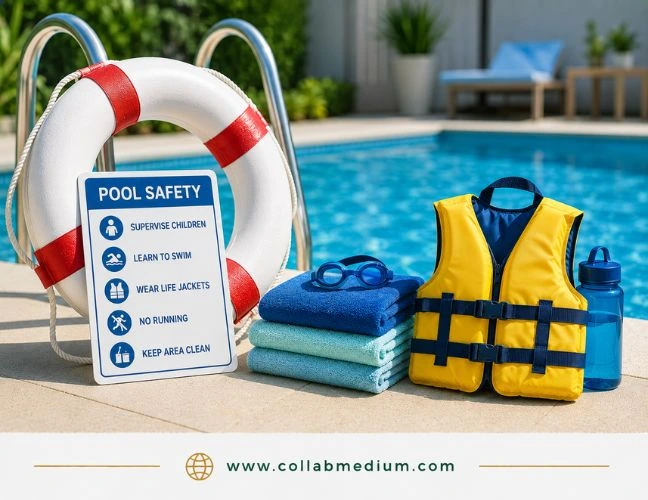
If you only remember one thing from this article, remember this. The most important water safety tips are constant supervision, layered barriers around pools, and proper-fitting life jackets in open water. I’ve pulled these tips together from CDC data, Red Cross guidance, and my own experience raising kids near a lake. They work because they attack the problem from every angle at once. Drowning kills over 4,000 Americans every year, and it happens fast and silently. You don’t need to be a lifeguard to prevent it. You just need to know which habits actually move the needle, and which ones are more myth than method. Let’s get into it.
What Is Water Safety, Really?
Before we dive into specific water safety tips, it helps to define the term. What is water safety? It’s the set of practices, products, and habits that reduce your risk of drowning or injury around water. That includes a bathtub, a backyard pool, or a river during rainy weather. Water safety isn’t a single action. It’s a layered system, and each layer catches what the last one might miss.
I think of it like a net with multiple knots. Supervision is one knot. Swim lessons are another. Fencing, life jackets, and CPR training are more knots. If one fails, the others still hold. That’s why the strongest habits always work together instead of alone.
Why Water Safety Tips Matter More Than Ever
The numbers back this up in a serious way. Over 4,500 people drowned each year in the United States from 2020 to 2022. That’s about 500 more drowning deaths per year than in 2019. Drowning is the number one cause of death for children ages 1 to 4. That single stat should stop every parent in their tracks.
The American Red Cross reports an estimated 4,000 unintentional drowning deaths every year in the US. That works out to about 11 deaths per day. Drowning also carries a massive economic cost, running past $50 billion annually when you factor in medical care, lost wages, and long-term disability.
Here’s a fact I share with every new parent I talk to. Kids ages 1 to 4 who took formal swim lessons had an 88% lower risk of drowning. That comes from a study published in JAMA Pediatrics. That’s not a small edge. That’s the difference between a scary afternoon and a tragedy.
The Core Problem With How People Approach Water Safety
Most families think water safety tips are only for pools. That’s the first mistake. Nearly 70% of toddler drownings happen during non-swim time, when kids find water access nobody expected. And 88% of children who drowned had at least one adult present, which shows how quickly and quietly it can happen.
I’ve seen parents turn away for thirty seconds to answer a phone, and that’s genuinely all it takes. Water safety tips only work if you treat every body of water, including buckets and bathtubs, as a real risk.
Essential Water Safety Tips for Every Home and Family
Let’s get practical. Here are the water safety tips I recommend to every family, whether you live near open water or just have a backyard pool.
1. Assign a Water Watcher
Pick one adult whose only job is watching the water. No phone, no book, no side conversations. Swap out every 15 to 20 minutes so attention stays sharp.
2. Enroll Kids (and Adults) in Swim Lessons
Over half of US adults have never taken a swimming lesson, which surprises most people I mention it to. Programs through the YMCA, USA Swimming Foundation, and local Red Cross chapters offer affordable classes for every age.
3. Install Four-Sided Pool Fencing
A fence that separates the pool from the house, not just the yard, cuts drowning risk significantly. Add a self-closing, self-latching gate for extra protection.
4. Wear a Coast Guard-Approved Life Jacket
Of everyone who drowned while boating in 2022, 85% weren’t wearing a life jacket. This is one of the simplest rules on this list, and also one of the most ignored.
5. Learn CPR
A few hours of training can mean the difference between panic and action during an emergency.
6. Check the Water First When a Child Goes Missing
As many as 69% of young children found submerged in pools weren’t expected to be in or near the pool at all. Check the water before you search anywhere else.
7. Watch the Weather Before You Swim
Local weather conditions change fast near lakes, rivers, and coastlines. Rip currents, sudden storms, and rainy weather can turn a calm swim into a dangerous one within minutes. If you’re planning a coastal trip, like a whale watching outing along the California coast, always check local weather forecasts before heading out, and get everyone out of the water at the first sign of thunder.
A Quick Comparison: Water Safety Products Worth Having
Not every product on the shelf is worth your money. Here’s how the most common water safety products actually stack up.
| Product | Best For | Effectiveness | Notes |
| US Coast Guard-approved life jacket | Boating, open water | Very high | Must fit snugly, not just be “nearby” |
| Four-sided pool fence with self-latching gate | Backyard pools | Very high | Cuts unsupervised access dramatically |
| Pool alarm | Backyard pools | Moderate | Best as a backup layer, not a primary one |
| Swim lessons (ongoing) | Kids and adults | Very high | Reduces drowning risk by up to 88% in young kids |
| Inflatable “floaties” or arm bands | Shallow play only | Low | Not a substitute for supervision or a life jacket |
I always tell people that water safety products work best when they’re layered, not chosen one at a time. A fence without supervision isn’t enough. A life jacket without swimming lessons isn’t enough either.
Common Mistakes Families Make With Water Safety Tips
I’ve made a couple of these mistakes myself, so I say this with zero judgment.
- Assuming a lifeguard on duty means you can stop watching your own kids
- Treating inflatable toys as flotation devices
- Skipping swim lessons because “we’ll get to it next summer”
- Ignoring bathtubs, buckets, and toilets as drowning risks for infants
- Swimming during rainy weather or right after a storm rolls through
- Believing older kids and strong swimmers don’t need supervision
Any one of these mistakes can undo the good work of every other water safety tip you’ve put in place.
Pro Tips From Someone Who’s Been There
After years of living near open water, here’s what I’d tell my younger self. First, practice “touch supervision” for kids under five, meaning you’re within arm’s reach, not just in the same yard. Second, keep a phone nearby for emergencies, but never in your hand while supervising. Third, rotate water watchers using a visible signal, like a labeled cup or bracelet, so nobody assumes someone else has it covered.
I also check local weather apps before any outing near open water. Rainy weather and sudden storms are two of the most underrated risks families overlook, and a sunny forecast can flip fast near rivers and coastlines.
How Can We Save Water While Staying Safe Around It?
Water safety tips and water conservation might seem unrelated, but they often overlap in practice. How can we save water at home while still practicing smart water safety habits? Simple swaps help both causes. Fix leaky faucets, install low-flow showerheads, and only run full loads in the dishwasher. When you’re mindful of water use, you also tend to notice where water sits around your home. Buckets, kiddie pools, and open containers tie directly back into water safety for young kids.
Water Safety Products and Tools I Recommend Checking Out
If you want to go deeper on gear recommendations and certification standards, the American Red Cross drowning prevention resource is one of the most thorough guides available. It’s a great next stop after finishing these tips.
Bringing It All Together for Your Family
Water safety tips work best as a system, not a checklist you complete once. Supervision, swim lessons, fencing, life jackets, and weather awareness all reinforce each other. Build these habits into your routine this season, and you’ll cut your family’s risk dramatically, no matter what body of water you’re near.
Frequently Asked Questions
What are water safety tips that work for toddlers specifically?
Constant touch supervision, four-sided pool fencing, and keeping bathtubs and buckets empty when not in use are the top water safety tips for toddlers.
How can we save water without compromising water safety?
Fix leaks, use low-flow fixtures, and store excess water in covered containers to conserve water while removing open-water drowning hazards for kids.
Do water safety tips change during rainy weather?
Yes. Check local weather before swimming, avoid open water during storms, and get out immediately at the first sign of thunder or lightning.
Are water safety products like floaties enough on their own?
No. Floaties and inflatable toys aren’t approved flotation devices, so they should never replace supervision, swim lessons, or a Coast Guard-approved life jacket.