Finding the right sports bra feels like solving a puzzle most of us never signed up for. You grab something off the rack, it looks fine, and then halfway through your run your straps are digging in, your chest is bouncing, or you can barely breathe. Sound familiar?
I’ve been through that frustration more times than I can count. The truth is, most women are wearing the wrong size or the wrong style for their activity level. And it’s not their fault. The sports bra market is confusing, sizing is inconsistent across brands, and most guides skip over the full range of cup sizes entirely.
This guide fixes that. Whether you’re an AA cup or a G cup, you’ll walk away knowing exactly what to look for, which brands actually deliver, and how to stop wasting money on bras that don’t work.
Why Getting Your Sports Bra Right Actually Matters
This isn’t just about comfort. It’s about your health and your performance.
A study published in the Journal of Sports Sciences found that 56% of women experience breast pain during exercise, and improper bra fit is one of the leading causes. Another study from the University of Portsmouth’s Research Group in Breast Health showed that breasts can move up to 15 centimeters during high-impact activity without proper support.
That movement strains the Cooper’s ligaments, which are the connective tissues that give your breasts their shape. Once those stretch, they don’t snap back. Wearing the right sports bra is genuinely preventive care.
Beyond health, proper support directly improves performance. When you’re not distracted by discomfort or restricted movement, you run faster, lift heavier, and push harder.
Understanding Cup Sizes and What They Mean for Fit
Cup size is only half the equation. Band size is just as important, and the two work together.
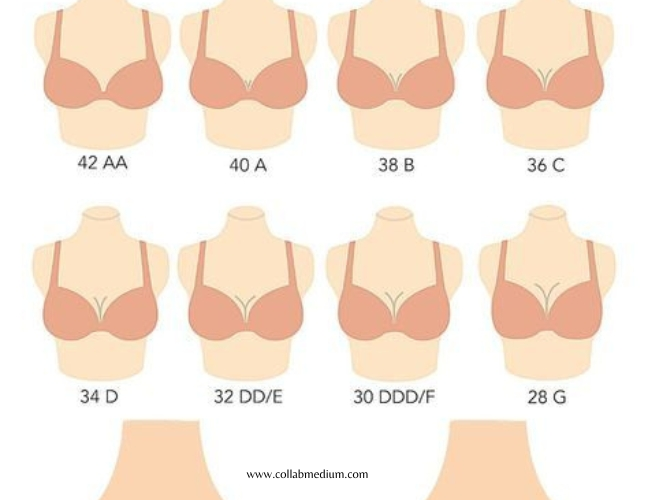
Here’s what most people miss: a D cup on a 32 band is actually smaller in volume than a D cup on a 38 band. This is called sister sizing, and understanding it changes how you shop entirely. A 34D and a 36C hold the same breast volume. The band just fits differently around your rib cage.
This matters enormously when shopping for sports bra because many brands only offer cup sizes in S, M, L, and XL. That system works decently for smaller cup sizes but completely fails women in larger cups.
Cup Size Breakdown: From AA to G and Beyond
Here’s a practical overview of cup sizes and the support needs that come with each:
| Cup Size | Typical Band Range | Support Level Needed | Best Bra Style |
| AA / A | 28 to 38 | Light to medium | Crop-style or pullover |
| B | 30 to 40 | Light to medium | Pullover or light racerback |
| C | 30 to 42 | Medium | Encapsulation or molded cup |
| D | 30 to 44 | Medium to high | Encapsulation with underwire |
| DD / E | 30 to 44 | High | Encapsulation with adjustable straps |
| DDD / F | 30 to 46 | High | Underwire encapsulation, wide straps |
| G and above | 32 to 48 | Maximum | Full-coverage underwire, J-hook |
The Two Types of Sports Bra Support
Compression bras press the breasts flat against the chest. They work well for A to C cups and low-impact activities like yoga, Pilates, and walking.
Encapsulation bras support each breast individually in its own cup. They mimic the structure of a regular bra but with athletic-grade support. Women in D cups and above almost always perform better in an encapsulation style. Some bras combine both methods, which is ideal for DD cups and larger during high-impact workouts.
The Best Sports Bra Brands by Cup Size
Not every brand covers the full size range. Knowing who does what saves you a lot of time and money.
Nike offers solid options up to a DDD cup in most styles. Their Swoosh Medium-Support Bra is a reliable everyday choice for B through D cups.
Panache Sport is a gold standard for larger cup sizes. They offer encapsulation bras from a 28 back size up to a K cup. Their underwire sports bras are specifically engineered for high-impact support in DD through H cups.
Shefit makes fully adjustable sports bras that cover AA through G cups. Their Ultimate Sports Bra lets you customize both the band and strap tension, which is a game-changer for women who fall between standard sizes.
Moving Comfort (Brooks) focuses heavily on run-specific support. Their Fiona Bra is popular among D through G cup runners.
ThirdLove offers half-cup sizing and covers a wide range, making them a good starting point if you’ve never been professionally fitted.
For plus-size and fuller-bust options specifically, <u>Bare Necessities</u> (barenecessities.com) carries one of the widest curated selections of sports bras in extended sizes from dozens of brands, with detailed fit guides for each.
Practical Solutions for Finding Your Perfect Fit
Step 1: Get Professionally Measured
Most women are wearing the wrong bra size. A 2017 study found that approximately 80% of women wear the wrong bra size. Getting measured costs nothing at stores like Nordstrom, Victoria’s Secret, or specialty lingerie boutiques.
Measure yourself twice a year. Your size changes with weight fluctuations, hormonal shifts, and age.
Step 2: Test the Bra Before You Buy
Try this simple checklist before committing to any sports bra:
Jump in place for 30 seconds. Does anything move or escape? Do the straps dig into your shoulders? Can you take a full deep breath? Does the band stay put or ride up?
If you pass all four, you’ve found a winner.
Step 3: Match the Bra to Your Activity
Low-impact activities like yoga, walking, and light strength training don’t require maximum support. A compression style works perfectly. High-impact activities like running, HIIT, kickboxing, and cycling demand full encapsulation, especially in C cups and above.
Common Mistakes Women Make When Buying Sports Bras
Choosing style over function. That cute strappy back might look great in the mirror but does nothing for support during a 5K. Function always comes first.
Buying based on clothing size. A medium in leggings has nothing to do with your bra size. Always size by actual measurements.
Ignoring band fit. About 80% of your support comes from the band, not the straps. If you can pull the band more than an inch away from your back, it’s too loose. Go down a band size.
Washing incorrectly. Heat breaks down elastane fibers fast. Always wash sports bras in cold water on a gentle cycle and let them air dry. Machine drying destroys the compression and support structure within just a few months.
Stretching bras past their lifespan. Most sports bras lose meaningful support after 6 to 12 months of regular use, depending on how often you wear and wash them. If the band feels loose even on the tightest hook, it’s time to replace it.
Pro Tips From Experience
Buy two of the same bra when you find one that works. Good sports bras in extended sizes sell out fast and get discontinued. When you find a fit that’s perfect, stock up.
Try the tightest hook first. When you buy a new bra, wear it on the loosest hook. As the elastic breaks down with washing and wear, you tighten the hook. By the time you’re on the tightest hook, it’s time to replace it.
Consider a swimsuit top for water sports. For swimming, surfing, or paddleboarding, a racerback sports bra doubles as functional support if it’s made with chlorine-resistant fabric.
Size up in the cup if you’re between sizes. When in doubt during online shopping, size up in the cup and down in the band. Too small in the cup causes the most common sports bra problems: spillage, bouncing, and underwire poking.
Layer up for very high-impact days. Some larger-busted women swear by wearing a compression bralette under an encapsulation sports bra for trail running or high-intensity interval training. It sounds like a lot but it genuinely doubles the support.
FAQs
Q: What sports bra is best for large cup sizes like DD, F, or G?
An encapsulation sports bra with underwire and wide adjustable straps, such as those from Panache Sport or Shefit, offers the best support for DD cups and above.
Q: How do I know if my sports bra fits correctly?
The band should sit level and firm against your back, straps should not dig in, and cups should fully contain your breasts with no spillage or gaps.
Q: How often should I replace my sports bra?
Replace your sports bra every 6 to 12 months with regular use, or when the band no longer feels snug on the tightest hook setting.
Q: Can I wear a sports bra as an everyday bra?
Yes, many women do, especially those in smaller cup sizes. However, for larger cup sizes, everyday wear can accelerate elastic breakdown and reduce support life faster than workout-only use.