
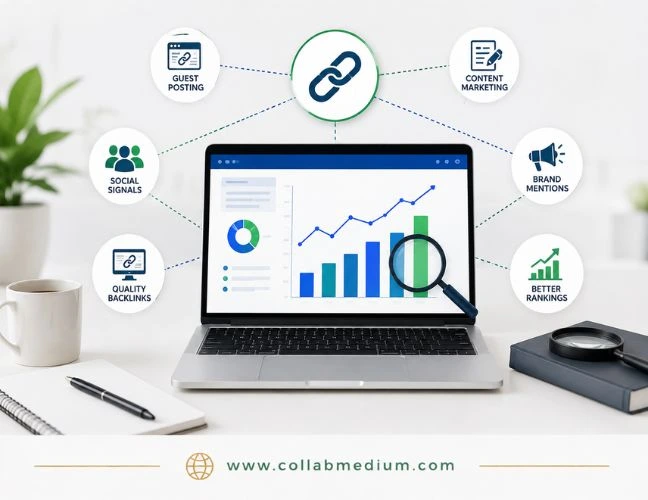
Off Page SEO is the set of actions you take outside your own website to build trust, authority, and visibility in search results. It relies on backlinks, brand mentions, and digital PR rather than on-site changes. If your rankings feel stuck despite solid content, weak external signals are usually the reason. This guide breaks down what is off page seo, why it matters more in 2026, and how to fix it. You will get a practical checklist, real tools, common mistakes, and pro tips pulled from years of hands-on link building work.
What Off Page SEO Actually Means in 2026
This practice covers everything that happens beyond your own pages. Google still treats external validation as a trust signal. A site with strong backlinks from respected sources tends to outrank a site with thinner content but weaker authority. That idea has not changed much in twenty years, even as the tactics around it have evolved.
What Is Off Page SEO Optimization, Exactly?
In practical terms, this branch of optimization means earning links, mentions, reviews, and social signals that point back to your site. It also includes reputation management, digital PR, guest contributions, and local citations. None of it touches your code or your copy directly. It shapes how the wider internet talks about your brand.
The Core Problem: Why These Efforts Fail
Most site owners focus entirely on content and technical fixes. They ignore external authority building until rankings stall. Then they panic and buy cheap links from low quality directories. That approach usually backfires within a few months.
Here is the real issue. Building genuine authority takes patience and consistency. A single guest post will not move rankings. A steady stream of relevant, high authority links over several months will. Ahrefs studied millions of pages and found that most top ranking pages have a large number of referring domains pointing to them, confirming that link volume and quality still correlate strongly with visibility.
Budget confusion adds another layer. Business owners often do not know whether to hire an agency, use freelancers, or handle Off Page SEO Services in house. Without a clear strategy, money gets wasted on tactics that do nothing for rankings.
Building an Off Page SEO Strategy That Actually Moves Rankings
A working SEO strategy starts with a goal, not a tactic. Decide what authority level you need to compete, then reverse engineer the backlink profile of the pages already ranking above you.
How to Do Off Page SEO Step by Step
Start with research. Pull your top three competitors into Ahrefs or Semrush and study their referring domains. Look for patterns like guest posts, resource page mentions, or press coverage.
Next, build a target list of realistic prospects. Do not chase massive publications first. Mid tier, relevant sites convert into links far more often and still carry real authority.
Then create linkable assets. Original research, free tools, and detailed guides earn links naturally because other writers want to cite something useful. This single step often matters more than any outreach template.
How to Improve Off Page SEO With Link Building
Link building remains the backbone of any serious campaign. Focus on relevance first and domain rating second. A link from a topically related site with a DR of 40 often outperforms a random link from an unrelated DR 70 domain.
Guest posting, broken link building, and digital PR are the three techniques that keep working year after year. Combine all three instead of relying on just one channel.
Off Page SEO Checklist for 2026
Use this checklist before you launch any new campaign. It keeps your work organized and measurable.
| Checklist Item | Why It Matters | Frequency |
| Competitor backlink audit | Reveals realistic link targets | Monthly |
| Broken link outreach | Recovers easy, low competition links | Monthly |
| Digital PR pitch | Builds high authority mentions | Quarterly |
| Guest post outreach | Adds relevant referring domains | Ongoing |
| Brand mention tracking | Finds unlinked mentions to convert | Weekly |
| Toxic link disavow review | Protects site from spam penalties | Quarterly |
Off Page SEO Techniques Worth Your Time
Not every tactic deserves your budget. These techniques consistently deliver results without risking a penalty.
Parasite SEO: Should You Use It?
Parasite SEO means publishing content on high authority third party platforms like Medium or LinkedIn to rank quickly. It can work for short term visibility, but it carries real risk since you do not own that content or that domain. Treat it as a supplement, never as your main strategy.
White Label Link Building and White Label Social Media Marketing
Agencies and freelancers often outsource execution through white label link building partners. This lets a small team deliver enterprise level campaigns without hiring an entire department. White label social media marketing works the same way, handling brand mentions and shares that support broader authority goals under someone else’s brand name.
Tools and Platforms for Off Page SEO Services
The right software saves hours of manual research every week.
Semrush, Ahrefs, and Competitor Research
Semrush and Ahrefs both offer backlink analysis, domain rating scores, and gap tools that show links your competitors have but you do not. Running a competitors gap report weekly keeps your prospect list fresh and relevant.
How Can We Find High DR Websites
How can we find high DR websites without paying for premium tools every month? Start with free trials on Ahrefs or Semrush, then cross reference results with Moz’s free domain authority checker. Journalist request platforms like Qwoted and Featured also connect you with high authority publications actively looking for sources.
Free Backlinks Platform Options: How Can We Find Free Backlinks
A reliable free backlinks platform includes business directories, niche forums, and resource pages that already accept submissions. How can we find free backlinks without spending anything? Look at Crunchbase, industry associations, local chamber of commerce sites, and podcast guest appearances. These sources rarely cost money and often carry decent authority.
Common Mistakes to Avoid
Buying links in bulk. Cheap link packages almost always come from spam networks that Google eventually catches.
Ignoring anchor text ratios. Over optimized exact match anchors look unnatural and can trigger algorithmic penalties.
Chasing DR instead of relevance. A high DR link from an unrelated niche rarely moves rankings the way people expect.
Skipping competitor analysis. Guessing at targets wastes outreach hours that a proper Ahrefs or Semrush audit would save.
Forgetting brand mentions. Plenty of unlinked mentions sit online waiting to be converted into real backlinks.
Pro Tips From Years of Off Page SEO Work
Tip 1: Track referring domains, not total backlinks. Ten links from ten different domains beat fifty links from two domains every time.
Tip 2: Build relationships before you need them. Journalists and bloggers respond faster to people they already recognize.
Tip 3: Repurpose one asset across many formats. A single research study can become guest posts, social content, and PR pitches.
Tip 4: Monitor your backlink profile monthly. Use Ahrefs or Semrush alerts to catch toxic links before they cause damage.
Tip 5: Pair strong external authority with solid on page fundamentals. Even the best backlink profile struggles to rank a thin, poorly structured page.
Backlinks Strategy: Building a Sustainable Plan
A sustainable backlinks strategy blends multiple channels instead of leaning on one tactic. Combine digital PR, guest posting, resource link building, and unlinked mention recovery into a rolling monthly plan.
According to research published by Search Engine Journal, backlinks remain one of the top three ranking factors Google confirms publicly, alongside content quality and page experience. That single data point explains why this work has stayed relevant for so long.
Review your strategy every quarter. Drop tactics that stop producing results and reinvest that budget into whatever is currently earning the most qualified referring domains for your niche.
Measuring Results Without Guessing
Tracking progress matters as much as the outreach itself. Watch referring domain growth, not raw backlink counts, since domain diversity signals real authority. Pair that with organic traffic trends and keyword ranking movement inside Semrush or Ahrefs. A campaign that grows referring domains but shows flat rankings after six months usually needs a relevance audit, not more volume. Set a simple dashboard that pulls these three metrics monthly so you can spot stalls early instead of discovering them a year later. Small businesses often skip this step entirely, which makes it hard to justify continued investment to stakeholders who want proof the work is paying off.
Frequently Asked Questions
What is off page seo?
This practice refers to actions taken outside your website to improve search rankings. It includes backlinks, brand mentions, guest posting, and digital PR that build trust and authority with search engines.
How long does this work take to show results?
Most campaigns need three to six months to show measurable ranking movement. Authority builds gradually as referring domains and brand mentions accumulate over time.
Is off page seo more important than on page seo?
Neither replaces the other. On page work makes your content rankable, while external authority building helps you actually outrank competitors in a crowded niche.
Can I handle this without hiring an agency?
Yes, many businesses manage off page seo in house using tools like Ahrefs and Semrush. It takes more time than hiring specialists, but it is entirely possible with consistent effort.