
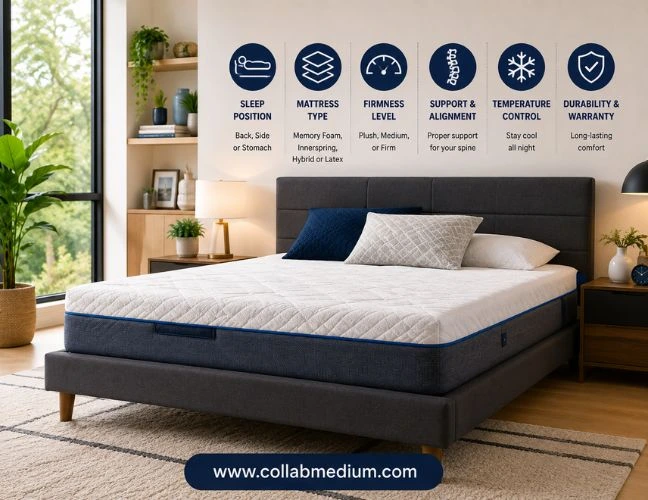
Shopping for a new bed sounds simple until you walk into a store. Rows of options stare back at you. Salespeople throw around terms like pocketed coils and cooling gel. You lie down for ninety seconds and try to make a decision that affects the next eight to ten years of your sleep. That is exactly why learning how to choose a mattress matters so much before you spend a single dollar.
I have tested dozens of models, read hundreds of owner reviews, and talked with sleep specialists over the years. The same confusion comes up again and again. People do not know how to choose a mattress that actually fits their body, their budget, and their sleep style. This guide fixes that problem step by step.
Why Knowing How to Choose a Mattress Actually Matters
Figuring out how to choose a mattress is one of those decisions that quietly affects everything else in your day. A mattress is not just furniture. It shapes your spine alignment, your energy levels, and even your mood the next day.
According to the Sleep Foundation, the average person spends roughly a third of their life in bed. The surface underneath you deserves real thought.
Most people replace a mattress only once every seven to ten years. That long window makes the decision feel heavier than it should. If you already own an old, sagging bed, you probably notice back pain or restless nights. Learning how to choose a mattress correctly the first time saves you money and years of poor sleep.
What Comfortable Sleep Really Requires
Comfortable sleep depends on more than softness. Your spine needs proper support while your shoulders and hips still sink slightly into the surface. A mattress that feels plush in a showroom can feel completely different after a full night of real sleep. That mismatch is the core reason so many buyers regret their purchase within the first few months.
The Core Problem Most Shoppers Face
Here is the mistake I see constantly. A shopper walks in, presses down on a mattress with their hand, and decides it feels nice. They buy it that same afternoon. Two weeks later, they woke up sore. The foam was too soft for their body weight, or the coils were too firm for a side sleeper.
This happens because most people do not understand how to choose a mattress based on their actual sleep position and body type. A back sleeper needs different support than a stomach sleeper. A heavier person compresses foam differently than someone under 130 pounds. Skipping this step is where most regret begins.
Signs Your Current Mattress Is Failing You
Waking up with stiffness, visible sagging in the middle, or noisy springs are all clear warning signs. If you sleep better in a hotel than at home, your bed is likely the culprit. These signals mean it is time to research how to choose a mattress that actually matches your needs instead of just replacing like for like.
Practical Steps for How to Choose a Mattress
Start with your primary sleep position. Side sleepers generally need a softer surface that cushions the shoulders and hips. Back sleepers usually want medium-firm support. Stomach sleepers need a firmer surface to prevent the hips from sinking too low.
Next, think about temperature. If you sleep hot, look for gel-infused memory foam or a hybrid design with coils that allow airflow. Hybrid mattresses combine foam comfort layers with a coil support base, giving you both contouring and bounce.
Test the trial period before you commit fully. Most direct-to-consumer brands now offer a 100-night trial or longer. That window gives your body real time to adjust, which matters far more than a two-minute store test.
Consider your weight and your partner’s weight too. Heavier sleepers usually need a firmer core or a hybrid build to avoid sinking through the comfort layers within a year or two.
How to Choose a Mattress for a Child
Kids have different needs than adults. A growing child benefits from a medium-firm mattress that supports proper spinal development. Avoid overly plush options, since children need consistent support while their bones and muscles are still forming. Twin or twin XL sizes usually work well until the teenage years. Many parents look at durability first, since kids tend to jump and roll far more than adults do.
How to Choose a New Mattress When Replacing an Old One
Replacing an old bed gives you a chance to fix past mistakes. Think honestly about what bothered you before. Did the old mattress trap heat? Was it too soft after a year? Bring that experience into your next decision, since it tells you more than any showroom test ever could.
How to Choose an Air Mattress for Guests or Travel
An air mattress serves a different purpose than your primary bed. Look for a raised design with built-in pumps for guest rooms, since low-profile options work better for camping or travel. Puncture-resistant material and a strong internal frame prevent the sagging middle that ruins a night’s sleep on cheaper models.
Tools and Platforms That Make Mattress Shopping Easier
Several retailers and platforms simplify the research process. Costco Mattress selections stand out for members who want name-brand quality at a lower markup, often paired with generous return windows. Warehouse pricing genuinely helps here since bulk retail models cut out extra markup layers.
IKEA Mattress options are worth a look if you want budget-friendly, foam-based designs with a minimalist approach. They tend to suit smaller apartments and guest rooms where a premium hybrid is not necessary.
Mattress reviews from independent sites like Sleep Foundation, Consumer Reports, and GoodBed offer side-by-side comparisons of firmness, motion isolation, and edge support. Reading a handful of detailed mattress reviews before buying helps you avoid marketing language and focus on real owner experiences. These platforms are especially useful once you already understand how to choose a mattress in general terms and just need to compare specific models.
Finding the Best Mattress for Your Budget
The best mattress for you is not always the most expensive one on the shelf. Mid-range hybrids often outperform luxury models for everyday comfort and back support. Setting a budget range before you shop keeps salespeople from pushing you toward the highest-margin option. Focus on the best mattress for your actual needs instead.
If you want the best mattress without overspending, compare warehouse retailers against direct-to-consumer brands. Costco Mattress deals frequently beat mattress-store pricing on comparable hybrid models. IKEA Mattress lines cover the budget end of the best mattress spectrum for smaller bedrooms.
Comparing Mattress Types at a Glance
| Mattress Type | Firmness Range | Best For | Average Lifespan |
| Innerspring | Medium to Firm | Traditional bounce, hot sleepers | 6-8 years |
| Memory Foam | Soft to Medium-Firm | Pressure relief, side sleepers | 7-10 years |
| Hybrid | Medium | Combination sleepers, couples | 7-9 years |
| Latex | Medium-Firm | Eco-conscious buyers, durability | 10-15 years |
| Air Mattress | Adjustable | Guests, travel, temporary use | 1-3 years |
Common Mistakes to Avoid When Choosing a Mattress
Buying based on price alone. The cheapest option often sags within a year, costing you more in the long run.
Ignoring the return policy. Always confirm the trial period and return shipping terms before you buy, especially online.
Skipping the weight and position match. A mattress that works for your partner may not work for you, even in the same bed.
Forgetting about the foundation. An old, worn box spring can undermine even the best new mattress.
Rushing the decision. Give yourself at least a few weeks of research before committing to a major purchase like this.
Pro Tips From Years of Testing Mattresses
Tip 1: Shop during major sales windows. Memorial Day, Labor Day, and Presidents Day typically bring the deepest mattress discounts of the year.
Tip 2: Ask about firmness on a numbered scale. Most brands rate firmness from 1 to 10. This makes comparing models across brands far easier than vague marketing terms.
Tip 3: Read mattress reviews from verified buyers only. Filter out reviews from the first week of ownership, since real comfort issues usually surface after thirty days.
Tip 4: Keep the packaging until the trial period ends. Many bed-in-a-box brands require the original packaging for a smooth return.
Tip 5: Match your mattress to your bed frame. Not every mattress works with every frame, especially adjustable bases, so check compatibility before ordering.
Understanding How to Choose a Mattress for Long-Term Support
Long-term support means the mattress keeps its shape and firmness for years, not months. Look for high-density foam layers and a sturdy coil count in hybrid designs. Cheaper materials break down faster, which shifts your spine out of alignment while you sleep.
If back pain lingers after thirty nights on a new bed, the support layer may not match your body type. This is often the final piece buyers overlook when learning how to choose a mattress, since support quality matters more than surface softness over time.
Ultimately, how to choose a mattress comes down to matching your body, your budget, and your sleep habits to the right materials. Take your time, use the trial period fully, and revisit this guide on how to choose a mattress whenever you feel unsure.
Please visit : https://collabmedium.com/
Frequently Asked Questions
What is the best way to choose a mattress?
The best way to choose a mattress is to match firmness to your sleep position and body weight. Test it during the trial period at home, not just in a showroom for a few minutes.
How firm should a mattress be?
Firmness depends on your sleep position and weight. Side sleepers usually prefer medium-soft, back sleepers prefer medium-firm, and stomach sleepers need firmer support.
How often should I replace my mattress?
Most mattresses should be replaced every seven to ten years. Sagging, noise, or waking up with pain are signs it is time sooner.
Is a more expensive mattress always better?
Not always. Price does not guarantee comfort or durability. Focus on materials, trial length, and mattress reviews instead of price alone when deciding.