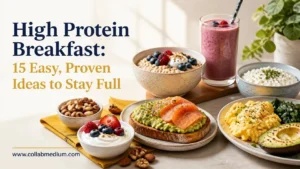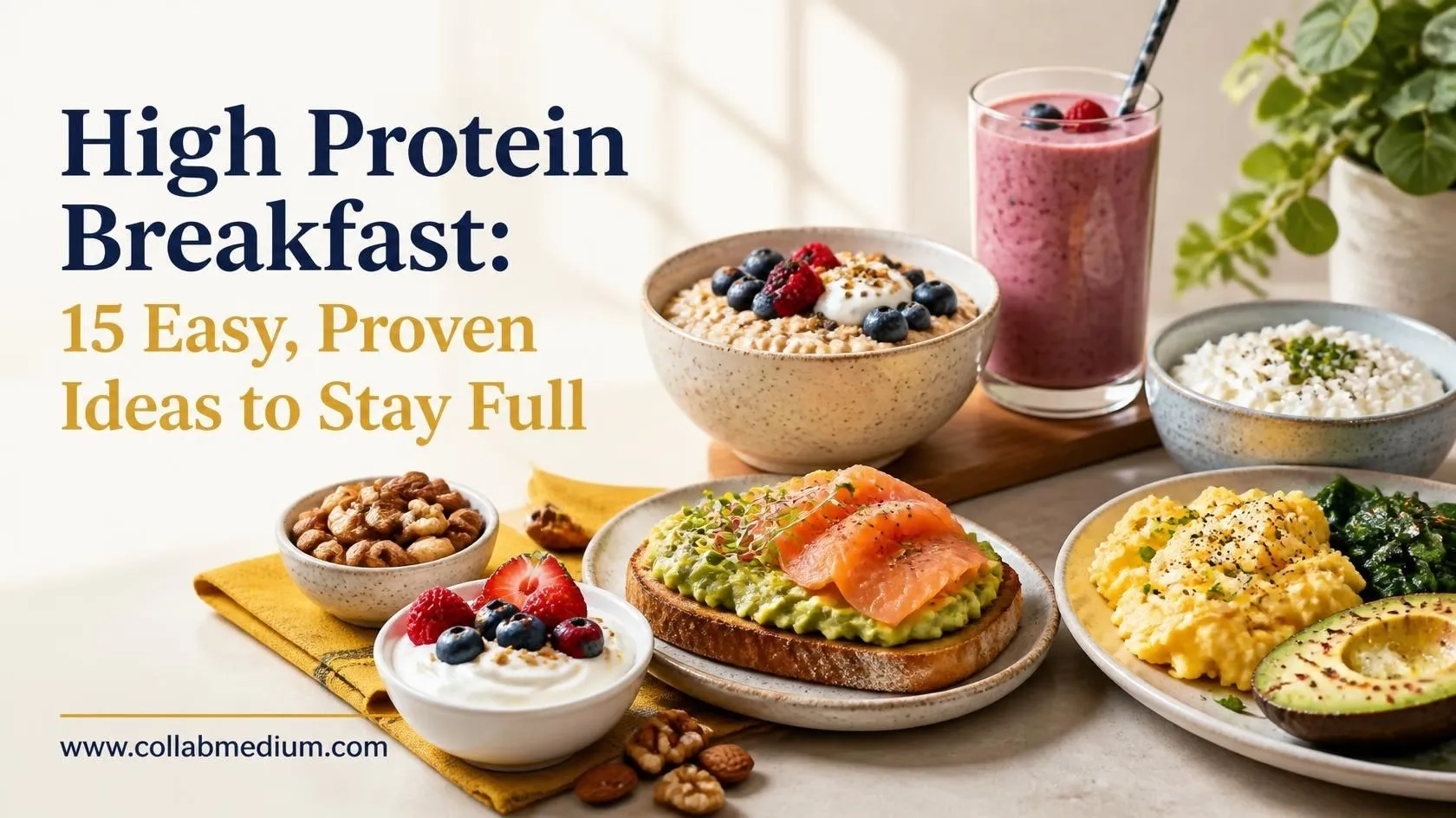
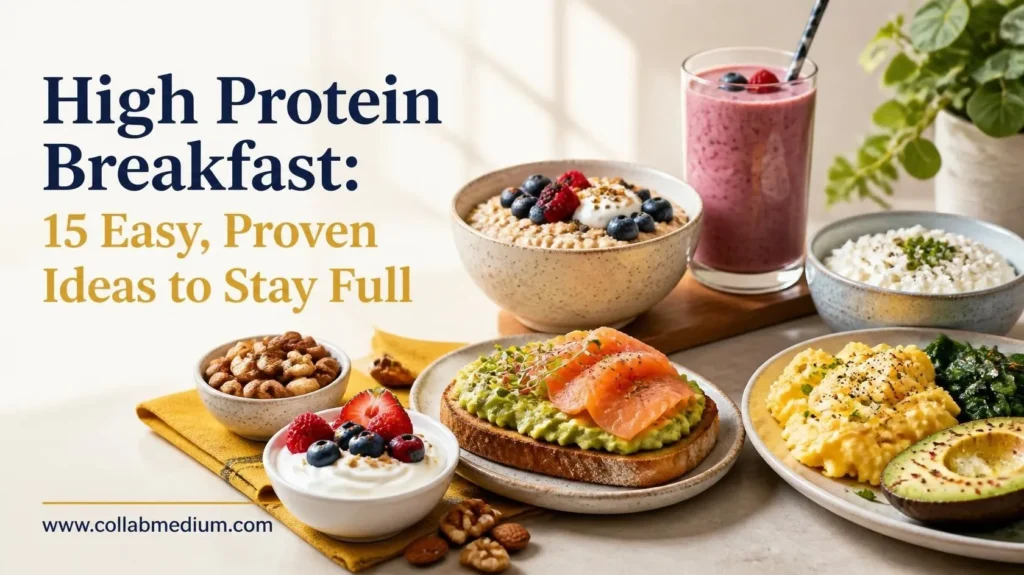
I skipped breakfast for years. Then I crashed at 10 a.m. every single day. A high protein breakfast fixed that problem for me. It keeps me full, steady, and focused until lunch. In this guide, I share the best ideas, the science behind them, and the mistakes I see most often. You can start tomorrow morning.
What Is a High Protein Breakfast?
A high protein breakfast is a morning meal with about 25 to 35 grams of protein. That amount gives most adults enough to feel full and support muscle. A bowl of plain cereal gives you 3 to 5 grams. That gap explains why so many people feel hungry by mid-morning.
The USDA Dietary Guidelines list 0.8 grams of protein per kilogram of body weight as the daily minimum. That equals about 46 grams for the average woman and 56 grams for the average man. Active people need more. Spreading protein across meals works better than saving it all for dinner.
Why Protein for Breakfast Matters
Protein for breakfast solves a common problem. Most Americans eat little protein in the morning and a huge amount at night. Nutrition researchers estimate breakfast often delivers only 10 to 15 grams. Dinner can deliver over 30.
Protein slows digestion and steadies blood sugar. It also triggers hormones that signal fullness. A 2013 study in the American Journal of Clinical Nutrition found something useful. A 35-gram protein breakfast reduced evening snacking in young women who normally skipped breakfast.
I noticed the same pattern in my own routine. When I ate toast and jam, I snacked by 10:30. When I ate eggs and yogurt, I lasted until 1 p.m. The Harvard T.H. Chan School of Public Health explains how protein quality and food sources affect your health. I recommend reading the Harvard T.H. Chan School of Public Health protein guide for the full picture.
If you want more morning meal options beyond protein, check my list of healthy breakfast ideas. It covers fiber, healthy fats, and fullness too.
High Protein Breakfast Ideas You Can Make Fast
These high protein breakfast ideas fit busy mornings. I group them by style so you can pick what suits your day.
Egg-Based Options
Eggs remain the easiest base. One large egg gives you about 6 grams of protein. Three eggs get you close to 18 grams.
- Veggie scramble: I cook three eggs with spinach and feta. It takes six minutes.
- Egg muffin cups: I bake a dozen on Sunday. They reheat in 45 seconds.
- Breakfast burrito: I wrap eggs, black beans, and cheese in a whole wheat tortilla.
- Smoked salmon toast: Three ounces of smoked salmon adds about 16 grams.
Dairy-Based Options
Dairy gives you protein with almost no cooking. Brands like Chobani, Fage, and Siggi’s make thick Greek yogurt with 15 to 20 grams per cup serving.
- Greek yogurt bowl: I top it with berries and hemp hearts. Three tablespoons of hemp hearts add about 10 grams.
- Cottage cheese bowl: One cup of cottage cheese delivers about 25 grams. I add pineapple or tomatoes.
- Protein oats: I stir a scoop of whey into cooked oats. That meal reaches 30 grams easily.
- Fairlife milk latte: One cup of Fairlife milk contains about 13 grams.
Plant-Based Options
You can build a strong high protein breakfast without meat or dairy. Extra-firm tofu gives about 10 grams per half cup.
- Tofu scramble: I season it with turmeric, garlic, and nutritional yeast.
- Chia pudding: Two tablespoons of chia add about 5 grams. I blend in soy milk for more.
- Peanut butter banana toast: Two tablespoons of peanut butter add 7 to 8 grams.
- Lentil breakfast bowl: I top warm lentils with an avocado and a poached egg.
If you plan ahead, my guide to vegetarian meal prep ideas shows how I batch overnight oats and egg-free breakfast jars.
Grab-and-Go Options
Some mornings give me five minutes. On those days, I use shortcuts.
- Premier Protein shake: One bottle contains 30 grams.
- Hard-boiled eggs and string cheese: I pack them the night before.
- Protein pancake mix: Brands like Kodiak Cakes offer about 14 grams per serving. Always check the label.
If you grab breakfast on the road, read my guide to high protein fast food. It ranks drive-thru options that actually deliver protein.
High Protein Breakfast Comparison Table
I use this table when I plan my week. Values are approximate, so check labels for exact numbers.
| Breakfast | Serving | Protein (g) | Prep Time |
| Three-egg scramble | 3 large eggs | 18 | 6 min |
| Cottage cheese bowl | 1 cup | 25 | 2 min |
| Greek yogurt with hemp hearts | 1 cup + 3 tbsp | 25 to 30 | 3 min |
| Protein oats | 1/2 cup oats + 1 scoop whey | 28 to 30 | 5 min |
| Tofu scramble | 1 cup tofu | 20 | 10 min |
| Smoked salmon toast | 3 oz salmon | 16 | 4 min |
| Premier Protein shake | 1 bottle | 30 | 0 min |
How I Build a 30-Gram Breakfast
I use a simple formula. It works every time.
- Pick a main protein. I choose eggs, yogurt, cottage cheese, or tofu.
- Add a booster. I add seeds, nut butter, or a scoop of protein powder.
- Add fiber. I include fruit, oats, or vegetables.
- Add healthy fat. I add avocado or nuts for lasting energy.
Here is a real example from my week. I scramble two eggs, add a half cup of cottage cheese, and serve it with berries. That plate delivers about 26 grams of protein. It takes eight minutes.
Tools That Make It Easier
I track my meals with free tools for a few weeks. Then I stop because I know my portions.
- USDA FoodData Central: This database gives exact protein values for common foods.
- MyFitnessPal: I scan barcodes to log packaged foods fast.
- Cronometer: This app shows protein per meal, which helps me balance my day.
- A kitchen scale: I weigh yogurt and cheese a few times to learn real portions.
Common Mistakes to Avoid
I made most of these mistakes myself. You can skip them.
- Trusting the front label. Many “protein” bars hide 20 grams of sugar. I read the nutrition panel first.
- Eating too little. A single egg and a slice of toast delivers about 10 grams. That meal falls short.
- Ignoring fiber. Protein alone can leave you constipated. I pair it with oats, fruit, or beans.
- Relying on shakes every day. Whole foods give you more nutrients and better fullness.
- Skipping prep. Without a plan, I grab a muffin. Preparation prevents that.
Pro Tips From My Kitchen
- Cook eggs in bulk. I boil a dozen on Sunday. They last five days in the fridge.
- Choose plain yogurt. I add my own fruit and save about 15 grams of sugar per cup.
- Season boldly. Hot sauce, everything bagel seasoning, and fresh herbs make simple eggs exciting.
- Time protein around workouts. If you train early, pair your meal with the foods in my guide to the best recovery food.
- Rotate your options. I change my main protein every few days to avoid boredom.
- Talk to a professional if needed. People with kidney disease or special diets should ask a registered dietitian before raising protein intake.
FAQs About High Protein Breakfast
What is a high protein breakfast?
A high protein breakfast is a morning meal with roughly 25 to 35 grams of protein. Examples include a three-egg scramble, Greek yogurt with seeds, or cottage cheese with fruit. These foods help you feel full longer and curb mid-morning snacking.
What are the best high protein breakfast ideas?
The best high protein breakfast ideas include scrambled eggs, Greek yogurt bowls, cottage cheese with fruit, protein oats, and tofu scramble. Each option delivers 15 to 30 grams of protein and takes under 10 minutes to prepare.
How much protein should I eat for breakfast?
Most adults should aim for 25 to 30 grams of protein at breakfast. This amount supports fullness and muscle maintenance. Your exact needs depend on your weight, age, and activity level. A registered dietitian can give you a personal target.
Is protein for breakfast good for weight loss?
Protein for breakfast can support weight loss because it increases fullness and reduces snacking. Research shows higher protein morning meals can lower evening cravings. It works best alongside balanced meals, regular activity, and a moderate calorie intake.