
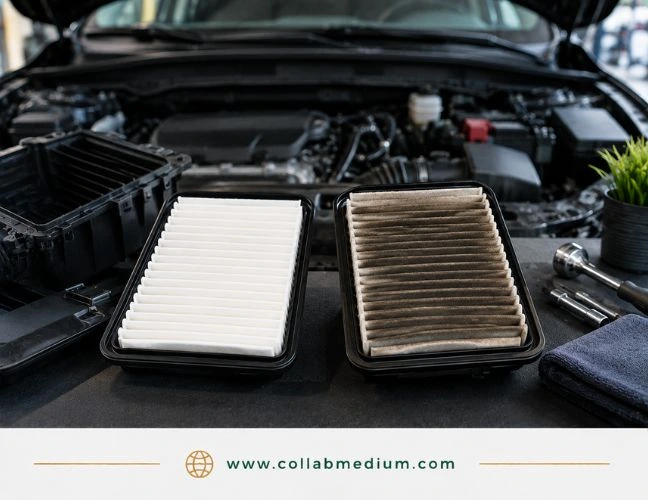
If your car feels sluggish, guzzles more gas than usual, or the check engine light won’t turn off, a dirty car air filter is often the hidden culprit. Your car air filter keeps dust, pollen, and road debris out of the engine so it can breathe clean air and burn fuel properly. Most vehicles need a fresh car air filter every 12,000 to 15,000 miles, though dusty routes and stop and go traffic can cut that number in half. The good news is that changing a car air filter is one of the easiest do it yourself repairs out there. I’ll walk you through the warning signs, the real cost, and the exact steps to swap it in under fifteen minutes.
What Is a Car Air Filter and Why It Actually Matters
Think of a car air filter as your engine’s lungs. Every time you start the engine, it pulls in thousands of gallons of outside air to mix with fuel for combustion. That air carries dirt, pollen, insects, and fine grit picked up off the road. A car air filter is a pleated paper or cotton element that traps those particles before they reach the sensitive internals of the engine.
Without it, abrasive dust would grind against pistons and cylinder walls, wearing them down fast. I’ve seen shops pull filters so caked in debris the paper had turned gray. A clogged car air filter restricts airflow, which forces the engine to work harder and burn more fuel to compensate. Over time, that strain shows up as rough idling, reduced acceleration, and lower fuel economy at the pump.
Signs Your Car Air Filter Needs Attention
You don’t need a mechanic’s eye to spot a failing filter. Watch for these common warning signs.
- A noticeable drop in fuel efficiency, sometimes several miles per gallon
- Sluggish acceleration or a rough, uneven idle
- A faint gasoline smell when starting the car
- Black smoke or soot from the exhaust
- The check engine light turning on due to an unbalanced air fuel mixture
- Visible dirt or debris when you check air filter housing under the hood
Any one of these is worth a quick look. Two or more together usually mean it’s time for air filter replacement.
How Often to Change Air Filter in Car
There isn’t one universal number, and that trips up a lot of first time DIYers. Most automakers recommend swapping the car air filter every 12,000 to 15,000 miles or once a year, whichever comes first. Premium filters made with denser media can stretch closer to 30,000 miles under ideal conditions.
Your actual interval depends on where and how you drive:
| Driving Condition | Recommended Replacement Interval |
| Normal city and highway driving | Every 12,000 to 15,000 miles |
| Dusty, rural, or unpaved roads | Every 6,000 to 10,000 miles |
| Stop and go commuting or idling | Once a year, check every oil change |
| Premium or high flow filters | Up to 30,000 miles with inspections |
Your owner’s manual always has the manufacturer’s official schedule, and it’s worth checking against the table above since your local climate and commute matter just as much as mileage.
How to Change Car Air Filter: A Step by Step Walkthrough
Learning how to change car air filter parts yourself saves you a shop visit and roughly twenty to thirty minutes of labor charges. Here’s exactly how I do it.
Tools and Parts You’ll Need
- A replacement car air filter matching your make and model
- A Phillips or flathead screwdriver, depending on your housing clips
- A shop rag or microfiber cloth
- A small vacuum or compressed air can, optional but handy
Step-by-Step Instructions
- Locate the airbox. Pop the hood and find the black rectangular housing near the front of the engine bay, usually connected to a wide intake tube.
- Release the clips or screws. Most housings use spring clips you can unhook by hand. Others need a screwdriver.
- Lift the lid and remove the old filter. Note which way it’s oriented before pulling it out. Some fold flat, others sit at an angle.
- Inspect the housing. Wipe out any loose dirt or leaves with your rag before installing anything new.
- Insert the new car air filter. Match the same orientation as the old one so it seats flush against the seal.
- Close and secure the housing. Snap the clips back or tighten the screws until the lid sits flat with no gaps.
- Start the engine. A properly seated filter should run quietly with no rattling or whistling from the intake.
That’s the entire process. No lift, no special tools, and most drivers finish before their coffee gets cold.
Engine Air Filter vs Cabin Air Filter: Know the Difference
People often use “air filter” as a catch all term, but your vehicle actually has two separate filters doing very different jobs. The engine air filter protects the combustion process, while the cabin filter cleans the air you and your passengers breathe.
How to Change Car Cabin Air Filter
The cabin filter is usually tucked behind the glovebox rather than under the hood. To access it, empty the glovebox, squeeze the side tabs to drop it down, then slide out the old filter housing. Insert the new filter with the airflow arrow pointing toward the blower motor, then snap the glovebox back into place. Most cabin filters need replacement every 12,000 to 15,000 miles, and drivers with allergies often notice a difference in cabin air quality immediately.
Air Filter Replacement Cost and Where to Buy One
A standard car air filter typically costs between eight and twenty five dollars for the part alone, with premium or performance versions running thirty to sixty dollars. Dealership labor for the same swap can add another twenty to forty dollars, which is exactly why so many drivers handle it themselves.
You can find a replacement at nearly any auto parts store, including national chains that stock filters by vehicle year, make, and model right at the counter. Staff there can usually look up the exact part number if you’re not sure which one fits. Buying online is another solid option if you want to compare the best air filter brands and read verified reviews before committing.
Common Mistakes to Avoid When You Check Air Filter Condition
Even a simple job goes sideways when you rush it. Here are the mistakes I see most often.
- Skipping the visual check. Holding the filter up to sunlight tells you more than mileage alone. If light barely passes through, replace it regardless of the odometer.
- Forcing a filter that doesn’t fit. Every housing has a specific shape. Cramming in the wrong size damages the seal and lets unfiltered air sneak past.
- Using compressed air incorrectly. Blasting a paper filter too hard tears the pleats. Light taps and gentle air are enough for a quick clean between changes.
- Ignoring the cabin filter entirely. Drivers fixate on the engine side and forget the cabin filter is doing just as much work for comfort and air quality.
- Buying based on price alone. The cheapest option sometimes uses thinner media that clogs faster, costing you more in the long run.
Pro Tips From Ten Years of Hands On Maintenance
A few habits separate drivers who never think about their car air filter from those who deal with expensive repairs later.
First, pair your filter check with every oil change. It takes thirty extra seconds and keeps you on a consistent schedule without extra trips to the garage. Second, keep the spare filter box until your next inspection so you have a visual baseline for how quickly yours gets dirty. Third, if you drive through construction zones or dusty backroads regularly, move to the shorter replacement interval without waiting for symptoms to show up.
If you’re already in the habit of handling maintenance yourself, it’s worth pairing this with other routine jobs like changing your oil at home, since both tasks take a similar amount of time and keep your engine running at its best between shop visits.
For manufacturer specific torque specs and intake system diagrams, the Car Care Council’s maintenance guidelines are a solid reference point before you start any DIY job.
Frequently Asked Questions
How do I know if my car air filter is dirty? Pull the filter and hold it up to a light source. If you can’t see light through the pleats, or it looks gray and caked with debris, it needs replacement.
Can a dirty air filter cause my car to fail an emissions test? Yes, a clogged filter throws off the air fuel ratio, which can increase emissions and trigger a check engine light during testing.
Is it safe to clean and reuse a paper car air filter? No, paper filters are disposable and tear easily when cleaned. Reusable cotton or foam filters can be washed, but standard paper ones should be replaced.
How long does it take to change a car air filter myself? Most drivers finish in ten to fifteen minutes with no tools beyond a screwdriver, making it one of the fastest DIY maintenance jobs available.