
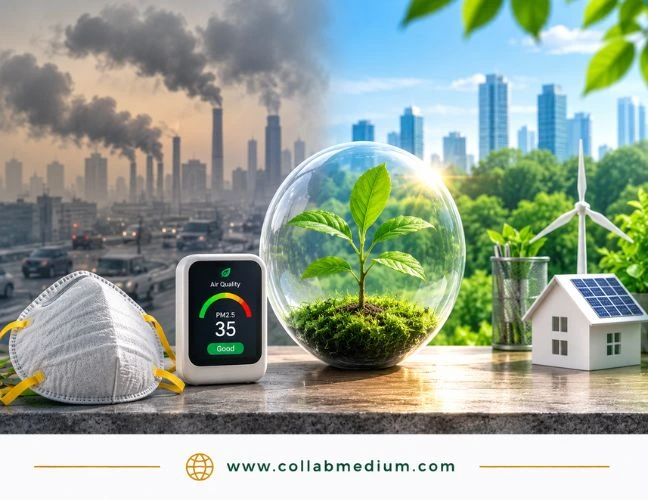
Air pollution now ranks among the top environmental health risks in the United States. It shortens lives, worsens asthma, and quietly damages the lungs of people who never smoked a cigarette. The World Health Organization links outdoor air quality to millions of early deaths worldwide every year. This guide explains what actually causes the problem, who it hurts most, and how to reduce air pollution at home, at work, and in your community. You will also find practical tools, common mistakes people make, and pro tips pulled from years of covering environmental health for a general readership.
Why This Problem Deserves Your Attention in 2026
I have covered environmental health topics for over a decade, and this issue keeps getting more urgent, not less. Wildfire smoke now reaches cities that rarely saw it a generation ago. Ozone days spike earlier in the summer each year.
According to the American Lung Association’s State of the Air report, more than 39% of Americans live in counties with unhealthy levels of ozone or particle pollution. That is roughly one in three people breathing compromised air on a regular basis.
Many people assume this only affects big industrial cities. That assumption is outdated. Rural areas near agricultural burning and wildfire zones now see spikes just as severe as urban traffic corridors.
What Actually Causes It
Vehicle exhaust, industrial emissions, wildfire smoke, and agricultural burning are the leading contributors nationwide. Indoor sources matter too. Gas stoves, cleaning products, and poor ventilation all add contaminants to the air inside your own home.
Understanding these sources is the first step toward how to solve air pollution at a personal and community level. You cannot fix what you do not understand.
The Core Problem: A Silent, Unequal Threat
Here is the mistake I see most often. People think the danger stays outside, contained near factories or highways. In reality, it seeps into homes, schools, and workplaces through ventilation systems and open windows.
There is also a common myth that air pollution affects everyone equally. It does not. Children, older adults, pregnant women, and people with asthma or heart conditions face far greater risk from the same exposure levels than a healthy adult.
Low-income communities and communities of color are also disproportionately exposed. The EPA has documented that these neighborhoods often sit closer to highways, ports, and industrial zones, which compounds health disparities that already exist.
The Health Costs Add Up Fast
Long-term exposure raises the risk of heart disease, stroke, lung cancer, and reduced lung function in children. The American Lung Association estimates that poor air quality contributes to tens of billions of dollars in healthcare costs annually across the country.
Short-term spikes matter too. A single bad ozone day can send asthma patients to the emergency room within hours. Wildfire smoke events have repeatedly overwhelmed hospitals in the Pacific Northwest and California in recent summers.
Practical Solutions: How to Reduce Air Pollution
Knowing how to reduce air pollution starts with understanding which changes actually make a measurable difference, not just symbolic gestures.
At the Individual Level
Drive less when possible. Combine errands into single trips. Choose walking, biking, or public transit for short distances whenever your schedule allows.
Switch to electric or manual lawn equipment. Gas-powered leaf blowers and mowers emit surprisingly high levels of pollutants for their size.
Reduce home energy use during peak demand hours. Power plants often ramp up dirtier backup generation during high-demand periods, which worsens regional air quality.
At the Community Level
Support public transit funding and safe biking infrastructure in your city. Fewer cars on the road means fewer tailpipe emissions overall.
Push for stricter local permitting on industrial facilities near residential neighborhoods. Community advocacy has historically driven meaningful policy change in cities like Los Angeles and Houston.
These combined ways to reduce air pollution work best when individuals, businesses, and local governments move together instead of relying on one group alone.
Air Pollution Solutions Businesses and Cities Are Testing
Several air pollution solutions are gaining traction heading into 2026. Cities are experimenting with low-emission zones that restrict older, higher-polluting vehicles from downtown cores.
Electric vehicle incentives continue expanding, and several states now offer rebates that lower the upfront cost significantly. Urban tree planting programs also help, since mature trees filter particulate matter and provide cooling that reduces energy demand.
Some manufacturers have shifted toward electrified fleets for delivery and public transit. Amazon and UPS have both piloted electric delivery vans in major metro areas, cutting local emissions in dense neighborhoods.
Tools and Platforms That Track Air Quality
Several free tools make it easy to check conditions before heading outside.
AirNow.gov, run by the EPA, provides real-time air quality index readings by zip code across the country. It is the most widely cited source for daily forecasts.
PurpleAir offers a crowdsourced sensor network with hyperlocal readings, which is especially useful during wildfire season when conditions shift block by block.
IQAir provides global rankings and comparisons, useful for travelers checking conditions in cities abroad.
An air pollution map from any of these platforms lets you visualize hotspots in real time, which helps families plan outdoor activities around safer hours of the day.
Comparing Common Air Quality Monitoring Tools
| Tool | Data Source | Best For | Cost |
| AirNow.gov | Government monitoring stations | Official daily forecasts | Free |
| PurpleAir | Crowdsourced sensors | Hyperlocal, real-time readings | Free |
| IQAir | Global monitoring network | International travel planning | Free with premium tier |
| BreezoMeter API | Combined data modeling | Business and app integration | Paid |
Tool availability and features may change; always verify current offerings before relying on any single source.
Using Visuals to Teach the Next Generation
Education matters just as much as policy. Teachers often use an air pollution drawing exercise in elementary classrooms to help kids visualize invisible contaminants like smog and particulate matter.
Simple activities like labeling a drawing with cars, factories, and smoke stacks help younger students grasp cause and effect. Pairing that lesson with a real-time air pollution map reinforces the idea that this is not an abstract concept but something happening right now, in real places.
Regional Differences You Should Know About
Conditions vary dramatically by region, and that shapes how much attention each household needs to pay. The Western United States now deals with recurring wildfire smoke seasons that can last weeks at a time, a pattern tied to the same climate change effects reshaping daily life across the country, sometimes pushing air quality index readings into hazardous territory hundreds of miles from the actual fire
The Midwest and South face different challenges. Agricultural burning, humidity, and industrial corridors along the Gulf Coast create their own seasonal patterns. Summer ozone spikes tend to hit hardest in cities with heavy vehicle traffic and limited tree cover, since heat and sunlight accelerate the chemical reactions that form ground-level ozone.
Coastal cities sometimes benefit from ocean breezes that disperse contaminants faster than inland valleys, where mountains can trap stagnant conditions for days. The Los Angeles basin remains a well-documented example of this trapping effect, even decades after major regulatory improvements reduced overall emissions there.
Knowing your region’s specific risk pattern helps you plan around the worst days instead of reacting after symptoms appear. A family in Phoenix needs a different seasonal strategy than a family in Minneapolis, even though both cities face real risk at different times of year.
Common Mistakes People Make
Ignoring indoor air quality. Many people focus only on outdoor conditions while neglecting gas stoves, mold, and poor ventilation inside their own homes.
Assuming clear skies mean clean air. Ozone and fine particulate matter are often invisible, especially on hot, sunny days when ozone levels spike.
Overlooking N95 masks during smoke events. Cloth masks do little to filter fine particulate matter from wildfire smoke.
Believing individual action alone solves the problem. Personal choices matter, but lasting change requires policy shifts and industrial accountability too.
Skipping air quality alerts. Local weather apps and AirNow both send free alerts, yet most people never turn on notifications.
Pro Tips From Years of Covering This Topic
Tip 1: Check the air quality index before outdoor exercise. Anything above 100 on the AQI scale warrants caution for sensitive groups.
Tip 2: Keep windows closed during wildfire smoke events. Running a HEPA filter indoors makes a measurable difference within hours.
Tip 3: Replace HVAC filters more often than the manual suggests. A MERV 13 filter captures far more particulate matter than a standard builder-grade filter.
Tip 4: Support local air monitoring initiatives. More sensors mean better data, which leads to faster public health responses during bad air days.
Tip 5: Teach kids the basics early. A simple drawing exercise paired with a short explanation builds lasting environmental awareness far better than a lecture alone.
Reducing exposure and pushing for cleaner air requires ongoing attention, not a one-time fix. The more people understand the real scope of this issue, the faster meaningful change happens at the community and policy level.
Frequently Asked Questions
What is the biggest cause of air pollution in the United States?
Vehicle emissions and industrial activity remain the largest contributors, though wildfire smoke has become a major seasonal source in recent years.
How can I check air quality in my area?
Use free tools like AirNow.gov or PurpleAir to check real-time air quality index readings by zip code or neighborhood.
Does air pollution affect everyone the same way?
No, children, older adults, and people with respiratory or heart conditions face significantly higher health risks from the same exposure levels.
What is the most effective way to reduce air pollution at home?
Improving ventilation, using HEPA filters, and reducing gas stove use are among the most effective steps for better indoor air quality.