
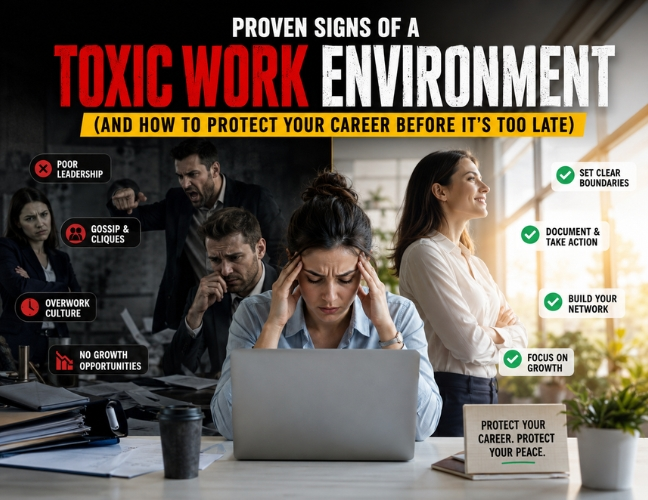
You spend roughly one-third of your life at work. That’s a significant chunk of your time, energy, and mental health. So when the workplace starts draining you more than it energizes you, something is seriously wrong. A toxic work environment is not just uncomfortable. It is damaging. And millions of American workers are living through it right now.
According to a 2023 report by the American Psychological Association, 76% of U.S. workers reported at least one symptom of a workplace mental health condition. Poor leadership, chronic stress, and hostile coworkers were among the top contributing factors. The problem is real, it is widespread, and it often goes unaddressed for far too long.
In this post, I want to break down exactly what a destructive work culture looks like, how to identify it early, and what you can do to protect your career and your mental well-being before real damage sets in.
What Makes a Toxic Work Environment?
Not every bad day at work means your workplace is dysfunctional. But there is a clear difference between occasional stress and a workplace that consistently chips away at your confidence, health, and motivation.
A damaging work culture typically involves patterns. These patterns become normalized over time, which makes them especially dangerous. People start accepting bad behavior as “just the way things are here.”
The Core Problem: Normalization of Harmful Behavior
When leadership ignores complaints, when bullying goes unchecked, or when overworking becomes a badge of honor, the environment starts to feel normal. But it is not. Research from MIT Sloan Management Review found that a toxic workplace culture is 10.4 times more likely to contribute to employee turnover than low compensation.
Here is something I have seen personally working with organizations over the years: employees often do not leave because of the paycheck. They leave because they feel invisible, unsafe, or disrespected.
Clear Warning Signs You Are Working in a Hostile Environment
Recognizing the red flags early gives you time to respond strategically rather than reactively. Here are the most common indicators:
1. Poor or Absent Leadership
Managers who micromanage, take credit for your work, or ignore your concerns are a massive warning sign. Gallup research shows that managers account for at least 70% of the variance in employee engagement scores. Bad management is not just annoying. It actively destroys team performance.
2. High Employee Turnover
When people keep quitting, there is a reason. If your team has rotated through three or four colleagues in the past year, that turnover rate is telling you something leadership refuses to say out loud.
3. Gossip, Cliques, and Office Politics
A culture where people talk behind each other’s backs or advance through favoritism rather than merit is deeply unhealthy. These behaviors signal a lack of psychological safety, which Google’s famous Project Aristotle study identified as the single most important factor in building a high-performing team.
4. No Work-Life Balance
If your boss sends emails at 11 PM and expects a response, or if PTO requests are met with passive-aggressive guilt trips, that culture is unsustainable. Chronic overwork leads to burnout, and the World Health Organization officially classifies burnout as an occupational phenomenon linked to unmanaged workplace stress.
5. Lack of Growth Opportunities
When you stop learning, you start stagnating. A company that offers no mentorship, training, or upward mobility is quietly telling you that your development is not a priority.
6. Gaslighting and Dismissiveness
When you raise concerns and leadership makes you feel like you are overreacting, that is a serious problem. Gaslighting in the workplace is more common than people realize, and it is one of the more insidious signs of a dysfunctional culture.
Common Workplace Toxicity: A Quick Reference Table
| Warning Sign | What It Looks Like | Potential Impact |
| Micromanagement | Constant oversight, no autonomy | Low confidence, reduced creativity |
| Favoritism | Promotions based on relationships | Resentment, low morale |
| Poor communication | Unclear expectations, no feedback | Confusion, missed goals |
| Bullying or harassment | Belittling, exclusion, threats | Anxiety, PTSD, attrition |
| Overwork culture | No boundaries, burnout culture | Physical and mental health decline |
| No accountability | Leaders avoid owning mistakes | Loss of team trust |
Practical Solutions for Dealing With a Difficult Workplace
Identifying the problem is only half the battle. You need a clear action plan.
Document Everything
Start keeping a written record of incidents. Dates, times, what was said, and who was present. This protects you legally and helps you identify patterns. Tools like Notion or even a private Google Doc work well for this.
Use Internal Resources First
If your company has an HR department, start there. I know HR often gets a bad reputation for protecting the company over employees. But in many organizations, especially larger ones, HR can be a legitimate resource when approached with clear documentation. Platforms like Workday and BambooHR often include anonymous reporting features in their employee portals.
Set Clear Boundaries
This is harder than it sounds, especially if you fear retaliation. But boundaries are not optional for your mental health. Start small. Stop answering emails after 7 PM. Decline non-essential meetings that eat into your deep work time.
Build Your External Network
Do not wait until you are desperate to grow your network. Connect with people in your industry on LinkedIn regularly. Attend virtual conferences or local meetups in your field. Having options reduces anxiety and gives you leverage.
Consider Seeking Outside Help
Talking to a therapist or career coach is not a sign of weakness. It is a smart investment. Apps like BetterHelp and Talkspace make mental health support more accessible than ever for working professionals in the U.S.
Know When to File a Formal Complaint
If your situation involves discrimination, harassment, or legal violations, you have rights. The <u>Equal Employment Opportunity Commission (EEOC)</u> handles workplace discrimination complaints and can guide you through the formal reporting process in the United States.
Common Mistakes People Make When Navigating a Toxic Workplace
Knowing what NOT to do can save you just as much pain as knowing the right steps.
Mistake 1: Suffering in silence. The longer you normalize the dysfunction, the harder it becomes to recognize it. Speak up early, even if just to a trusted colleague.
Mistake 2: Venting on social media. It feels satisfying at the moment. It can cost you your job and your reputation.
Mistake 3: Waiting for things to magically improve. Cultures rarely change on their own. If leadership is the source of the toxicity, change is even less likely.
Mistake 4: Burning bridges on the way out. No matter how badly you want to leave, exit professionally. Your industry is smaller than you think.
Mistake 5: Neglecting your financial safety net. Before you quit, build a runway. Most career coaches recommend having three to six months of living expenses saved before making a move.
Pro Tips From Years of Experience in This Space
I have worked with professionals across industries who have navigated these situations. Here is what separates those who come out stronger from those who spiral:
Tip 1: Audit your own role first. Ask yourself honestly whether any part of the tension is something you can control or change. Self-awareness is powerful.
Tip 2: Leverage anonymous feedback tools. Platforms like Lattice and Culture Amp are used by progressive companies specifically to measure and improve workplace culture. If your company uses them, take every survey seriously.
Tip 3: Find an internal ally. Having one trusted colleague who understands the environment can make a significant difference. You validate each other’s experiences and can advocate together when appropriate.
Tip 4: Reframe your exit strategy as a career upgrade. Leaving a destructive workplace is not failure. It is a strategic move toward a healthier, more productive professional life.
Tip 5: Research company culture before your next job. Use Glassdoor, Blind, and Comparably to read candid reviews from current and former employees. Look for patterns, not outliers, in the feedback.
The Long-Term Cost of Staying Too Long
This is something people underestimate. The longer you remain in a damaging professional environment, the more normalized the dysfunction becomes in your mind. You may start to believe that this is just how work is. It is not.
Studies show that prolonged exposure to workplace stress increases the risk of cardiovascular disease, depression, and anxiety disorders. A 2021 study published in the Journal of Occupational Health Psychology found that employees in high-strain work environments reported significantly higher levels of emotional exhaustion than their counterparts in supportive workplaces.
Your mental health, your confidence, and your long-term earning potential are all at stake. Protecting them is not selfish. It is essential.
FAQs About Toxic Work Environments
Q1: How do I know if my workplace is actually toxic or if I am just stressed?
A toxic work environment involves consistent, systemic patterns of harmful behavior such as harassment, poor leadership, lack of accountability, and disregard for employee well-being. Stress is a temporary response to workload. Toxicity is a cultural condition that persists regardless of what you do.
Q2: Can a toxic work environment cause long-term health problems?
Yes. Prolonged exposure to a harmful workplace culture has been linked to serious physical and mental health conditions including anxiety, depression, burnout, sleep disorders, and increased risk of cardiovascular disease.
Q3: Should I quit immediately if I recognize the signs?
Not necessarily. Before quitting, document your concerns, explore internal resources like HR or anonymous reporting tools, and build a financial and professional safety net. If the environment involves illegal behavior such as harassment or discrimination, contact the EEOC.
Q4: How do I explain leaving a toxic job in a future interview?
Keep your answer professional and forward-focused. A strong response sounds like: “I was looking for a workplace culture that better aligned with my values around collaboration, growth, and respect, and I am excited about what your organization represents.