
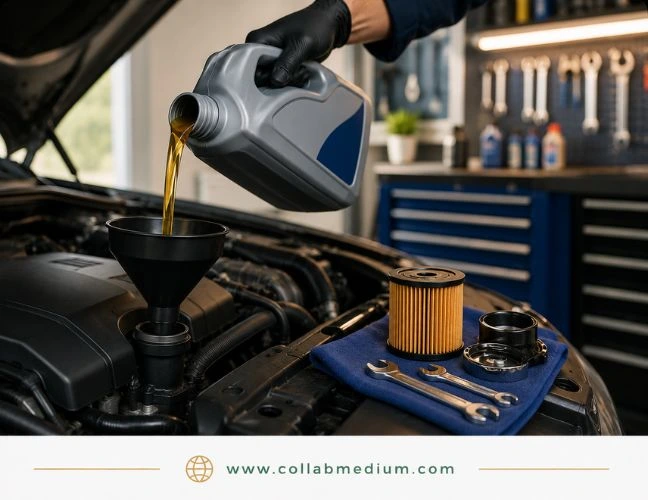
If you want to know how to change oil in a car the right way, here’s the short answer.
Drain the old oil while the engine is warm. Swap the filter. Refill with the correct grade. Reset your oil life monitor.
The whole job takes most drivers 30 to 60 minutes. Materials run $32 to $60 depending on whether you use conventional or full synthetic oil.
Learning how to change oil in a car yourself can save you $25 to $75 every single visit compared to a shop. Buy a wrench and a drain pan once, and that money stays in your pocket for years.
I’ve walked dozens of first timers through this process. The biggest thing that trips people up isn’t the mechanics.
It’s skipping a step because they assumed it didn’t matter. It always matters.
Why Learning How to Change Oil in a Car Actually Pays Off
I get asked constantly whether DIY oil changes are worth the hassle. The honest answer is yes, especially in 2026.
A conventional oil change costs $35 to $75 at most shops in 2026. A full synthetic oil change runs $65 to $130 depending on your city and provider.
Compare that to DIY oil changes. They save $15 to $40 per service compared to professional shops.
A typical DIY change needs 5 to 6 quarts of oil costing $20 to $45. One filter runs $5 to $15 on top of that.
Here’s what really got my attention. A 2026 consumer auto survey found that 64% of drivers prefer independent garages for routine maintenance because of lower average service costs.
That tells me people are already price shopping for this exact service. If you’re going to shop around anyway, knowing how to change oil in a car gives you the leverage to walk away from an upsell instead of nodding along.
There’s also a bigger financial picture here. Vehicle maintenance costs increased 6.2% year over year according to a January 2026 Bureau of Labor Statistics report, with oil changes among the most affected services.
Prices aren’t going back down. Every DIY oil change you do locks in today’s savings against tomorrow’s inflation.
What You Need Before You Start
Before you learn how to change oil in a car, gather your supplies. You don’t need a full garage setup.
Here’s the complete kit:
- Correct oil grade and quantity for your engine (check your owner’s manual)
- New oil filter that matches your make and model
- Oil filter wrench
- Socket wrench for the drain plug
- Oil drain pan
- Jack and jack stands or ramps
- Funnel
- Nitrile gloves and shop rags
- New drain plug washer if your car uses one
A quality filter alone runs about $7 to $12. Full synthetic oil typically runs $7 to $9 per quart at retail.
Budget brands from a warehouse store bring that number down considerably. Once you have this kit assembled, you’ll have everything you need every time you learn how to change oil in a car again down the road.
How to Change Oil in a Car: Step by Step
This is the part everyone actually wants. Here’s exactly how to change oil in a car from start to finish.
Step 1: Warm the Engine, Then Shut It Off
Run the engine for about five minutes so the oil flows freely, then turn it off.
Warm oil drains faster and carries more sediment out with it than cold, thick oil.
Step 2: Lift and Secure the Vehicle
Use ramps or a jack with jack stands. Never rely on a jack alone.
Give yourself enough clearance to slide underneath comfortably and safely.
Step 3: Locate and Remove the Drain Plug
Slide your drain pan underneath, then loosen the plug with your socket wrench.
Let it finish draining by hand so you don’t lose grip and drop it into the pan.
Step 4: Let the Oil Fully Drain
Give it a solid 10 minutes. Rushing this step leaves old, contaminated oil sitting in your pan.
That defeats half the purpose of the change.
Step 5: Replace the Drain Plug and Washer
Wipe the plug clean, install a fresh washer if your vehicle requires one, and hand tighten before finishing with a wrench.
Overtightening strips the pan, which is a repair nobody wants to pay for.
Step 6: Remove and Replace the Oil Filter
Use your filter wrench to remove the old filter. Rub a little fresh oil on the new filter’s gasket before installing it.
This small habit prevents leaks and makes the next change easier.
Step 7: Add New Oil
Remove the fill cap, insert your funnel, and pour in the amount specified in your owner’s manual.
Check the dipstick and top off gradually rather than dumping it all in at once.
Step 8: Reset the Monitor and Check for Leaks
Start the engine, let it run for a minute, then check underneath for drips.
Reset your oil life monitor through your dashboard settings so it tracks the new interval accurately.
That’s the entire process for how to change oil in a car. Once you’ve done it once, every future change gets faster.
How Often to Change Oil in a Car
Most gasoline powered cars in 2026 need an oil change every 5,000 to 7,500 miles.
Some manufacturers push full synthetic formulas to 10,000 or 15,000 mile intervals under ideal conditions. Older vehicles running conventional oil should still stick closer to 5,000 to 7,500 miles.
Mileage isn’t the only factor though. Oil degrades chemically over months, so manufacturers recommend changing oil at least once a year regardless of mileage.
Short trips, stop and go traffic, and extreme heat all push your car into what manufacturers call severe service. That cuts recommended intervals roughly in half.
Oil Change Intervals: Normal vs. Severe Driving
| Oil Type | Normal Driving | Severe Driving |
| Conventional oil change | 3,000 to 5,000 miles | 3,000 miles |
| Synthetic blend | 5,000 to 7,500 miles | 3,500 to 5,000 miles |
| Full synthetic | 7,500 to 10,000 miles | 5,000 miles |
Common Mistakes People Make When They Learn How to Change Oil in a Car
I’ve seen the same errors over and over, so let me save you the headache.
Skipping the washer replacement is a big one. A worn washer causes slow leaks that owners often blame on the engine itself.
Overtightening the drain plug is another classic mistake. It can crack the oil pan if you’re not careful with torque.
Using the wrong oil weight also causes real problems. Your engine is engineered around a specific viscosity.
Guessing instead of checking your manual can quietly wear down internal components over months.
Forgetting to reset the oil life monitor confuses a lot of new DIYers too. The dashboard light stays on even after a proper change if you skip this final step.
That leads people to think something went wrong when nothing did.
Finally, improper disposal is both an environmental issue and, in many states, a legal one. Used oil from a single oil change can contaminate one million gallons of fresh water according to the EPA.
Never pour it down a drain. Most auto parts stores accept used oil for free recycling.
Pro Tips From Someone Who’s Done This More Times Than I Can Count
Tip 1: Buy in bulk during sales. Purchase your oil and filter during sales instead of one trip at a time. Warehouse clubs and seasonal auto parts promotions can cut your per-change cost significantly.
Tip 2: Log every service. Keep a small notebook or phone note logging your mileage and date at every change. This habit matters more than people expect, especially if you ever sell the car and need to show maintenance history.
Tip 3: Check oil color between changes. Check your oil color and level between changes, not just at the interval. Dark, gritty oil is a sign something needs attention sooner than scheduled, monitor or no monitor.
Tip 4: Ask about bundled services. If you drive a manual transmission vehicle, the oil change process doesn’t differ much. Manual car oil change services sometimes get bundled with clutch fluid checks at the shop, so it’s worth asking while you’re already under the hood.
When DIY Isn’t the Right Call
Not every driver wants to learn how to change oil in a car, and that’s completely reasonable.
Plenty of people know how to change oil in a car in theory but still prefer to hand the job to a professional. If you don’t have a flat driveway, storage for tools, or a nearby place to recycle used oil, a shop makes more sense.
If you’re searching for the best oil change near Houston, you’re in luck. Houston is actually the cheapest major metro for oil changes on marketplace deal platforms.
The average deal price sits around $35, well below cities like New York where it runs closer to $55. That price gap comes down to competition.
More independent garages and auto parts stores offering oil change services in a given metro means more pressure to keep prices reasonable. Still, knowing how to change oil in a car yourself means you’re never at the mercy of local pricing swings.
When you’re comparing local options, look past the sticker price. Ask what oil brand they stock, whether it meets your manufacturer’s spec like dexos or the equivalent, and whether the filter is OEM or generic.
A cheap deal isn’t a bargain if it uses bulk oil that doesn’t match what your engine actually needs.
Conventional Oil Change Versus Synthetic
A conventional oil change costs less upfront but needs more frequent visits.
Full synthetic costs more per visit but stretches out further. The annual math tends to land close to even for most drivers.
If your vehicle is older or has higher mileage, a conventional oil change with slightly shorter intervals is often the simpler, cheaper path. That’s another reason how to change oil in a car matters as a skill, since it lets you switch strategies without paying a shop for every experiment.
Newer engines built for synthetic formulations rarely benefit from switching back.
Building a Simple Home Auto Parts Kit
Once you’ve learned how to change oil in a car, it makes sense to stock a few auto parts ahead of time instead of scrambling before every service.
Keep a spare filter, a few quarts of your correct oil grade, and a couple of drain plug washers on a shelf.
Reputable retailers like AutoZone’s oil recycling program also accept used oil for free, which solves the disposal headache entirely.
Having your own small stock of parts on hand also means you’re never stuck waiting on a delivery when your oil life monitor finally hits zero. It’s the last piece of the puzzle once you’ve mastered how to change oil in a car from start to finish.
Frequently Asked Questions
How long does it take to change oil in a car yourself?
Most drivers finish a DIY oil change in 30 to 60 minutes once they’ve done it a couple of times. First timers should budget closer to an hour.
Is it cheaper to change your own oil?
Yes, DIY materials typically run $32 to $60 versus $35 to $130 at a shop, saving most drivers $25 to $75 per change depending on oil type.
How often should I change my oil in 2026?
Most vehicles need service every 5,000 to 7,500 miles on synthetic blends, or up to 10,000 miles on full synthetic, with an annual change minimum regardless of mileage.
Do I need any special skills to learn how to change oil in a car?
No. Learning how to change oil in a car takes basic mechanical comfort and a willingness to follow the steps in order. Most first-time DIYers get comfortable after just one or two attempts.
Can I mix conventional and synthetic oil?
Yes, they’re chemically compatible in a pinch, but it’s best to stick with one type consistently to match your engine’s designed lubrication needs.