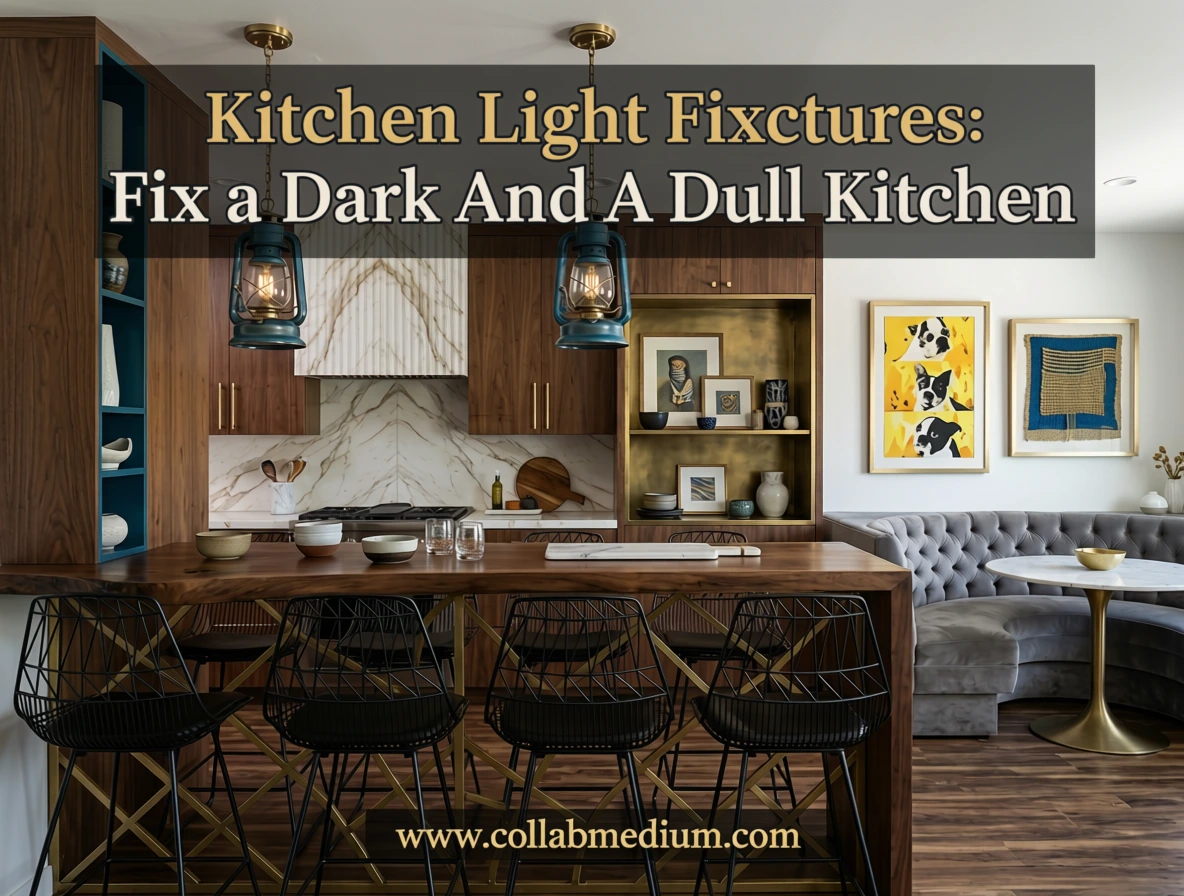
The right kitchen light fixtures can transform a flat, shadowy kitchen into a room you actually want to cook in. Most kitchens rely on a single overhead fixture, which leaves counters dim and faces in shadow while you chop and cook. The fix is layering three types of light: ambient, task, and accent, using LED kitchen light fixtures wherever possible. In 2026, a full kitchen lighting refresh typically costs between 600 and 2,500 dollars, depending on how many zones you update. I have planned lighting for dozens of home kitchens, and the same fixes solve most problems every time. This guide covers what kitchen light fixtures actually do, how to layer them, what they cost in 2026, and the mistakes that leave a kitchen looking worse after the upgrade.
What Are Kitchen Light Fixtures?
Kitchen light fixtures are any fixed lighting element mounted to the ceiling, wall, or underside of cabinets in your kitchen. That includes flush mounts, recessed cans, pendants, chandeliers, under-cabinet strips, and track heads. Light fixtures for kitchen spaces serve two jobs at once. They light the room, and they act as a design feature that sets the tone for the whole space.
A good set of kitchen light fixtures does not just brighten a countertop. It shapes how the entire kitchen feels, from a quick breakfast to a dinner party. That is why designers treat lighting as a core part of any indoor kitchen plan, right alongside cabinetry and countertops.
The Core Problem: Why Most Kitchens Feel Poorly Lit
Walk into an older home and you will usually find one thing wrong. A single central fixture tries to light the entire room by itself. That creates a flat wash of light in the middle and dark, shadowed zones near the counters and sink.
This single-source setup was standard for decades. It is no longer enough for how people actually use a kitchen today. Cooking, homework, video calls, and entertaining all happen in the same space, often at the same time. One ceiling light cannot serve all of those tasks well.
The result is a kitchen that feels dated even when the cabinets and counters are fine. Poor lighting also makes prep work harder and less safe, since shadows fall right across your cutting board.
Layering Your Kitchen Lighting the Right Way
Professional designers rely on a simple framework: layer ambient, task, and accent light instead of leaning on one fixture. This is the backbone of good kitchen lighting in 2026.
Ambient Kitchen Ceiling Lights
Kitchen ceiling lights provide the base layer of illumination. Recessed cans, flush mounts, or a statement chandelier fill the room with general light. Most kitchens need one recessed can for every four to six square feet of ceiling space to avoid dark corners.
Task Lighting Over Work Zones
This layer targets counters, the stove, and the sink. Under-cabinet LED strips are the standard here, since they throw light directly onto the counter without casting your own shadow across it. If you have an island, pendant kitchen light fixtures placed 30 to 36 inches above the counter give you focused light exactly where you chop and plate food. Our kitchen island guide covers island sizing and layout if you are planning both projects together.
Accent and Kitchen Table Light Fixtures
Accent lighting adds warmth and depth. Toe-kick LEDs, glass-front cabinet lighting, and wall sconces all fall into this category. Kitchen table light fixtures deserve their own attention here too. A pendant or small chandelier centered over a breakfast table or banquette gives that zone its own identity, separate from the main work area.
LED Kitchen Light Fixtures: Why They Are the 2026 Standard
LED kitchen light fixtures have essentially replaced incandescent and halogen options in new installs. According to the U.S. Environmental Protection Agency, LED lighting produces light up to 90 percent more efficiently than incandescent bulbs, and LED products typically last 15 to 25 times longer before their brightness fades.
That efficiency matters more in a kitchen than almost anywhere else in the house, since kitchen lights tend to run longer hours than lighting in a bedroom or hallway. Swapping five frequently used fixtures to LEDs can save a household real money over the life of the bulbs, and it cuts down on how often you are standing on a step stool changing a bulb.
Dimmable LED kitchen light fixtures also make the layering approach work better. You can run ambient light bright during meal prep, then dim everything down for a relaxed dinner, all from the same fixtures.
How Much Do Kitchen Light Fixtures Cost in 2026?
Cost depends on fixture type, how many zones you are updating, and whether an electrician needs to run new wiring. According to 2026 data from Angi, the national average light fixture installation runs about 589 dollars, with most projects landing between 158 and 1,021 dollars per fixture.
Here is a rough breakdown by fixture type.
| Fixture Type | Typical Installed Cost | Notes |
| Recessed can (per light) | $100 to $300 | Higher for remodels without attic access |
| Pendant set (2 to 3) | $150 to $450 | Common choice over islands and tables |
| Flush mount ceiling light | $100 to $250 | Simple ambient upgrade |
| Chandelier | $220 to $3,400 | Price scales with size and material |
| Under-cabinet LED strip | $150 to $500 | Priced per run of cabinets |
If you are budgeting a full kitchen project, this guide on which home improvements pay off the most puts lighting spending in context next to bigger-ticket renovations. Lighting upgrades rarely dominate a renovation budget, but they carry an outsized effect on how finished the whole kitchen feels.
Kitchen Lighting Ideas by Zone
A few kitchen lighting ideas consistently work well, no matter the layout.
Over the sink, a single recessed can or small flush mount solves the classic dark-corner problem. Over an island or peninsula, two or three mini pendants spaced evenly create both function and visual rhythm. Along the ceiling perimeter, indoor kitchen lights set on a dimmer let you shift from bright morning light to a softer evening mood. Inside glass-front cabinets, small puck lights turn dishware into part of the room’s décor instead of hiding it behind a door.
Indoor kitchen lighting works best when every zone has a clear job. Prep areas need bright, shadow-free light. Eating areas benefit from warmer, dimmable light. Trying to make one fixture do both jobs is where most kitchens fall short.
Common Kitchen Light Fixture Mistakes to Avoid
I see the same handful of mistakes on repeat.
- Relying on one central fixture and skipping task lighting entirely.
- Choosing a color temperature that clashes, like cool white task lights next to warm white pendants.
- Hanging pendants too high or too low over an island or table.
- Skipping dimmers, which makes a bright kitchen feel harsh at night.
- Ignoring existing wiring limits, then paying extra for last-minute electrical changes.
Many of these mistakes show up during larger renovations too. This breakdown of kitchen remodeling mistakes to avoid covers several more issues worth checking before you start demolition.
Pro Tips From a Decade of Lighting Projects
A few lessons have stuck with me across dozens of projects.
Match your color temperature across the whole kitchen, ideally between 2700K and 3000K for a warm, welcoming glow. Measure pendant height from the counter, not the floor, since counter height varies by a few inches from house to house. Add a dimmer to every fixture you install, even ambient ones, since it is the cheapest upgrade with the biggest impact on mood.
Here is the longer thought worth sitting with, since it shapes the whole plan before you buy a single fixture. Good kitchen lighting is not really about how many fixtures you install or how expensive they are. It is about matching each layer of light to an actual task that happens in that exact spot. A beautiful chandelier centered on the ceiling does almost nothing for the person chopping onions six feet away in their own shadow. A fifteen dollar under-cabinet LED strip solves that same problem instantly, for a fraction of the cost. That is why professional lighting designers start every project by mapping out where people actually stand and work, before they ever open a catalog of fixtures.
Tools and Platforms for Planning Indoor Kitchen Lighting
You do not need to guess at fixture placement. A few tools make planning far more accurate.
Lamps Plus and Build.com both offer kitchen-specific filters that let you shop by fixture type and ceiling height. Houzz and Pinterest are useful for collecting kitchen lighting ideas before you commit to a style. For layout math, free tools like the Lutron dimmer compatibility checker help confirm a fixture will actually work with the dimmer you want to pair it with, which avoids a common and frustrating return trip to the store.
Kitchen Lighting Ties Into the Rest of Your Indoor Kitchen
Lighting rarely works in isolation. The best kitchen light fixtures are chosen alongside cabinet finishes, countertop material, and even where an island sits in the room. Treat lighting as part of the whole indoor kitchen plan rather than a last-minute add-on, and the room reads as finished instead of patched together.
Frequently Asked Questions
What are the best kitchen light fixtures?
The best setup layers ambient ceiling lights, task lighting over counters, and accent lighting near cabinets or a table. No single fixture handles all three jobs well.
How many light fixtures does a kitchen need?
Most kitchens need one recessed can per four to six square feet of ceiling, plus dedicated task lighting over counters and any island or table.
Are LED kitchen light fixtures worth the extra cost?
Yes. LED fixtures use far less energy and last many times longer than incandescent options, which lowers both your electric bill and replacement costs.
What height should pendant lights hang over a kitchen island?
Hang pendant lights 30 to 36 inches above the counter surface, adjusted slightly for ceiling height and the size of the fixture itself.