
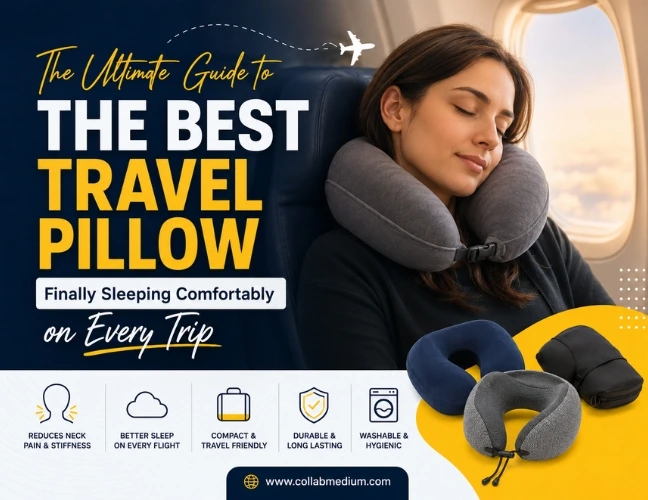
I used to land after every long flight with a neck so stiff I could barely turn my head. It took me years of trial and error to find the best travel pillow that actually works instead of just looking good on a store shelf. If you’re tired of arriving at your destination feeling wrecked, this guide walks you through everything I’ve learned.
Why Your Neck Hurts So Much After Traveling
Long trips put your body in positions it was never built for. You sit upright for hours, your head drifts forward, and your neck muscles fight gravity the entire time.
The numbers back this up. Research shows 65% of travelers report discomfort or pain during extended journeys. That’s not a small annoyance. That’s most of us.
It gets worse the longer you’re stuck in one seat. Studies on posture note that tilting your head forward while using a device can add up to 60 pounds of effective stress on the neck. Now stretch that position out over a six-hour flight and you can see why so many people step off a plane rubbing their shoulders.
Air travel isn’t slowing down either. More than 4.7 billion people flew globally in a single recent year, and average international flights now stretch between six and fourteen hours. That’s a long time to sit without support.
What Actually Makes a Good Travel Pillow
Not every pillow marketed as “travel-friendly” earns that label. I’ve tested foam, inflatable, and bead-filled versions, and each one solves a different problem.
Memory Foam Pillows
Memory foam molds to your neck and holds its shape through the whole trip. It’s the most popular choice for a reason. Data shows 55% of frequent flyers prefer memory foam travel pillows for long-haul flights because they reduce strain and last longer than cheaper alternatives.
Inflatable Pillows
These win on portability. You deflate them and toss them in a side pocket. Roughly 30% of travelers say portability is the deciding factor when picking a pillow, which explains why inflatable models keep gaining ground with backpackers and carry-on-only flyers.
Microbead Pillows
Microbead pillows are budget-friendly and flexible, though they don’t hold support as well over a full flight. I’d only recommend these for shorter trips or car rides.
What to Look For
A good travel pillow should check these boxes:
- Contours to your neck without collapsing
- Uses breathable, washable fabric
- Packs down small enough for a backpack or purse
- Comes with a clip or strap so it doesn’t slide off your neck mid-nap
Best Neck Pillow for Travel: A Quick Comparison
Here’s how the main categories stack up when you’re choosing the best neck pillow for travel based on your trip type.
| Pillow Type | Best For | Support Level | Packability |
| Memory Foam | Long-haul flights | High | Medium |
| Inflatable | Carry-on-only travelers | Medium | Excellent |
| Microbead | Short trips, road trips | Medium | Good |
| Wrap-Style | Side sleepers on planes | High | Medium |
Brands like Cabeau, Trtl, and Travelrest have built strong reputations in this space, and Cabeau in particular has added cooling gel layers for travelers heading to warmer climates. If you want a deeper breakdown of packing gear for a carry-on-only trip, check our guide on <u>packing light for international flights</u>, which pairs well with pillow selection.
Common Mistakes People Make When Buying a Travel Pillow
I’ve made most of these mistakes myself before I figured out what actually works.
Buying based on looks alone. A pillow can look sleek and still offer zero neck support. Always check the fill material first.
Ignoring size. A pillow that’s too bulky eats up carry-on space. Around 40% of travelers admit bulkiness is the reason they stop using a neck pillow altogether.
Skipping the strap or clip. Without one, your pillow slides off the second you doze off, which defeats the entire purpose.
Choosing cheap over durable. Low-cost pillows flatten fast. You’ll be shopping again within a few trips.
Forgetting about washability. You’re pressing your face into this thing for hours. A removable, machine-washable cover matters more than people think.
Pro Tips I’ve Picked Up From Years of Travel
After dozens of long-haul flights, a few small habits made the biggest difference for me.
I always pair my pillow with a compact blanket or scarf. It adds extra support around the sides of my neck when the pillow alone isn’t enough.
I clip my pillow to my bag instead of stuffing it inside. It saves time and keeps it from getting crushed under heavier items.
I test the firmness before buying whenever possible. A pillow that feels perfect in a store display can feel completely different after three hours on a plane.
I rotate pillows depending on the trip. My inflatable pillow comes out for short regional flights, while my memory foam pillow is reserved for anything over five hours. Choosing the right neck pillow for travel really does depend on the specific trip, not a single one-size-fits-all pick.
Frequently Asked Questions
What is the best travel pillow for long flights?
Memory foam travel pillows work best for long flights because they contour to your neck and hold support for hours. Brands like Cabeau and Trtl are popular choices among frequent flyers.
Are inflatable travel pillows worth it?
Inflatable travel pillows are worth it if packing space matters most to you. They offer solid support and deflate down to fit in a small bag pocket.
How do I stop my travel pillow from sliding off?
Choose a travel pillow with a built-in clip or strap. This keeps it secured to your neck or bag so it doesn’t fall off while you sleep.
What’s the difference between a travel pillow and a regular neck pillow?
A travel pillow is designed to be compact, portable, and travel-durable, while a regular neck pillow is built more for home or office use without portability features.