
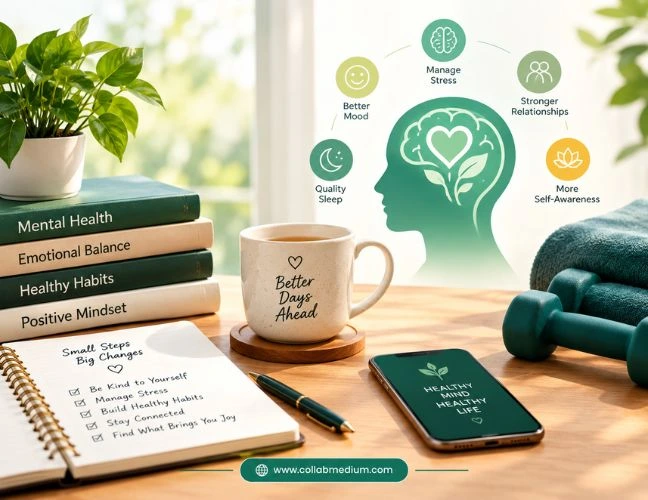
Behavioral health covers the connection between your mind, your emotions, and your everyday actions. If you want the short answer, here it is. Behavioral health improves when your daily routine, your sleep, your relationships, and your coping habits all work together instead of pulling against each other. It is not the same as simply avoiding a diagnosis. It is an active, ongoing process that shapes your mental health and your physical health at the same time.
I have spent years researching wellness trends and talking with people who felt stuck in unhealthy patterns. The pattern I see most often is this. People wait until a crisis hits before they take this side of their life seriously. This guide breaks down what actually works instead, so you can build a genuinely healthy life before a small problem grows into a bigger one.
What Is Behavioral Health? (Behavioral Health Meaning Explained)
So what does this term actually mean? The Substance Abuse and Mental Health Services Administration defines it as the connection between behaviors and the well being of the mind, body, and spirit. That includes substance use, stress management, mental health conditions, and the daily choices that either support or undermine your wellness. This definition has expanded quite a bit over the past decade. It used to focus mostly on mental illness and addiction treatment. Today, it also covers prevention, healthy routine building, and everyday emotional resilience.
Mental health meaning is often confused with the term, but the two are not identical. Mental health mainly refers to your emotional and psychological state. This broader category includes mental health, plus the habits, behaviors, and lifestyle choices that shape it. Sleep, nutrition, movement, and even how you spend your screen time all fall under this umbrella.
Why Behavioral Health Shapes Your Daily Life
Your daily life runs on more than willpower. It runs on the state of your behavioral health. When that foundation is strong, you handle setbacks without spiraling. You sleep better. You show up for work and relationships with more patience. When it is neglected, small stressors start to feel unmanageable fast.
According to the National Institute of Mental Health, more than one in five American adults lived with a mental illness in 2022, representing roughly 59.3 million people. That figure does not include the millions more who struggle with subclinical stress, burnout, or unhealthy coping patterns that never get formally diagnosed. If you want to understand the quieter side of this, it helps to review the non-observable warning signs a mental health condition is developing, since many people mask their struggles well.
The Core Problem: Why Most People Ignore Behavioral Health Until It Is Too Late
Here is the mistake I see constantly. People treat behavioral health like a light switch. They think they are either fine or in crisis, with nothing in between. That black-and-white thinking keeps people from addressing small issues before they grow. A little anxiety gets ignored for months. A bad sleep schedule turns into chronic exhaustion. By the time someone finally reaches out for help, the problem has compounded.
Cost is another barrier. Therapy and other similar services can run $100 to $250 per session without insurance. Many people skip care simply because they assume it is out of reach. Stigma still plays a role too, especially for men and older adults who were raised to associate emotional struggles with weakness rather than a normal part of daily life.
Practical Steps to Improve Your Behavioral Health
Improving your behavioral health does not require a total life overhaul. Small, consistent changes tend to outperform dramatic ones that fizzle out after two weeks.
Start by naming your stress triggers. Write them down for a week. Patterns show up fast once you track them on paper instead of just in your head.
Next, protect your sleep like it is non-negotiable. Poor sleep worsens nearly every symptom tied to this part of wellness, from irritability to poor decision-making.
Move your body daily, even if it is just a twenty-minute walk. Exercise remains one of the most well-researched tools for improving mood and reducing anxiety.
Build one honest relationship where you can talk without pretending everything is fine. Isolation quietly damages emotional stability more than most people realize.
Building a Healthy Routine That Actually Sticks
A healthy routine works best when it fits your actual life, not an idealized version of it. Anchor your day around two or three non-negotiables. A consistent wake time, a short movement break, and a wind-down period before bed cover the basics. A realistic healthy routine beats an ambitious one you abandon by Thursday.
Keep your routine flexible enough to survive a rough week. Rigid systems break under pressure. Flexible ones bend and keep going, which matters far more for long-term wellness than perfection ever will.
Behavioral Health and Your Intellectual Well-Being
This side of wellness is not only emotional. Your intellectual side matters too. Reading, learning a new skill, or working through a challenging problem keeps your mind engaged in ways that protect against decline. Intellectual stimulation reduces boredom-driven anxiety and gives your brain a sense of purpose that sits apart from daily stress.
Tools and Platforms That Support Better Well Being
Several tools make this kind of support more accessible than it was even five years ago. BetterHelp and Talkspace offer online therapy with licensed counselors, often at a lower cost than traditional in-person care. Headspace and Calm focus on meditation and stress reduction, which pairs well with therapy rather than replacing it. The SAMHSA National Helpline, reachable at 1-800-662-4357, connects callers with free, confidential referrals around the clock.
Employers increasingly offer Employee Assistance Programs, known as EAPs, which provide a set number of free counseling sessions. Check your benefits page before assuming you cannot afford help. For a wider look at building sustainable habits across sleep, nutrition, and stress, this guide to happy health and wellness rounds out the picture nicely.
Comparing Behavioral Health Services at a Glance
| Service Type | Best For | Average Cost | Typical Format |
| Individual Therapy | Anxiety, depression, life transitions | $100 to $250 per session | In-person or video |
| Online Therapy Platforms | Convenience, ongoing support | $60 to $100 per week | App-based messaging or video |
| Psychiatry / Medication Management | Diagnosed conditions needing medication | $150 to $300 per visit | In-person or telehealth |
| Support Groups | Shared experience, peer accountability | Often free or low-cost | In-person or virtual groups |
| Employee Assistance Programs | Short-term counseling through work | Free (limited sessions) | Phone or video referral |
Common Mistakes to Avoid
Waiting for a crisis before seeking help. Small issues are far easier to treat early than after months of neglect.
Comparing your progress to someone else’s timeline. Recovery and growth move at different speeds for different people.
Relying only on willpower instead of structure. A healthy routine outperforms motivation, which fades within days.
Ignoring physical health while focusing only on the mind. Sleep, diet, and movement directly affect emotional stability.
Choosing a provider based on price alone. A mismatched therapist or program wastes both time and money.
Pro Tips From Years of Researching Wellness
Tip 1: Track your mood for two weeks before starting any new program. That baseline data helps a provider spot patterns faster.
Tip 2: Ask providers about their specialty before booking. A generalist is not always the right fit for anxiety, grief, or addiction recovery.
Tip 3: Use free screening tools from Mental Health America to get a starting point before paying for a full evaluation.
Tip 4: Build recovery time into your calendar the same way you schedule meetings. Unscheduled rest rarely happens.
Tip 5: Revisit your support plan every few months. What worked during a stressful season may not fit your current daily life.
What Is Changing in Mental Wellness for 2026
A few shifts are reshaping this space heading into 2026. Telehealth counseling has become the default first step for many people rather than a backup option, especially in rural areas where in-person providers remain scarce. Insurance parity enforcement has also tightened, which means more plans are required to cover mental and emotional care at the same level as physical care.
Workplaces are paying closer attention too. More employers now train managers to recognize burnout early instead of waiting for performance to slip. Schools have followed a similar path, adding counselors and screening tools aimed at catching issues during childhood rather than adulthood.
Wearable devices that track sleep, heart rate variability, and activity levels are also feeding into this picture. They will not replace a therapist or physician, but they give people an early, data-backed nudge to check in with themselves before a rough patch turns into something harder to manage.
Behavioral Health for Families and Teens
Teenagers face unique pressures around social media, academic stress, and identity. Parents often notice changes in mood or sleep before a teen says anything out loud. Reviewing practical mental health tips for teens can help families spot early warning signs and open a conversation before things escalate.
Family routines matter here too. Shared meals, consistent bedtimes, and open conversation all support behavioral health across an entire household, not just one individual.
Frequently Asked Questions
What is behavioral health?
This term describes the connection between a person’s daily habits, emotions, and mental well being. It includes mental health, substance use, and lifestyle choices that shape overall wellness.
How is this different from mental health?
Mental health refers mainly to emotional and psychological well being. This is a broader category that includes mental health plus the habits, behaviors, and routines that influence it daily.
How do I know if I need this kind of support?
Persistent sleep changes, withdrawal from relationships, or ongoing anxiety are common signs. A licensed provider can help you evaluate symptoms and recommend next steps.
Is this type of treatment covered by insurance?
Most major insurance plans cover these services under mental health parity laws. Coverage details vary, so confirm your specific benefits before booking an appointment.