A book often begins as a promising thought rather than a complete plan. A writer may have a subject worth explaining, a fictional character, a collection of professional insights or several unfinished chapters. The difficulty lies in turning that material into a coherent manuscript and then preparing it for publication.
Writing is only one part of this journey. Authors must define the reader, organise chapters, maintain continuity, revise weak sections, create a suitable cover and prepare accurate publishing information. Each responsibility can introduce unfamiliar decisions, particularly for someone publishing a first book.
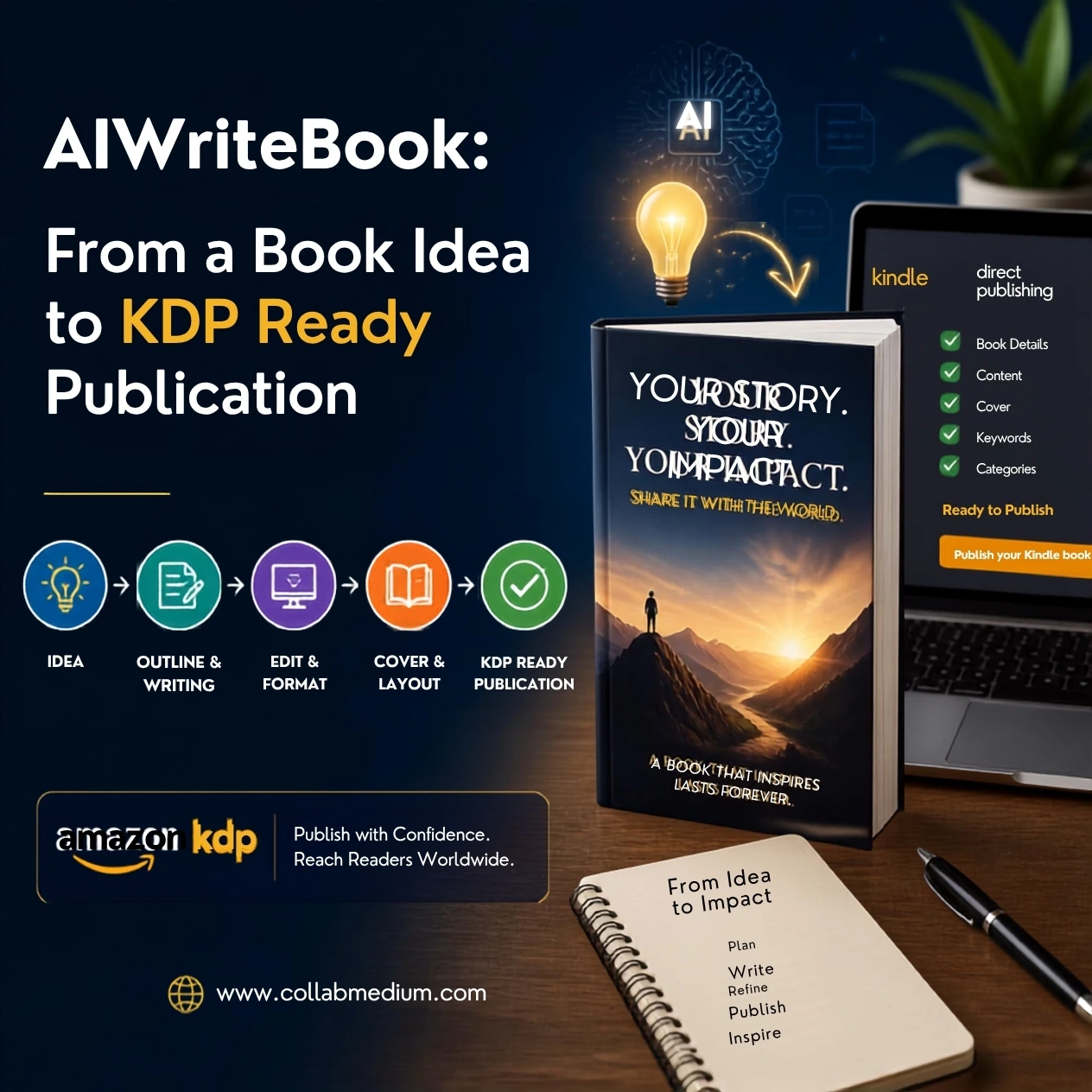
AIWriteBook brings these stages into one connected process. Authors can begin with an idea or existing material, develop the manuscript and prepare the files and metadata needed for Amazon KDP. The platform reduces practical complexity while leaving important creative and editorial decisions with the writer.
Developing a Clear Book from the Initial Idea
Defining the Reader and Central Promise
A strong book needs a clear reason to exist. Before generating chapters, the author should identify who the reader is and what that person should gain from the finished work.
For nonfiction, the promise may involve learning a method, understanding a difficult subject or solving a practical problem. Fiction requires a different kind of promise. The reader may expect suspense, emotional development, imaginative discovery or a satisfying journey through a particular genre.
Defining this purpose helps the writer decide which ideas belong in the book. Interesting material should still be removed if it distracts from the central experience. A focused concept gives every later stage a dependable direction.
Converting Notes into an Editable Outline
Many writers already possess useful material but lack a structure. Their ideas may be spread across notebooks, research files, presentations or partial drafts. Starting again would waste valuable work, yet arranging everything manually can feel overwhelming.
AIWriteBook allows an author to start with a description or import existing content. The platform can develop an editable outline according to the selected genre. A fiction outline may cover characters, settings and plot progression. A nonfiction plan may include lessons, exercises, reflections and practical actions.
The outline should be treated as a proposal rather than a fixed answer. Authors can rearrange chapters, remove repetition and introduce ideas based on their own knowledge. This review makes the structure more personal and prevents the manuscript from following a generic formula.
Establishing Voice, Evidence and Direction
Planning should also clarify how the book will sound. A professional guide may need a confident and practical tone, while a memoir may depend on reflection and emotional honesty. Fiction requires consistency in perspective, dialogue and atmosphere.
Writers can provide examples of their previous work to guide the style of new chapters. However, personal voice involves more than vocabulary. It comes from experience, judgement, humour, values and the way an author interprets events.
Nonfiction authors should also identify reliable evidence before drafting. Important claims need original sources, while personal experience should be presented honestly as experience rather than universal proof. Early research reduces the risk of rewriting entire chapters later.
Turning the Plan into a Publication Quality Manuscript
Drafting Chapters without Losing Continuity
A long manuscript can easily become inconsistent. Characters may behave differently between chapters, examples may be repeated and key arguments may disappear beneath less important details.
Working from a central outline helps each chapter serve a specific function. Before drafting a section, the author can review what the reader already knows, what must be introduced next and how the chapter advances the complete book.
AI support can speed up early drafting, but generated text should never be accepted automatically. The writer should examine whether every scene, explanation and example supports the original purpose. Careful involvement throughout the process produces a stronger result than waiting until the end to repair a disconnected manuscript.
Revising for Clarity, Accuracy and Originality
A finished first draft is not yet a finished book. Revision is where the author improves logic, removes repetition and replaces vague language with precise explanations.
Nonfiction writers should verify statistics, quotations, dates and technical claims using credible public sources. Fiction authors need to review character motivation, pacing, setting details and unresolved plot points. In both cases, the manuscript should be checked for accidental repetition and unsupported statements.
Authors should also add the knowledge that cannot come from a general writing system. Original frameworks, personal examples, informed opinions and meaningful observations make a book distinct. These elements demonstrate why the author is qualified to tell this story or teach this subject.
Creating the Cover and Correct Publishing Files
Readers usually encounter the cover before they read the description or sample. Its design should communicate the genre, subject and tone without becoming visually confusing. The title must remain readable at the small size used in Amazon search results.
The interior file requires equal attention. Headings, chapter breaks, page margins, images and navigation should remain consistent. Books containing illustrations, tables or complex layouts may require additional checks because formatting can change during conversion.
AIWriteBook supports cover development and export in EPUB, print PDF and DOCX formats. These options can reduce the number of separate applications an author needs, but every exported file should still be inspected before upload.
Preparing the Book for KDP and Reader Discovery
Researching Keywords That Reflect Reader Intent
A well written book can remain difficult to discover if its listing does not use language that potential readers recognise. Amazon keywords should accurately represent the book while reflecting the phrases readers may use during a search.
The KDP keyword research tool helps authors explore related phrases, estimated demand, competition and possible categories. This information can reveal whether a broad idea should be positioned around a more specific audience, theme or problem.
Keyword selection still requires judgement. Authors should avoid unrelated popular phrases, exaggerated quality claims and the names of competing writers. The strongest terms describe the actual book and connect it with readers who are likely to find the content relevant.
Aligning the Title, Description and Categories
Keywords work best when the complete listing communicates one consistent promise. The title and subtitle should clearly represent the subject or reading experience. The description should expand that promise by explaining what readers will discover without making claims the book cannot support.
Categories also influence where the book appears and which titles it competes against. The narrowest category is not always the best choice. It must still represent the content accurately and match the expectations of people browsing that section.
Authors should read the entire listing as a potential customer. If the cover suggests one genre while the description and categories suggest another, confusion may reduce interest even when individual elements look professional.
Completing the Final Quality and Rights Review
Before publication, the author should preview the ebook and print edition carefully. The table of contents should work, images should display correctly and no temporary notes should remain inside the manuscript. A physical proof can reveal spacing, colour and readability problems that are less obvious on a screen.
Writers must also confirm that they have permission to use every image, quotation and other protected element. Any required disclosure concerning generated content should be completed accurately during the KDP submission process.
The author should keep final copies of the manuscript, cover and publishing details. These records make future corrections easier and provide a clear reference if the book is later released in another format.
Read more Educational Articles : Please visit – https://collabmedium.com/category/education/
Conclusion
Moving from an idea to a KDP ready publication requires creative thinking, structured planning, careful revision and technical preparation. AIWriteBook brings these responsibilities into one workflow, helping authors develop an outline, create chapters, prepare visual elements and export suitable publishing files.
The platform can make the process more manageable, but it does not replace authorship. The writer remains responsible for originality, factual accuracy, reader value and final quality.
When technology handles repetitive production tasks and the author maintains editorial control, a book idea has a clearer path towards publication. The result is not simply a completed file, but a carefully developed work that is prepared to meet readers through Amazon KDP.