
The best budget airlines can get you across the country for under $100 — but only if you know which carriers to trust, which fees to watch for, and how to book smartly. This guide covers everything you need to fly cheap without regret.
I’ve watched too many people book a $49 fare and end up paying $180 by the time they checked a bag, chose a seat, and added a carry-on. That’s not a deal. That’s a trap.
Budget air travel in the United States is genuinely great right now — if you understand how it works. Low fare airlines have expanded routes, improved reliability, and in some cases added real perks. But they’ve also gotten more creative with fees. The gap between what you see advertised and what you actually pay can be surprisingly wide.
This guide cuts through all of it. I’ll walk you through the best budget airlines flying in the U.S. today, how to compare them honestly, what mistakes to avoid, and the tools that actually help you score the lowest fares available.
The Core Problem: Best Budget Airlines Are Cheap Until They Are Not
Here’s the honest reality. Most tourists search for flights based on the base fare alone. Airlines like Spirit, Frontier, and Allegiant have built their entire business model on an ultra-low advertised price that comes with almost nothing included.
That base fare covers your seat and that’s about it. No carry-on bag in many cases. No seat selection. No free snacks. No flexibility on changes or cancellations. And every add-on you need carries a fee that can quickly push your total past what a Southwest or even a Delta basic economy ticket would have cost.
This is not a criticism of budget airlines. It’s just the model. Once you understand it, you can work with it. The key is knowing upfront what you actually need for your specific trip, and then comparing the real all-in cost across carriers rather than chasing the headline number.
The Best Budget Airlines in the USA Right Now
Southwest Airlines
Southwest consistently ranks as one of the most tourist-friendly low fare airlines in the country. Two checked bags fly free on every ticket. No change fees on most fares. And their Wanna Get Away fares frequently hit $59 to $99 on popular domestic routes.
The trade-off is open seating. Southwest does not assign seats. You board in groups based on check-in time, which means early check-in (exactly 24 hours before departure) is essential for a decent seat. Still, for most tourists, the free bags alone make Southwest significantly cheaper than the true all-in cost of competitors.
Spirit Airlines
Spirit is the most aggressive ultra-low-cost carrier in the U.S. Their Big Front Seat fares occasionally drop to $29 to $49 on short routes. But Spirit charges for carry-on bags, seat selection, and even printing your boarding pass at the airport. If you travel with just a personal item and book everything in advance, Spirit can deliver genuinely low total costs. If you need flexibility or bags, the math shifts fast.
Frontier Airlines
Frontier operates a similar ultra-low-cost model to Spirit. Their Discount Den membership program offers members access to the cheapest fares on the site for around $60 per year. Frontier has improved on-time performance in recent years and serves over 100 U.S. destinations. Their “GoWild” all-you-can-fly pass became one of the more interesting budget travel offers in recent memory, though availability is seat-limited.
Allegiant Air
Allegiant is unique among budget carriers because it focuses almost entirely on leisure routes. They fly directly from smaller regional airports to vacation destinations like Las Vegas, Orlando, and Florida beach towns. This means skipping hub connections entirely, which saves time and often money. Allegiant’s fares can be remarkably low on routes where they have no competition. Their fee structure is similar to Spirit and Frontier, so packing light is essential.
Sun Country Airlines
Sun Country is a Minneapolis-based low-cost carrier that punches above its weight in terms of passenger experience. It offers one of the more reasonable fee structures among budget carriers, and its fares on leisure routes to warm weather destinations are consistently competitive. Sun Country also has a strong charter operation that keeps its overall costs low.
Breeze Airways
Breeze is a newer entry in the budget space, founded by JetBlue creator David Neeleman. It focuses on connecting mid-size cities that typically require connections on legacy carriers. Their “Nicer” and “Nicest” fare bundles include perks like Wi-Fi and seat selection, making Breeze one of the more transparent budget options for tourists who want a predictable total price.
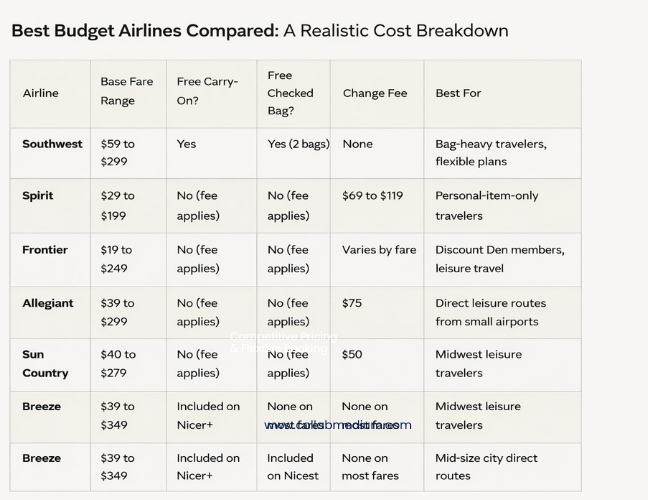
Best Budget Airlines Compared: A Realistic Cost Breakdown
| Airline | Base Fare Range | Free Carry-On? | Free Checked Bag? | Change Fee | Best For |
| Southwest | $59 to $299 | Yes | Yes (2 bags) | None | Bag-heavy tourist, flexible plans |
| Spirit | $29 to $199 | No (fee applies) | No (fee applies) | $69 to $119 | Personal-item-only tourist |
| Frontier | $19 to $249 | No (fee applies) | No (fee applies) | Varies by fare | Discount Den members, leisure travel |
| Allegiant | $39 to $299 | No (fee applies) | No (fee applies) | $75 | Direct leisure routes from small airports |
| Sun Country | $49 to $279 | No (fee applies) | No (fee applies) | $50 | Midwest leisure tourist |
| Breeze | $39 to $349 | Included on Nicer+ | Included on Nicest | None on most fares | Mid-size city direct routes |
How to Find the Lowest Fares That Are Actually Low
Use flight comparison tools the right way
Google Flights is the most powerful free tool for comparing low fare airlines in the U.S. Its calendar view shows the cheapest days to fly across an entire month at a glance. The price tracking feature sends alerts when fares drop on specific routes. I use it as my starting point for every trip.
Hopper is excellent for predictions. It looks over historical pricing data and tells you whether to buy now or wait. According to Hopper’s own data,tourists who follow its recommendations save an average of $50 per ticket on domestic flights.
Kayak, Scott’s Cheap Flights (now Going), and Secret Flying also surface deals that don’t always appear on Google Flights, particularly mistake fares and flash sales from budget carriers.
Book directly with the airline when possible
Third-party booking sites sometimes hide fees or present bundle packages that look like deals but aren’t. I almost always compare on aggregators and then book directly on the airline’s own website. This also protects you better if there’s a cancellation or schedule change, since you’re dealing directly with the carrier rather than a middleman.
Fly on the cheapest days
Tuesday and Wednesday remain the cheapest days to fly on most U.S. domestic routes. Early morning and late-night departures are consistently cheaper than midday flights. Flexibility on departure time can save you $40 to $80 on a single ticket without changing the airline at all.
Common Mistakes Tourists Make with Budget Airlines
Not calculating the true all-in cost
This is the biggest mistake by far. A $49 Spirit fare with a carry-on bag, seat selection, and a checked bag can easily become $160 or more. Before you commit to any budget airline ticket, add up every fee you’ll actually need. Then compare that total to what Southwest, JetBlue basic economy, or Delta main cabin would cost with the same inclusions. The results often surprise people.
Ignoring the airport location
Budget airlines frequently use secondary airports to keep costs down. Allegiant might fly into St. Pete-Clearwater instead of Tampa. Frontier might use a terminal at an airport that’s 45 minutes farther from your destination than the main hub. Add your ground transportation cost to the ticket price before calling it a deal.
Skipping travel insurance on non-refundable fares
Most budget airline fares are non-refundable and non-changeable at the base price tier. A medical emergency, a missed connection, or a family issue means losing that money entirely. Travel insurance on a $150 ticket costs around $15 to $25 and covers the kind of situations that turn cheap travel into an expensive lesson.
Waiting too long to book
The lowest fares from budget airlines typically appear four to six weeks before departure on domestic routes. According to the Airlines Reporting Corporation, the sweet spot for booking domestic U.S. flights is 21 to 60 days in advance. Book too early or too late, and you’ll miss the best window.
Tools and Platforms That Help You Fly for Less
Beyond Google Flights and Hopper, here are the platforms I rely on to find low fares consistently:
- Going (formerly Scott’s Cheap Flights) — Sends email alerts for mistake fares and flash sales. The premium tier costs around $49 per year and pays for itself quickly with even one deal used.
- Airfarewatchdog — Aggregates fare sales directly from airline websites, including budget carriers that don’t always appear on major search engines.
- Flightradar24 — Useful for checking airline on-time performance before booking a carrier you haven’t flown before.
- CardPointers or AwardWallet — If you carry any travel credit cards, these tools help you maximize points and miles across your bookings, including on budget carriers that participate in co-branded programs.
- Skiplagged — Shows hidden city fares where the cheapest ticket to your destination is actually a connection that passes through it. Use with awareness of the airline’s terms of service.
Lucky one who wants a deeper look at airline safety records, on-time performance, and consumer complaint data all in one place, the U.S. Department of Transportation’s Air Travel Consumer Report publishes monthly data on every major domestic carrier — including all the budget airlines covered in this guide.
Pro Tips for Getting the Most from best budget Airlines
After booking hundreds of budget flights, here’s what I’ve learned that most guides don’t tell you:
- Download the airline’s app before your trip. Budget carriers often push app-exclusive deals and allow mobile-only check-in features that save time at the airport.
- Pack in a personal item only when possible. The personal item (under-seat bag) is always free on every budget carrier. Mastering a packing cube system for a 40L backpack eliminates bag fees entirely.
- Join the airline’s free loyalty program even if you don’t fly them often. Points accumulate across purchases, and status upgrades occasionally unlock free bag waivers on future flights.
- Sign up for the airline’s email list. Budget carriers send flash sale emails to subscribers first, often with prices that never appear on third-party search engines.
- If your budget carrier flight gets cancelled, know your rights. Under U.S. DOT rules updated in 2024, airlines must offer cash refunds for cancelled or significantly delayed flights — even on non-refundable budget fares.
When Budget Airlines Are Worth It — and When They Are Not
Budget airlines make the most sense for short domestic routes where you travel light, your schedule is flexible, and the destination is leisure-focused. A $59 Frontier fare from Denver to Las Vegas for a weekend trip with just a backpack is a genuinely great deal. No argument there.
They make less sense for business travel where reliability, flexibility, and checked luggage are priorities. They also become less competitive on longer routes where the base fare advantage shrinks and the fee structure compounds. On a cross-country flight with a bag, a legacy carrier’s basic economy fare often beats the all-in budget airline total.
The right approach is to evaluate each specific trip rather than being loyal to one type of carrier. For some routes and travel styles, a budget airline saves you real money. For others, the lowest advertised fare is not the lowest actual cost.
Frequently Asked Questions
What is the best budget airline in the USA?
Southwest Airlines offers the best overall value for most U.S.tourist because two checked bags fly free and there are no change fees on most fares. Spirit and Frontier offer the absolute lowest base fares but charge for nearly every add-on. The best airline depends on your specific route, bag needs, and flexibility requirements.
Are budget airlines safe to fly?
Yes. All U.S. budget airlines are regulated by the FAA and must meet the same safety standards as legacy carriers like Delta and United. The U.S. Department of Transportation publishes monthly safety and on-time performance data for every domestic carrier, including all budget airlines, at its Air Travel Consumer Report page.
How do I find the lowest fares on budget airlines?
Use Google Flights’ calendar view to identify the cheapest travel dates, set up price alerts on routes you’re watching, and sign up for airline email lists to receive flash sale notifications first. Booking 21 to 60 days in advance on domestic routes typically yields the lowest available fares according to Airlines Reporting Corporation data.
Do budget airlines charge for carry-on bags?
Most ultra-low-cost carriers in the U.S. — including Spirit, Frontier, and Allegiant — charge fees for carry-on bags that go in the overhead bin. A personal item that fits under the seat in front of you is always free. Southwest is the main exception among budget airlines, allowing one carry-on and one personal item at no extra charge on all fares.