
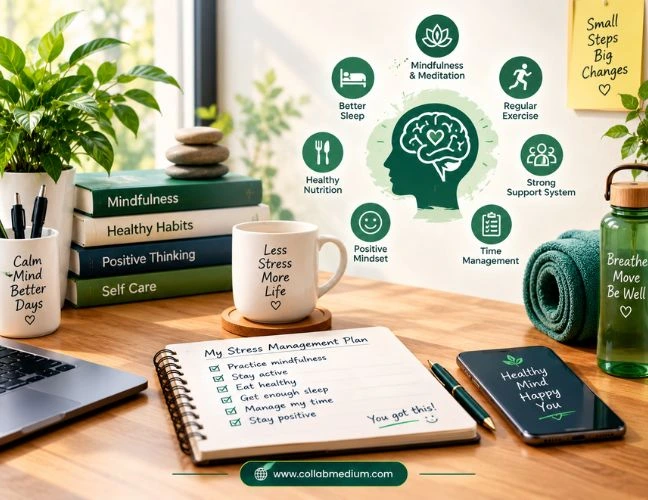
If you want the short answer, here it is. The most effective stress management strategies combine three things: better time management, daily exercise, and a small set of stress management techniques you actually repeat every day, like breathing drills, workload triage, and a consistent sleep routine. I have spent over a decade writing about workplace wellness, and the pattern never changes. People who build simple, repeatable stress management strategies into their week feel calmer within days, not months. This guide walks you through how to reduce stress step by step, using real data, practical tools, and mistakes I have watched readers make again and again. You do not need a retreat in the mountains. You need a plan you will actually follow.
Why Stress Management Strategies Matter More in 2026
Stress is not a personal failing. It is a measurable, national pattern. According to the American Psychological Association’s 2025 Stress in America survey, 62% of U.S. adults say societal division is a major stressor, and roughly half report feeling isolated or lacking companionship. That emotional strain does not stay in your head. The same research links high loneliness to a much greater chance of chronic illness.
Separately, Gallup’s Global Emotions Report found that about 49% of Americans experience significant daily stress, one of the highest rates among wealthy nations. Nearly one in two adults is walking around with a constant undercurrent of tension. That is exactly why stress management strategies matter so much right now. Work has changed, screens never really turn off, and the line between office hours and personal time keeps blurring. Without a plan for stress management, that blur turns into chronic pressure fast.
I bring this up first because most people try to figure out how to manage stress without understanding the scale of the problem. Once you see it is systemic and not just “you,” it gets easier to build stress management strategies instead of blaming yourself for feeling tired all the time.
The Core Problem: Why Ordinary Coping Falls Short
Most people do not lack willpower. They lack a system. They try one relaxation app for three days, quit, and conclude that stress management does not work for them. The real issue is usually one of two things: poor time management or an unmanaged workload. Both quietly compound until stress becomes the default state instead of the exception.
Signs of Stress You Should Never Brush Off
Recognizing the signs of stress early is the first real stress management strategy, even before you pick a technique. Common physical and behavioral signs of stress include tight shoulders, shallow breathing, trouble falling asleep, irritability over small things, and reaching for sugar or caffeine more than usual. Mentally, you might notice racing thoughts at night or a short fuse with people you love.
It is worth noting that stress and deeper mental health struggles can overlap, and they are not always obvious from the outside. If you want a closer look at symptoms that often go unnoticed, this breakdown of non-observable mental health warning signs is a useful companion read, especially if you are worried about someone who “seems fine” but is not.
How Workload Affects Your Health
Workload is one of the most underrated drivers of chronic stress. The APA’s 2025 report found that work is one of the most prominent sources of personal stress for American adults, with certain groups, including women and adults under 45, more likely to rate their stress as severe. Heavy, sustained workload does not just eat your evenings. It affects your health in concrete, physical ways: elevated cortisol, disrupted sleep, higher blood pressure, and a weaker immune response over time.
I have seen this play out with dozens of clients over the years. Someone takes on “just one more project,” tells themselves it is temporary, and six months later they are dealing with chest tightness and insomnia. Learning how workload affects your health is not abstract. It is the difference between a sustainable career and a burnout diagnosis.
How to Reduce Stress: Practical Stress Management Strategies That Actually Work
Here is where we get practical. These are the stress management strategies I recommend most often, in the order I suggest tackling them.
1. Master Time Management First
Time management is the foundation almost every other stress management strategy sits on. When your day has no structure, everything feels urgent, and urgency is exhausting. Block your calendar in chunks. Protect at least one 90-minute window for deep work. Say no to meetings that do not need you.
A simple time management fix I give every reader: write down your three real priorities each morning, not ten. Time management is not about doing more. It is about doing the right things without the constant background hum of “I’m behind.”
2. Build Daily Exercise Into Your Routine
Daily exercise is one of the most well-documented stress management techniques we have. The Mayo Clinic and CDC both note that physical activity lowers stress hormones and boosts endorphins, which improve mood almost immediately. You do not need a gym membership. A brisk 20-minute walk counts. What matters is consistency.
I tell readers to treat daily exercise like brushing their teeth: nonnegotiable, short, and not something you debate every morning. Once daily exercise becomes automatic, it quietly becomes one of your strongest habits without needing extra willpower.
3. Learn How to Manage Routine Without Rigid Perfectionism
Knowing how to manage routine is different from having a rigid schedule. A flexible routine gives your nervous system predictability, which lowers baseline stress, while still leaving room for real life. Anchor your day with two or three fixed points, like a wake time, a lunch break away from your desk, and a wind-down hour before bed.
This is one of the quieter tactics, but it works because your brain stops spending energy predicting what comes next. That saved energy is exactly what reduces the low-grade stress most people carry all day.
4. How to Manage Workload Before It Manages You
Knowing how to manage workload is a skill, not a personality trait. Start by listing every task you are carrying, then sort it into three buckets: must do today, can wait, and should be delegated or dropped. Most people are shocked at how much sits in the third bucket once they actually look.
If your workload keeps growing without pushback, that is a conversation for your manager, not something to absorb silently. A strong approach always includes boundaries at work, not just breathing exercises at home.
5. Try Proven Stress Management Techniques for the Moment
Some stress management techniques work in the moment, not just over weeks. Box breathing, four seconds in, four seconds hold, four seconds out, calms your nervous system within a minute. Journaling for five minutes before bed clears mental clutter. A short walk outside resets your focus better than another cup of coffee.
These are not gimmicks. They are quick, science-backed stress management strategies you can use between meetings, before a hard conversation, or right after a stressful email lands in your inbox.
Tools and Platforms That Support Stress Management Strategies
Technology can genuinely help if you pick the right tools. Apps like Headspace and Calm guide structured meditation. Todoist and Notion help with time management and workload tracking, which indirectly reduces stress by clearing mental clutter. Wearables like Whoop and the Apple Watch track heart rate variability, giving you an early warning sign of stress before you consciously feel it.
For a broader look at building sustainable wellness habits beyond stress alone, this behavioral health guide covers how physical and emotional health intersect, which pairs well with the stress management strategies covered here.
| Strategy | Best For | Time Needed | Difficulty |
| Time management blocking | Reducing daily overwhelm | 10 min setup | Easy |
| Daily exercise | Lowering stress hormones | 20 to 30 min | Easy |
| Workload triage | Preventing burnout | 15 min weekly | Medium |
| Box breathing | In-the-moment stress relief | 1 to 2 min | Easy |
| Routine anchoring | Long-term stability | Ongoing | Medium |
| Journaling | Mental clarity before sleep | 5 min | Easy |
Common Mistakes to Avoid
I see the same mistakes repeatedly when people try to apply stress management strategies for the first time.
Trying everything at once. Pick one or two stress management techniques and build consistency before adding more.
Treating stress management as a weekend activity. A single Sunday reset does not offset five chaotic weekdays.
Ignoring workload conversations. Breathing exercises will not fix a workload that is genuinely unmanageable.
Skipping sleep to “catch up.” Sleep debt undoes almost every other stress management strategy you attempt.
Comparing your stress to someone else’s. Stress is personal, and your approach should be too.
Pro Tips From a Decade of Writing About This Topic
After years of covering workplace wellness, a few things stand out. First, the people who succeed with stress management strategies track their stress the same way they track sleep or steps, with a quick daily rating from one to ten. Second, they schedule recovery the same way they schedule meetings, instead of hoping it happens. Third, they revisit their approach every few months, because what worked during a calm quarter will not always work during a chaotic one.
One more thing I always tell readers: ask for help before you are in crisis, not after. A therapist, a manager, or even a trusted coworker can spot patterns you cannot see in yourself.
FAQs
What are the most effective stress management strategies for beginners?
Start with time management, daily exercise, and one breathing technique. These three stress management strategies require little setup and show results within one to two weeks.
How do I know if my stress is workload related?
If your stress spikes on workdays and eases on days off, workload is likely a major driver. Track your tasks for a week to confirm the pattern clearly.
Can daily exercise really reduce stress that fast?
Yes. Physical activity lowers cortisol and raises endorphins almost immediately, and consistent daily exercise builds long-term resilience to stress over time.
How to reduce stress without spending money on apps or classes?
Free options work well. Walking, journaling, box breathing, and stricter time management cost nothing and remain some of the most reliable stress management strategies available.
When should I see a professional about stress?
See a professional if stress disrupts sleep, relationships, or work for more than two weeks, or if you notice signs of stress that do not improve with self-care.