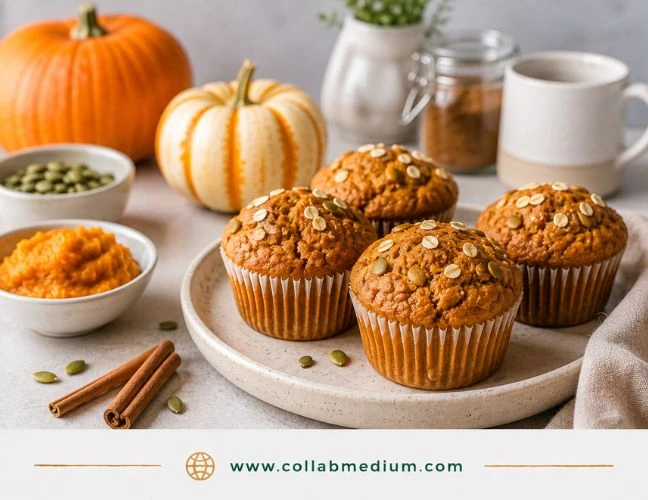
If you want a warm, filling breakfast without the sugar crash, healthy pumpkin muffins are the answer. I bake mine with real canned pumpkin, whole wheat flour, and just enough honey to keep them naturally sweet. Each muffin packs fiber, vitamin A, and slow-burning carbs that keep you full past 10 a.m. This recipe skips refined sugar and vegetable oil, so you get a moist, spiced muffin without the guilt. Below, I break down the exact ingredients, the mistakes that ruin most homemade batches, and pro tips from years of fall baking. I also cover how these muffins compare to store bought versions and which tools make the process faster. By the end, you will have a reliable recipe and a clear plan for weekly meal prep.
Why Healthy Pumpkin Muffins Solve a Real Breakfast Problem
Most mornings feel rushed. You grab a granola bar or skip breakfast entirely, and by 10 a.m. you are starving again. That is the core problem healthy pumpkin muffins solve. They travel well, need no utensils, and hold up in a lunch bag or car console for hours.
Store bought muffins often hide 400 or more calories and 30 grams of added sugar in a single serving. This recipe flips that script. A homemade batch made with canned pumpkin, oat flour, and Greek yogurt delivers real nutrients instead of empty calories. I started baking healthy pumpkin muffins after getting tired of bakery muffins that tasted like cake but left me hungry an hour later.
Beyond breakfast, these muffins work as an afternoon snack, a post-workout bite, or a lunchbox addition for kids. Because the batter uses whole grains instead of refined flour, the fiber content helps steady blood sugar rather than spiking it the way most sweet baked goods do.
Real Nutrition Behind Healthy Pumpkin Muffins
Pumpkin is the real reason this recipe earns its name. According to the USDA FoodData Central database, one cup of canned pumpkin contains more than 7 grams of fiber and supplies over 200 percent of your daily vitamin A needs. That single ingredient does most of the nutritional heavy lifting in every batch of healthy pumpkin muffins I bake.
Fiber matters more than most people realize. Adults need between 25 and 38 grams of fiber daily, and most Americans fall well short of that target. Adding pumpkin to the batter helps close that gap while also slowing sugar absorption, which keeps energy levels steadier through the morning. The beta carotene in pumpkin, the antioxidant responsible for its orange color, converts to vitamin A in the body and supports eye health and immune function. Some research also links potassium rich foods like pumpkin to better blood pressure control, which matters for long term heart health.
Here is how a typical homemade batch compares nutritionally to a bakery counter version.
| Nutrient (per muffin) | Homemade Healthy Pumpkin Muffins | Standard Bakery Muffin |
| Calories | 160-190 | 400-450 |
| Added sugar | 4-6 g | 28-32 g |
| Fiber | 3-4 g | 1 g or less |
| Fat | 5-7 g | 18-22 g |
| Vitamin A | High (from pumpkin) | Negligible |
This table shows why homemade muffins beat the bakery case on almost every measure that affects your energy and waistline.
The Best Healthy Pumpkin Muffins Recipe
I have tested this recipe dozens of times, and it holds up whether you bake it for weekend meal prep or a holiday brunch. Made this way, the muffins stay moist for four to five days.
Ingredients
- 1 cup canned pumpkin puree (not pumpkin pie filling)
- 1 3/4 cups whole wheat flour or oat flour
- 2 large eggs
- 1/3 cup honey or maple syrup
- 1/4 cup melted coconut oil or unsweetened applesauce
- 1 teaspoon baking soda
- 1 teaspoon cinnamon
- 1/2 teaspoon nutmeg
- 1/4 teaspoon ground cloves
- 1/2 teaspoon salt
- 1/3 cup chopped walnuts or pumpkin seeds, optional
Steps
- Preheat your oven to 350°F and line a 12-cup muffin tin with paper liners.
- Whisk the pumpkin puree, eggs, honey, and melted coconut oil together until smooth.
- In a separate bowl, combine the flour, baking soda, cinnamon, nutmeg, cloves, and salt.
- Fold the dry ingredients into the wet mixture just until combined. Overmixing makes the batter dense and rubbery.
- Stir in walnuts or pumpkin seeds if using.
- Divide the batter evenly among the muffin cups, filling each about three quarters full.
- Bake for 18 to 22 minutes, until a toothpick comes out clean.
- Cool the muffins in the pan for five minutes, then move them to a wire rack.
Smart Substitutions That Make Healthy Pumpkin Muffins Even Better
Small swaps can turn a good recipe into a great one. Replacing half the flour with oat flour adds extra fiber without changing the texture much. Swapping coconut oil for plain Greek yogurt cuts fat while keeping the crumb moist. If you want lower sugar, ripe mashed banana can replace up to half the honey.
For anyone managing blood sugar, almond flour works as a full substitute for wheat flour, though it produces a denser muffin. I also recommend flax eggs for a dairy free and egg free version of healthy pumpkin muffins, using one tablespoon of ground flaxseed mixed with three tablespoons of water per egg. Dark chocolate chips in small amounts can satisfy a sweet tooth without pushing added sugar too high.
If mornings are already a struggle, pairing muffins with other quick options helps round out the plate. The team at Collab Medium put together a solid list of healthy breakfast ideas that work well alongside a fresh batch when you need more protein at the table. Their guide to healthy lunch ideas is another useful resource if you are building out full daily meal plans and want muffins to fit into a bigger picture.
Tools and Platforms That Make Baking Easier
A few tools speed up the baking process on a regular basis. A silicone muffin pan releases muffins cleanly without tearing the bottoms. A kitchen scale, rather than measuring cups, gives more consistent results across batches, especially for flour, which is easy to over pack.
Apps like MyFitnessPal or Cronometer let you log a custom recipe so you know the exact calorie and macro count per muffin. If you bake often, a stand mixer with a paddle attachment saves time when doubling a batch for freezer stock. Reusable silicone liners also cut down on waste compared to paper liners, which adds up if you bake weekly. A digital oven thermometer helps too, since many home ovens run 15 to 25 degrees off their dial setting, and that gap can turn a perfect batch into a dry one.
Common Mistakes to Avoid
Even simple recipes go wrong in predictable ways. Here are the mistakes I see most often with homemade muffins.
- Using pumpkin pie filling instead of pure pumpkin puree. Pie filling already contains added sugar and spices, which throws off both flavor and nutrition counts.
- Overmixing the batter. This activates gluten and makes healthy pumpkin muffins tough instead of tender.
- Skipping the toothpick test. Underbaked muffins collapse as they cool, while overbaked ones dry out fast.
- Using cold eggs and pumpkin straight from the fridge. Room temperature ingredients blend more evenly and rise better.
- Ignoring pan size. A standard muffin tin holds 12 muffins at roughly 1/3 cup batter each. Overfilling causes muffin tops to sink in the middle.
- Skipping the rest step. Batter that goes straight into the oven without resting often bakes unevenly.
Pro Tips From My Own Kitchen
After years of trial and error, a few tricks consistently improve every batch. I always let the batter rest for five minutes before baking, which helps the flour hydrate and produces a softer crumb. Adding a tablespoon of cornstarch to the dry mix also gives a bakery style texture without extra fat.
I freeze extra muffins individually wrapped in parchment, then in a freezer bag. They thaw at room temperature in about two hours or in the microwave in 20 seconds. For extra protein, I sometimes stir a scoop of unflavored collagen or protein powder into the batter, which barely changes the texture but adds staying power through a busy morning. A light dusting of turbinado sugar on top before baking gives a crackly, bakery style crust without much added sugar overall.
If you meal prep on Sundays, doubling this recipe means breakfast is covered through Wednesday without touching the stove again. That single habit has done more for my mornings than any other change I have made in the kitchen this year.
FAQs
Are healthy pumpkin muffins actually good for weight loss?
Yes, when made with whole grains and less sugar, they are lower in calories and higher in fiber than bakery versions, which supports fullness and weight management goals.
Can I make healthy pumpkin muffins without eggs?
Yes, flax eggs or unsweetened applesauce work as reliable egg substitutes without changing the final texture much.
How long do healthy pumpkin muffins stay fresh?
Stored in an airtight container, they stay fresh at room temperature for four to five days or in the freezer for up to three months.
What can I use instead of white sugar in healthy pumpkin muffins?
Honey, maple syrup, or mashed ripe banana all work well as natural sweeteners while keeping added sugar low.