
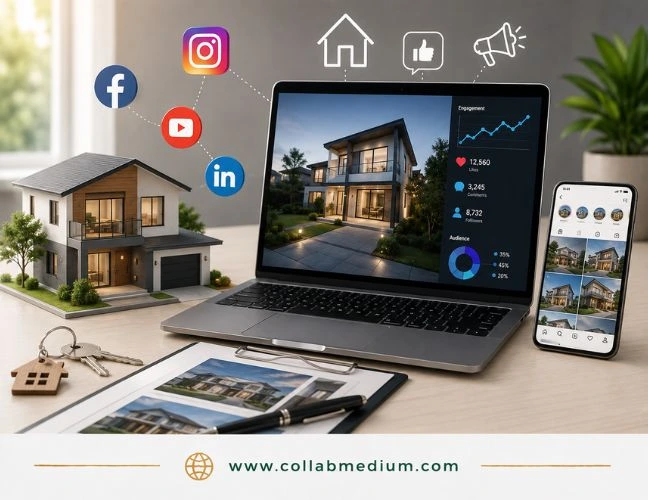
Social media marketing for real estate is the single biggest lever agents have for winning listings in 2026. Buyers now scroll Instagram and Facebook before they ever call an agent. If your brand is not showing up in that scroll, you are losing deals to someone who is.
I have spent years helping agents and brokerages build real social media marketing for real estate systems that actually generate leads. The agents who win are not the ones with the biggest budgets. They are the ones who show up consistently with content buyers actually want to see.
This guide breaks down exactly how to build social media marketing for real estate that works in 2026. You will get practical strategies, real platform tactics, common mistakes to avoid, and pro tips pulled from years of hands-on experience.
Why Social Media Marketing for Real Estate Matters More Than Ever
The real estate business has changed. Buyers do not wait for open houses anymore. They form opinions about an agent long before the first phone call. That shift is exactly why social media marketing for real estate has become non-negotiable for agents who want consistent business.
According to the National Association of Realtors, a large majority of real estate professionals now use social platforms as part of their daily prospecting routine, and agents who post consistently report stronger lead flow than those who rely on referrals alone.
That data tells a clear story. Marketing strategies for real estate that ignore social platforms leave real money on the table. Buyers and sellers both research agents online before signing anything.
What Buyers Actually Look For on Social Media
Home buyers scrolling Facebook or Instagram are not looking for generic listing photos. They want to see the agent behind the deal.
- Local knowledge: Buyers want proof you know the neighborhoods, schools, and market trends inside and out.
- Personality: People hire agents they like. Video content builds that connection faster than any flyer.
- Proof of results: Recent sales, client testimonials, and days-on-market numbers build trust quickly.
- Responsiveness: Buyers judge how fast you reply to a comment or a direct message. Slow customer service on social media costs you leads.
The Core Problem: Most Agents Post Without a Plan
Here is the mistake I see constantly. An agent posts a listing photo, gets a few likes, and moves on with their week. There is no plan behind it. There is no strategy connecting the post to an actual lead.
Random posting is the biggest reason social media marketing for real estate fails for so many agents. A few sporadic posts a month will never build the kind of audience that turns into closed transactions.
The agents who succeed treat their social channels like a real estate social network of their own. They build an audience the same way a small local business builds regulars. That is the mindset shift most agents never make.
Why Consistency Beats Perfection
You do not need cinematic video or a professional photographer for every post. You need to show up regularly. An agent who posts three times a week with an iPhone will usually outperform an agent who posts once a month with a perfect, polished reel.
Consistency is also why social media marketing for small businesses and real estate marketing share the same core lesson. Both depend on staying visible long enough for trust to build. A single great post rarely closes a deal. Twenty ordinary posts over two months often does.
How to Create a Social Media Marketing Strategy for Real Estate
Building a real strategy takes more than picking a platform and posting randomly. Here is the step-by-step approach that actually works.
- Step 1: Define your audience. First-time buyers, luxury sellers, and investors all respond to different content. Pick your primary audience before you post anything.
- Step 2: Build a content calendar. Plan listing content, local market updates, client stories, and behind-the-scenes posts at least two weeks ahead. This keeps your social media marketing content of real estate consistent instead of reactive.
- Step 3: Mix content types. Rotate between short-form video, carousel posts, and single images. Variety keeps your feed from feeling repetitive.
- Step 4: Track what performs. Check saves, shares, and comments weekly. Those numbers tell you what your audience actually wants more of.
- Step 5: Convert engagement into conversations. A comment or a like means nothing without a follow-up message. Move engaged followers into direct conversations quickly.
Agents who follow this framework tend to build a much stronger social media marketing for real estate presence within just a few months, even without a big advertising budget.
The Best Platforms for Real Estate Social Media Marketing
Not every platform deserves equal attention. Here is how the major platforms stack up for agents in 2026.
Real Estate Social Media Platforms: Quick Comparison
| Platform | Best Content Type | Primary Audience | Ideal Posting Frequency |
| Reels, carousels, stories | Buyers 25-44, visual browsers | 4-6 times per week | |
| Listings, local groups, live video | Sellers, older buyers, referrals | 3-5 times per week | |
| TikTok | Short-form video, market tips | First-time buyers, renters | 3-4 times per week |
| Market reports, professional wins | Investors, referral partners | 2-3 times per week | |
| YouTube | Neighborhood tours, long-form video | Relocation buyers, luxury clients | 1-2 times per week |
Facebook: Still the Backbone of Local Real Estate Marketing
Facebook remains a core piece of social media marketing for real estate, especially for local reach. Facebook Groups built around a neighborhood or a school district put agents directly in front of engaged local buyers and sellers.
Facebook Marketplace listings and boosted posts also extend reach beyond your existing followers. Older buyers and sellers, who often hold significant home equity, still spend meaningful time on the platform daily.
Instagram: Where Visual Storytelling Wins Listings
Instagram is where real estate social media marketing shines the brightest. Reels showing a walkthrough, a before-and-after renovation, or a quick neighborhood tour consistently outperform static photos.
Instagram Stories with polls and questions also build engagement fast. Agents who use Stories daily see far higher profile visits than agents who only post to the main feed occasionally.
Using Local SEO Alongside Your Social Strategy
Social platforms and search engines work together more than most agents realize. Local SEO helps your Google Business Profile and website show up when someone searches for an agent nearby. Social proof, reviews, and consistent posting all feed into that local visibility.
Pairing local SEO with social media marketing for real estate creates a feedback loop. A buyer sees your reel, checks your Google reviews, then finds your website ranking for their neighborhood search. Each channel reinforces the other.
If you want a deeper look at building a full-funnel approach beyond social platforms, our guide on top digital marketing agencies breaks down how professionals structure paid search, SEO, and social together for maximum reach.
Tools and Platforms That Make This Easier
You do not need an enormous budget to run strong social media marketing for real estate. A handful of tools cover most of what agents actually need.
- Canva simplifies graphic design for listing carousels and story templates, even without design experience.
- CapCut handles quick video editing for Reels and TikTok content directly from a phone.
- Later or Buffer schedules posts across platforms so you are not manually posting every single day.
- Meta Business Suite manages Facebook and Instagram together, including ad campaigns and message inboxes in one place.
Other industries face the same content challenges agents do. Our breakdown of healthcare social media marketing shows how a completely different, highly regulated industry builds trust and consistency online, and many of those same lessons apply directly to real estate.
Common Mistakes to Avoid
- Posting only listings. An account that only shows homes for sale feels like an ad feed. Mix in market updates, local tips, and personal stories.
- Ignoring comments and messages. Weak customer service on social media kills trust fast. Reply within a few hours whenever possible.
- Buying followers. Fake followers destroy your engagement rate and make future ads perform worse.
- Skipping video entirely. Static photos alone underperform video content across every major platform in 2026.
- Forgetting a call to action. Every post should tell the viewer what to do next, whether that is a comment, a message, or a link in bio.
Pro Tips From Years of Running Real Estate Accounts
- Tip 1: Batch your content. Film five to ten short videos in one afternoon instead of scrambling daily for new footage.
- Tip 2: Repurpose everything. One listing video can become a Reel, a Story, a Facebook post, and a YouTube Short with small edits.
- Tip 3: Feature real clients. A short testimonial video from a happy buyer builds more trust than any polished ad.
- Tip 4: Localize every caption. Mention the specific neighborhood, school district, or landmark. Generic captions get ignored.
- Tip 5: Study your competitors. Watch what other agents in your market post. Note what earns comments and adapt the format, not the content itself.
Why Small Agencies and Solo Agents Should Not Skip This
Solo agents often assume social media marketing for real estate only works for big teams with marketing budgets. That is not true. A single consistent agent with a phone camera can outperform a large team posting stale content.
The same principle applies across industries. Social media marketing for small businesses succeeds on consistency and authenticity, not budget size. Real estate is no different. A dentist’s office, a boutique, and a solo real estate agent all win the same way, by showing up regularly with content people actually want to watch.
Treat your following like a genuine real estate social network rather than a broadcast channel. Respond to comments. Ask questions in captions. Build relationships instead of just pushing listings.
Frequently Asked Questions
What is social media marketing for real estate?
Social media marketing for real estate is the use of platforms like Instagram, Facebook, and TikTok to promote listings, build an agent’s personal brand, and generate buyer and seller leads. It combines content strategy, local SEO, and consistent engagement.
Which social media platform works best for real estate agents?
Instagram and Facebook typically deliver the strongest results for most agents in 2026. Instagram wins on visual storytelling through Reels, while Facebook still leads for local groups and older sellers.
How often should real estate agents post on social media?
Most successful agents post four to six times per week across their main platforms. Consistency matters more than volume, so a sustainable schedule beats sporadic bursts of activity.
Can social media marketing replace traditional real estate marketing?
Social media marketing for real estate works best alongside traditional marketing strategies for real estate, not as a full replacement. Combining social content with local SEO, referrals, and open houses produces the strongest results.