
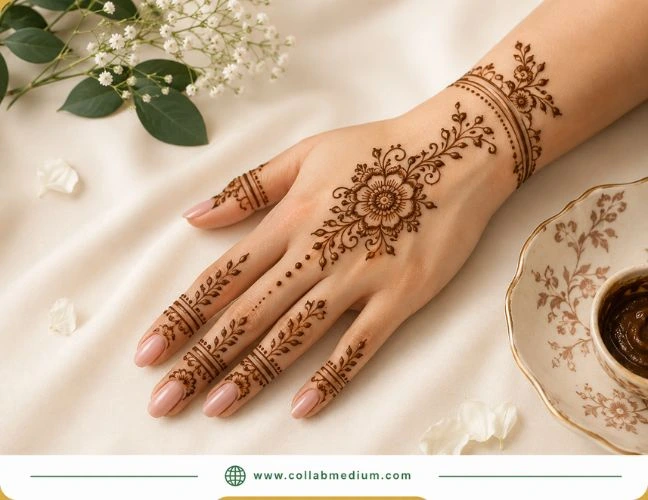
Picking a simple mehndi design sounds easy until you actually sit down to try one. I remember my first attempt. I watched three tutorials, ruined a cone of henna, and still ended up with smudged lines. Sound familiar?
Here is the good news. An easy henna pattern does not require years of training. It requires the right approach, the right tools, and a little patience. This guide walks you through everything I have learned after years of practicing, teaching, and writing about mehndi design.
Why Simple Mehndi Design Is Trending Right Now
Minimalism has taken over beauty trends everywhere, and mehndi design is no exception. Full-hand bridal patterns still have their place. But everyday women want something quicker and more wearable.
The global henna and mehndi market has grown steadily over the past few years, driven largely by social media exposure and rising interest in natural body art. North American demand alone has expanded as more brides, students, and professionals experiment with henna outside traditional festival seasons. That growth mirrors what I see constantly online. Search interest in easy, minimal henna work spikes every wedding season, every holiday, and every summer.
Fashion has played a huge role too. Influencers pair a light, minimal mehndi design with everyday outfits, not just formal wear. It has become an accessory, not just a tradition.
The Core Problem: Why a Simple Mehndi Design Still Feels Hard to Get Right
Here is the mistake most beginners make. They watch one polished video and expect the same result on their first try. That almost never happens.
Henna cones behave differently depending on brand, temperature, and paste consistency. A design that looks effortless in a video often took the artist years to master. Beginners get frustrated, give up, and assume this kind of pattern is simply not for them.
Common Struggles Beginners Face
Shaky lines top the list. Most people grip the cone too tightly or move too fast. Uneven henna color comes next. Poor paste quality or short sitting time leaves color patchy. Smudging ruins otherwise good work when people move their hands too soon.
Choosing overly complex patterns is another issue. Beginners often pick intricate references instead of a genuinely simple mehndi design suited to their skill level.
Practical Solutions: How to Master a Simple Mehndi Design at Home
Start small. Literally. Practice single elements first: dots, lines, teardrops, and small flowers. Once those feel natural, combine them into a full pattern.
Use tracing paper or a henna practice pad before applying anything to skin. This step alone saves hours of frustration. Draw the same pattern five or six times until your hand memorizes the motion.
Front Hand Simple Mehndi Design for Everyday Wear
A front hand simple mehndi design works best for daily life because it stays visible without covering your whole palm. Think of a single vine running from your wrist to your middle finger, with small flowers branching off. This style takes fifteen to twenty minutes and suits office days, casual outings, or a quiet afternoon at home.
I recommend this style to anyone easing into a happy routine that includes a little self-care. It is quick enough to fit before breakfast and still makes your hands feel special for the rest of the day.
Stylish Simple Mehndi Design Ideas for Special Occasions
A stylish simple mehndi design does not need to be complicated to look elevated. Try a mandala centerpiece on the back of the hand with a thin border instead of filling the entire palm. Geometric patterns, like repeating triangles or chevrons, also read as modern and photograph beautifully.
These patterns work well for parties, family gatherings, or when you want your hands to match a fresh outfit without spending hours in a mehndi artist’s chair.
Tools and Platforms That Make Mehndi Design Easier
Good results depend heavily on your tools. Here is a quick comparison of the resources I turn to most often.
| Tool or Platform | Best For | Why It Helps |
| Golecha Henna Cones | Beginners and daily practice | Consistent flow and reliable dark stain |
| Nupur Sundori Henna Cones | Bridal and detailed work | Fine tip control for intricate lines |
| Design inspiration | Endless easy henna design boards sorted by occasion | |
| YouTube tutorials | Step-by-step learning | Slow-motion hand movement breakdowns |
| Henna practice pads | Skill building | Reusable surface for repeated practice |
Apps like Pinterest and YouTube function almost like a personal design library. Search a phrase like mehndi design simple, and you will find thousands of reference images sorted by hand size, occasion, and skill level. Many artists also post short reels breaking a full mehndi design into three or four repeatable motifs, which makes copying the pattern at home far less intimidating.
Common Mistakes to Avoid With Mehndi Design
Applying henna with cold or dry hands slows down staining significantly. Warm, slightly moist skin absorbs color better.
Removing the paste too early is another frequent error. Most artists recommend leaving henna on for at least four to six hours, though overnight gives the deepest color. Scraping it off after thirty minutes leaves a light, uneven stain.
Skipping the lemon sugar mixture also hurts your results. A light dab of lemon juice and sugar after the paste dries helps seal moisture in and deepens the final color considerably.
Rushing the drying process is another slip-up. Fanning wet henna or blasting it with a hair dryer can crack the paste before it sets, which pulls color unevenly off the skin. Patience during those first thirty minutes matters more than most people expect.
Finally, avoid designs that do not match the occasion. A heavy bridal-style pattern feels out of place for a regular Tuesday, while a design that is too plain can feel underwhelming for a celebration.
Pro Tips From Years of Practicing Mehndi Design
Tip 1: Test the cone on paper first. Every cone flows differently. A quick test on paper prevents surprises on skin.
Tip 2: Keep your non-drawing hand steady. Rest your wrist on a table or your knee. Stability matters more than speed.
Tip 3: Layer thin lines rather than thick blobs. Thin, confident lines dry faster and look cleaner than thick, wet strokes.
Tip 4: Store leftover cones in the freezer. Wrapped tightly, a henna cone can last weeks longer without drying out.
Tip 5: Build a folder of your favorite references. Save your best henna design finds so you are never starting from scratch before an event.
Simple Mehndi Design as Part of Your Happy Routine
I genuinely believe this kind of minimal henna art belongs in a happy routine, not just a wedding checklist. Applying henna is quiet, repetitive work. It slows you down in a good way.
Many women describe the process as a small pleasure for myself. Twenty minutes with a henna cone can feel like a mini reset in an otherwise packed day. It fits naturally into a daily life routine, whether that means a Sunday evening ritual or a quick design before a video call with friends.
A smiley life is often built from small, intentional habits like this one. A simple mehndi design costs little, takes minutes, and leaves you with something pretty to look at for over a week. Add it to your happy life checklist alongside your morning coffee or evening walk.
For more Interesting articles , please visit : https://collabmedium.com/category/lifestyle/
Celebrate Independence Day and Other Occasions With Mehndi Design
Mehndi design is not reserved for weddings anymore. People celebrate Independence Day, birthdays, graduations, and casual weekend get-togethers with a fresh design on their hands.
Red, white, and blue themed patterns have become popular around patriotic holidays in the United States, blending cultural art with local celebration. A simple mehndi design featuring stars or small flag motifs adds a festive touch without looking costume-like.
The Christian Science Monitor has documented how henna body art spread from a handful of coastal cities into mainstream American culture, a shift that The Christian Science Monitor traced back to celebrity influence and everyday salons offering it as fun, wearable fashion. That shift explains why so many non-South Asian households now keep henna cones on hand for holidays and parties.
Frequently Asked Questions
What is a simple mehndi design?
A simple mehndi design uses minimal lines, dots, and small motifs instead of full coverage patterns. It typically takes fifteen to thirty minutes and suits everyday wear or casual occasions.
How long does a simple henna pattern last?
A well-applied simple henna pattern usually lasts one to two weeks. Stain depth depends on paste quality, skin type, and how long you leave the paste on before removing it.
Can beginners do easy mehndi at home?
Yes, beginners can absolutely learn easy mehndi at home with practice. Starting with basic elements like dots and lines before attempting full patterns makes the learning curve much easier.
What is the best mehndi design for daily use?
A front hand design with a single vine or small floral cluster works best for daily use. It stays subtle enough for work or school while still looking polished.