
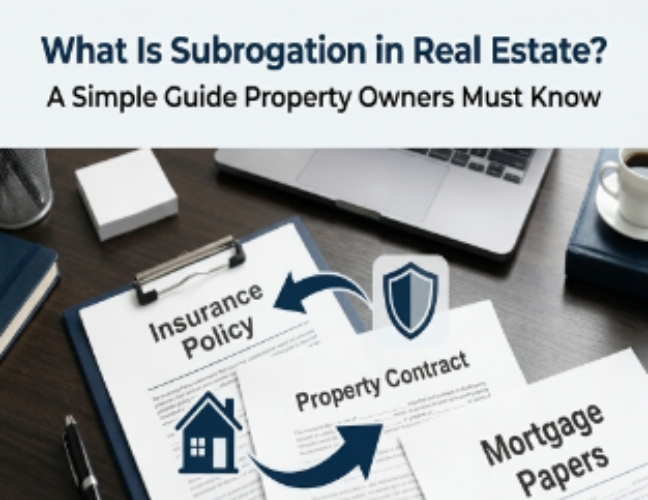
Subrogation in real estate is one of the most misunderstood legal concepts in property ownership — yet it directly affects how insurance claims, mortgage disputes, and title issues get resolved. This guide breaks it down completely so you know exactly what it means, when it applies, and how to protect yourself.
Most homeowners sign documents containing the word “subrogation” without ever asking what it means. I’ve seen this happen in mortgage closings, homeowner’s insurance policies, title insurance agreements, and lease contracts. People nod along, sign the line, and move on.
That’s understandable. Real estate transactions come loaded with legal terminology that can feel overwhelming. But subrogation is one of those concepts that actually matters in a very practical way — especially when a property loss, a disputed claim, or a financial recovery situation arises. Skipping past it can cost you real money.
Let me walk you through exactly what subrogation is, how it works in the real estate context, and what every property buyer, homeowner, landlord, and investor in the U.S. needs to understand before it ever becomes relevant to them.
What Is Subrogation in Real Estate?
Subrogation is a legal right that allows one party — typically an insurance company or a lender — to step into the shoes of another party after paying out a claim or loss. In plain terms, it means the paying party gains the legal right to pursue whoever caused the loss in the first place.
Here’s the simplest way to think about it. Your home suffers water damage because a contractor next door caused a pipe to burst on your property. Your homeowner’s insurance company pays you for the damage. Under subrogation rights, your insurer can then turn around and sue the contractor directly to recover what it paid you.
You get made whole quickly. Your insurer gets its money back from the actual responsible party. The contractor bears the financial consequence of the damage they caused. That is subrogation working exactly as intended.
In the real estate world, subrogation shows up in several specific contexts — homeowner’s insurance, title insurance, mortgage lending, and landlord-tenant relationships — and each one works slightly differently.
How Subrogation Works in Different Real Estate Contexts
Subrogation in Real Estate of homeowner’s insurance
This is the most common form of subrogation that property owners encounter. When your homeowner’s insurance pays out a claim for damage caused by a third party — a negligent contractor, a neighbor’s tree falling on your roof, a burst pipe from an adjacent unit in a condo building — your insurer acquires subrogation rights against that responsible party.
You, as the homeowner, generally do not need to do anything. The insurer handles the recovery process. But here’s the critical detail: you cannot take any action that undermines your insurer’s subrogation rights. If you sign a release of liability with the contractor before your insurer has recovered its money, you may have just waived your insurance company’s ability to collect. That can create a serious legal and financial problem for you.
Subrogation in title insurance
Title insurance protects buyers and lenders from losses that arise from defects in a property’s ownership history — unpaid liens, forged deeds, undisclosed heirs, recording errors, and similar issues. When a title insurance company pays a claim, it steps into the buyer’s legal position and pursues the party responsible for the title defect.
For example, if a previous owner failed to disclose a contractor lien that later comes to light after closing, and your title insurer pays to resolve it, the insurer then has subrogation rights to recover that money from the seller or their title attorney who missed the issue. Companies like First American Title, Fidelity National Title, and Old Republic Title all operate active subrogation recovery programs as part of their standard title insurance operations.
Subrogation in mortgage lending
When a lender pays off a senior debt on behalf of a borrower to protect its own mortgage position, it can acquire subrogation rights against the borrower or other parties involved. This situation most commonly arises when a property goes to foreclosure and there are competing claims from multiple lien holders. Lender subrogation protects the mortgage company’s financial position by allowing it to recover costs from the responsible parties in the transaction.
Subrogation in landlord-tenant relationships
Leases frequently include subrogation clauses that define what happens when property damage occurs and insurance pays out. A waiver of subrogation clause — extremely common in commercial real estate leases — means the insurance company gives up its right to sue the tenant even if the tenant caused the damage. This waiver protects tenant-landlord relationships by preventing insurers from pursuing tenants for covered losses. In residential leases, subrogation clauses are less common but still appear in some states and lease formats.
Real-World Example
A restaurant tenant in a Dallas commercial building accidentally starts a kitchen fire that damages the landlord’s property. The landlord’s property insurer pays $85,000 for repairs. Without a waiver of subrogation in the lease, the insurer could sue the tenant to recover that $85,000 — potentially bankrupting a small business. With a mutual waiver of subrogation clause, both parties’ insurers agree not to pursue each other’s clients, protecting the tenant-landlord relationship and keeping the commercial lease viable.
Subrogation vs. Related Real Estate Legal Terms
| Term | What It Means | How It Relates to Subrogation | Common in Which Documents |
| Subrogation | One party’s legal right to pursue a third party after paying another’s loss | The core concept | Insurance policies, mortgage agreements, leases |
| Waiver of Subrogation | Contractual agreement to give up subrogation rights | Limits or eliminates subrogation claims | Commercial leases, construction contracts |
| Assignment of Rights | Formal transfer of legal claim from one party to another | Mechanism that enables subrogation to occur | Insurance policies, settlement agreements |
| Indemnification | Agreement to compensate another party for specific losses | Often paired with subrogation clauses in contracts | Leases, construction agreements, purchase contracts |
| Lien Subrogation | A lender’s right to take the priority position of a paid-off lien | Specific type of subrogation in mortgage law | Mortgage documents, refinance agreements |
The Core Problem: Why Subrogation Catches Property Owners Off Guard
Here’s the situation I see repeatedly. A homeowner experiences property damage. Their insurer pays out the claim quickly and fairly. The homeowner, relieved and grateful, then settles directly with the neighbor or contractor who caused the damage — signing a release agreement — without realizing the insurer still has active subrogation rights.
Now the insurer can no longer recover its payout from the responsible party because the homeowner already released them from liability. In many states, this gives the insurance company legal grounds to reduce or deny future claims and potentially seek reimbursement from the homeowner for the subrogation recovery they lost.
The exact same problem occurs when tenants sign lease addendums that inadvertently waive insurance protections without their insurer’s knowledge. And it happens when buyers accept title with undisclosed encumbrances that later trigger title insurance claims their attorney failed to flag.
The root of the problem is always the same: subrogation is invisible until it becomes expensive.
What a Waiver of Subrogation Means and When You Need One
A waiver of subrogation is a provision in an insurance policy or a contract where the insurer agrees — in advance — to give up its right to pursue third parties for losses it covers. In real estate, these waivers are standard in commercial leases and construction contracts. They are negotiated items in many residential lease agreements in certain states.
Here’s when you need to pay close attention to whether a waiver of subrogation is in place or absent:
- Before signing any commercial lease as a tenant — standard practice is to require mutual waivers of subrogation between landlord and tenant
- When entering a construction or renovation contract on your property — contractors and property owners should both carry insurance with mutual waivers
- When refinancing a mortgage where a new lender might claim superior lien position through equitable subrogation arguments
- When reviewing a purchase and sale agreement that includes indemnification language related to property condition
Important Warning
Never sign a settlement agreement, liability release, or damage waiver with any third party who caused property damage before contacting your insurance company first. Doing so without your insurer’s consent can compromise their subrogation rights — and in some states, your insurer can legally seek reimbursement from you for the recovery amount they lost as a result.
Common Subrogation Mistakes Property Owners Make
Settling directly with the responsible party too quickly
This is the most damaging and most common mistake. After a neighbor’s tree falls on your roof or a contractor causes flooding, the natural instinct is to resolve the dispute quickly and move on. But settling and signing a release before your insurer has completed its subrogation recovery process can create serious legal liability for you. Always loop in your insurance adjuster before accepting any payment or signing any release from a third party.
Not reading the subrogation clause in your policy
Every standard homeowner’s insurance policy includes a subrogation provision. Most people have never read it. That clause defines exactly what rights your insurer has, what obligations you carry, and what actions can void coverage. Spending 15 minutes reading it now is far better than discovering its terms during an active claim dispute.
Confusing subrogation with assignment
These are related but different legal concepts. Subrogation is an automatic right that arises by law or contract after a payment is made. Assignment is a deliberate, formal transfer of legal rights from one party to another. In some complex real estate transactions, attorneys and insurers use them interchangeably when they shouldn’t — which can create disputes about who actually holds the right to pursue recovery.
Skipping waiver of subrogation endorsements in commercial leases
Commercial tenants who skip this step take on enormous unnecessary risk. Without a mutual waiver of subrogation in your commercial lease, your landlord’s insurance company can sue you personally for any loss they paid out that your business caused — even if you had nothing to do with the actual incident. This is not a theoretical risk. It happens regularly in commercial property disputes across U.S. jurisdictions.
Pro tip from experience
When reviewing any real estate contract — whether a lease, a purchase agreement, or a construction contract — search the document for the words “subrogation,” “waiver,” and “indemnification” specifically. These three terms almost always appear together and define your full risk exposure in that agreement. If you find them and don’t fully understand what they mean together, get a real estate attorney to review the document before you sign.
How Subrogation Affects Real Estate Investors and Landlords Specifically
For real estate investors managing rental properties, subrogation is a daily operational reality — even if most investors don’t realize it. Every landlord insurance policy carries subrogation provisions. Every commercial lease you sign or offer to tenants should address subrogation waivers explicitly.
Property managers who handle multiple units across large portfolios — using platforms like AppFolio, Buildium, or Yardi — should ensure that their standard lease templates include appropriate mutual waiver of subrogation language. The absence of this language in a lease is a legal vulnerability that a tenant’s insurer can exploit after a covered loss event.
Real estate investors who use hard money loans or private lending should also understand equitable subrogation — the principle that allows a new lender who pays off a senior debt to take on that senior lender’s priority lien position. This matters significantly in refinance situations and in disputes involving multiple lien holders on the same property.
Practical Steps to Protect Yourself from Subrogation Issues
Managing subrogation risk in real estate is not complicated once you know what to look for. Here’s a practical checklist based on your role in the transaction:
| Your Role | Key Subrogation Risks | Protective Actions |
| Homeowner | Settling with third parties before insurer recovers | Always notify insurer before signing any damage release |
| Commercial Tenant | Landlord insurer pursuing you for covered losses | Require mutual waiver of subrogation in every lease |
| Landlord / Investor | Unenforceable subrogation rights due to lease gaps | Use standard lease templates reviewed by a real estate attorney |
| Buyer | Title defects triggering post-closing subrogation claims | Buy both owner’s and lender’s title insurance at closing |
| Contractor / Builder | Insurance company pursuit after covered property damage | Include waiver of subrogation in all construction contracts |
Tools and Resources for Understanding Subrogation in Your Real Estate Transactions
You don’t need to become a legal expert on subrogation. But you do need reliable resources and the right professionals in your corner. Here’s what actually helps:
- A licensed real estate attorney — The single most valuable resource for reviewing subrogation language in contracts, leases, and insurance policies before you sign
- Your insurance broker — Can explain your policy’s specific subrogation provisions and add waiver endorsements where appropriate
- First American Title or Fidelity National Title — Both offer educational resources on title insurance and subrogation rights for buyers and lenders
- AppFolio and Buildium — Property management platforms that allow landlords to upload attorney-reviewed lease templates with proper subrogation language across their entire portfolio
- The American Bar Association’s real estate law resources — Publishes plain-language guides on subrogation, indemnification, and title insurance for property owners and real estate professionals
For a comprehensive and authoritative overview of how subrogation rights apply across different insurance contexts — including specific guidance on homeowner’s policies, title insurance, and commercial property coverage — the Insurance Information Institute’s policyholder resource library is one of the most reliable and clearly written public resources available to U.S. property owners and real estate professionals.
Pro tip from experience
If you’re a real estate investor or landlord managing multiple properties, consider working with a single insurance broker who specializes in real estate investment portfolios. These specialists build subrogation waivers, umbrella coverage, and coordinated policy language into every property’s coverage structure from day one — rather than treating each policy as a standalone document that may conflict with your lease terms.
Frequently Asked Questions
What is subrogation in real estate?
Subrogation in real estate is a legal right that allows an insurance company or lender to step into the legal position of a property owner after paying out a claim or loss, and then pursue the third party responsible for that loss to recover the amount paid. It appears in homeowner’s insurance policies, title insurance agreements, mortgage documents, and commercial leases. The goal of subrogation is to ensure that the party who actually caused a financial loss — not the insurer — ultimately bears the cost.
What is a waiver of subrogation in a real estate lease?
A waiver of subrogation in a real estate lease is a contractual provision where an insurance company agrees in advance to give up its right to pursue the other party for losses it covers. In commercial real estate, mutual waivers of subrogation between landlords and tenants are standard practice. The waiver protects both parties from being sued by the other’s insurer after a covered property loss event, preserving the landlord-tenant relationship and reducing litigation risk for all parties involved.
How does subrogation affect homeowners after an insurance claim?
After your homeowner’s insurance pays a claim for damage caused by a third party, your insurer acquires subrogation rights to pursue that responsible party for reimbursement. As the homeowner, you must not take any action that compromises those rights — particularly signing a release or settlement agreement with the responsible party without your insurer’s knowledge. Doing so can expose you to legal liability and may affect your future coverage rights under your policy.
Does title insurance involve subrogation?
{
“@context”: “https://schema.org”,
“@type”: “Article”,
“headline”: “What Is Subrogation in Real Estate?”,
“description”: “Learn what subrogation in real estate means, how it works, and how property owners can protect themselves.”,
“image”: “https://www.collabmedium.com/wp-content/uploads/what-is-subrogation-in-real-estate.webp”,
“author”: {
“@type”: “Organization”,
“name”: “CollabMedium”
},
“publisher”: {
“@type”: “Organization”,
“name”: “CollabMedium”,
“logo”: {
“@type”: “ImageObject”,
“url”: “https://www.collabmedium.com/logo.png”
}
},
“datePublished”: “2026-04-20T10:00:00+05:00”,
“dateModified”: “2026-04-21T12:00:00+05:00”,
“mainEntityOfPage”: {
“@type”: “WebPage”,
“@id”: “https://www.collabmedium.com/what-is-subrogation-in-real-estate/”
}
}