Ever tried a core move that looks easy but burns like crazy? That’s the dead bug exercise. You lie on your back and move your arms and legs slowly. Sounds simple, right? It isn’t. This move trains your deep core muscles without stressing your lower back. It takes just a few minutes and needs no equipment. In this guide, you’ll learn what it is, why it works, and how to do it with proper form. You’ll also see the mistakes that hold people back. Ready to build a steadier core? Let’s start.
What Is a Dead Bug Exercise?
Understanding the Basics
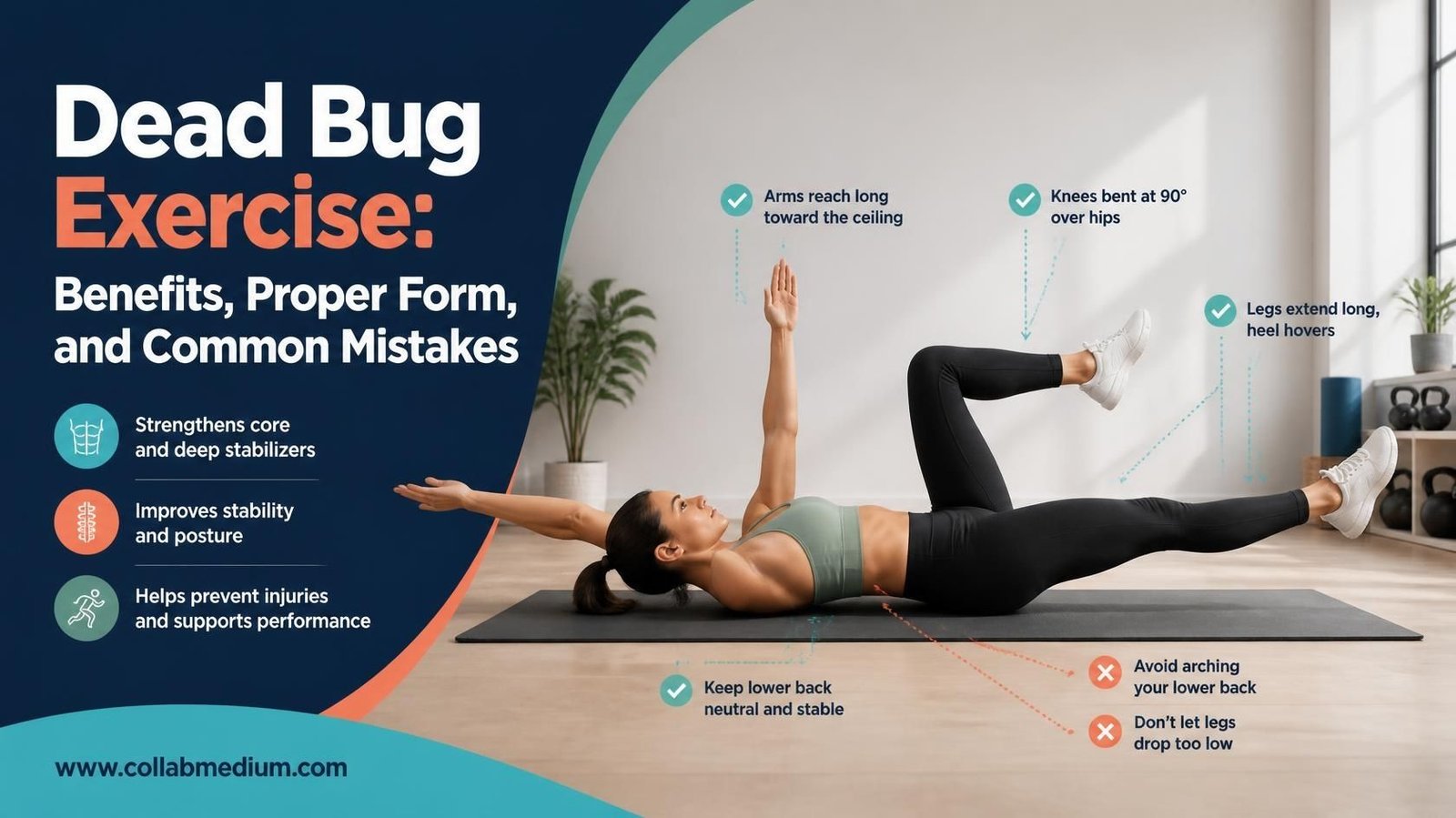
So, what is a dead bug exercise? It’s a core move you do lying on your back. Your arms point to the ceiling and your knees sit bent above your hips. You then lower the opposite arm and leg, like a bug flipped over. The name comes from that look.
Meeting the Muscles It Works
The dead bugs exercise targets your deep core. Harvard Health notes it works all the abdominal muscles, even the deep transversus abdominis. That deep muscle acts like a natural corset for your spine. This is why the dead bug core exercise is a favorite among trainers and physical therapists.
Seeing Who Can Benefit
Almost anyone can try it. Harvard Health says the move can be modified for nearly any age or physical limit. Beginners, desk workers, and older adults all fit. If you have a health concern or back pain, check with your doctor first. Stop if anything hurts.
Dead Bug Exercise Benefits You Can Feel
Building Core Strength
A strong core helps with almost everything you do. Lifting groceries, climbing stairs, and playing with your kids all use it. This exercise trains your core to stay steady while your limbs move. That skill carries over to daily life. It’s a simple way to support your physical fitness.
Protecting Your Lower Back
Many ab moves strain the back. This one is gentler. Because you’re lying on your back, the position helps protect your spine. You still get a real challenge. Just keep your lower back pressed into the floor and let your core do the work.
Improving Coordination and Posture
Your arm and leg move on opposite sides. That makes your brain and body work together. Over time, this can improve control and posture. NASM says the dead bug builds coordinated movement patterns that carry over to everyday movement. Think of it as practice for staying balanced.
Supporting Mental Peace
This part is opinion, not science. Many people find slow, focused movement calming. You match your breath to each rep. You leave no room for racing thoughts. A few quiet minutes on the mat can add a little mental peace to a busy day.
How to Do the Dead Bug Exercise With Proper Form
Setting Up Your Space
You need a mat or a soft rug. Lie on your back and reach both arms toward the ceiling. Lift your legs so your knees are bent at 90 degrees above your hips. Gently press your lower back into the floor. That contact is your starting point.
Following the Steps
Move slowly and stay in control. Here’s the basic flow:
- Take a breath in and brace your core.
- Exhale as you lower your right arm overhead and straighten your left leg.
- Stop before your lower back lifts off the floor.
- Return to the start with control.
- Repeat on the other side.
Choosing Your Reps and Sets
Quality beats quantity here. A common starting point is 2 sets of 8 reps per side. NASM suggests 3 sets of 10 to 15 reps per side for more experienced exercisers. Rest for 30 to 60 seconds between sets. Add reps only when your form stays clean.
Adjusting the Difficulty
Need it easier? Keep your feet flat on the floor with knees bent, and move only your arms, one at a time. Want more challenges? You can add light weights. A resistance band around your thighs works too. Progress when the basic version feels smooth.
Common Dead Bug Mistakes and How to Fix Them
Arching Your Lower Back
This is the top mistake. Your back lifts off the floor as your leg lowers. That means your core has lost control. Shorten the range of motion. Lower your leg only as far as your back stays flat. Range grows with practice.
Moving Too Fast
Speed steals the benefit. Quick reps let momentum do the work. Tom’s Guide points out that the slower you go, the harder your core works. Count two seconds down and two seconds up. If it feels easy, you’re probably rushing.
Holding Your Breath
It’s easy to freeze up when you concentrate. NASM lists breath holding as a common error that reduces core stability. Exhale as you extend your limbs. Inhale as you return. A steady breath keeps your core engaged and your body calm.
Dropping Limbs Too Low
Don’t slam your arm or leg to the floor. You lose tension at the bottom. Hover just above the mat instead. Keep your ribs down and your neck relaxed. Control matters more than range, especially in your first few weeks.
Adding the Dead Bug Exercise to a Healthy Routine
Starting a Morning Dead Bug Exercise
A morning dead bug exercise wakes up your core before the day gets busy. Roll out of bed and do two short sets. It takes about three minutes. Doing it first also means you won’t skip it. Pair it with a glass of water for an easy win.
Pairing With a Morning Walk
A morning walk and dead bugs make a great combo. Walk first to loosen up. Then finish with a few sets on the mat. You get light physical activity and core work in one short block. It’s a simple healthy routine that fits most schedules.
Staying Consistent Every Day
A daily dead bug exercise is safe for many people when done with good form. Still, listen to your body. Some soreness is normal. Sharp pain is not. Traveling? Try this move inside a hotel room workout routine. Want to match your meals to your training? Use a calorie calculator to estimate your daily needs.
FAQs
What is a dead bug exercise?
It’s a beginner-friendly core move done lying on your back. You lower the opposite arm and leg while keeping your lower back flat. It builds deep core strength and body control.
How often should I do the dead bug exercise?
Most people do well with 3 to 4 sessions a week. Some prefer a short daily dead bug exercise as a warm-up. Start small and add reps slowly. If you feel pain, stop and ask a health professional.
Is the dead bug exercise good for lower back pain?
It may help some people because it trains core stability without loading the spine much. However, it isn’t a cure. If you have ongoing back pain, check with your doctor before starting the dead bug exercise.
Can I do the dead bug exercise in the morning?
Yes. A morning dead bug exercise is a quick way to start the day. Add a morning walk and you have a simple healthy routine that supports your physical fitness.
Conclusion
The dead bug exercise is small, simple, and powerful. It strengthens your deep core, protects your back, and improves control. The key points are easy to remember: go slow, keep your lower back flat, and breathe. Bonus tip: record a short video of your set. Seeing your form helps you spot problems fast.
Ready to give it a try? Put a mat by your bed and do two sets tomorrow morning. For more ideas, browse our health and wellness guides at CollabMedium.