
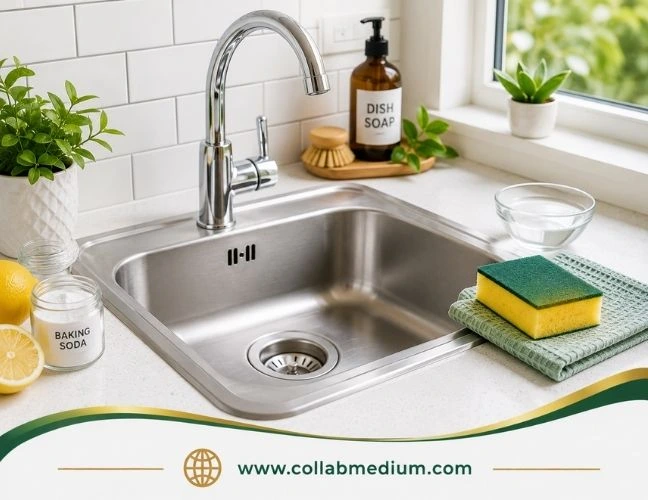
Nobody wakes up excited to scrub a sink. Yet this small basin sees more daily use than almost anything else in your home. Food scraps, grease, soap scum, and bacteria all pass through it. Over time, that buildup turns into stains, clogs, and smells nobody wants near their food.
I have cleaned more sinks than I can count while managing rental properties. The good news is simple. A few smart habits keep this fixture looking new for years. This guide walks you through the exact steps, tools, and mistakes to avoid.
Why a Clean Sink Deserves Your Attention
Most people assume a quick rinse handles the job. It does not. According to NSF International’s household germ study, a kitchen faucet can carry more bacteria than a doorknob. That is a genuinely surprising fact for most homeowners.
Bacteria thrive in damp, food-rich environments. Every dish you rinse leaves behind particles that feed bacterial growth. Left alone, this buildup creates odors. It can even affect the taste of water sitting in cups nearby.
A clean basin also protects your plumbing. Grease and food build up narrow pipes over time. That narrowing leads to slow drainage and eventually a full clog. Regular care prevents an expensive repair bill later.
Common Mistakes That Make Things Worse
Many homeowners unknowingly speed up damage and buildup. Here are the habits I see most often.
Using steel wool on stainless steel. This scratches the surface permanently. Scratches then trap more grime, creating a cycle that gets harder to fix.
Leaving wet sponges in the basin. Damp sponges breed bacteria fast. That bacteria then transfers right back onto dishes and surfaces.
Pouring grease down the drain. Grease hardens inside pipes. This is one of the top causes of slow or blocked drains nationwide.
Ignoring the overflow hole. This small opening collects grime that most people forget exists. It needs attention too.
Skipping the faucet base. Water pools there constantly, creating hidden buildup that spreads bacteria across the counter.
What You Need Before You Start
Gather these basic supplies first. Most of them are already sitting in your pantry.
- Baking soda
- White vinegar
- Dish soap
- A soft microfiber cloth
- An old toothbrush for tight corners
- Rubber gloves
Skip harsh abrasive powders on polished surfaces. They dull the finish faster than people expect.
Step-by-Step Daily Cleaning Routine
Start by clearing any dishes sitting in the basin. Rinse away loose food particles with warm water. Apply a small amount of dish soap to a soft cloth. Wipe the entire surface in circular motions, then rinse thoroughly. Dry with a clean towel.
Drying matters more than most people realize. Standing water leaves mineral spots and dulls shine over time. A thirty-second wipe-down each night keeps the surface looking fresh.
Caring for Stainless Steel Sinks
Stainless steel sinks need gentle handling despite their tough appearance. Always wipe in the direction of the grain lines, never against them. This prevents fine scratches from becoming visible under kitchen lighting.
Baking soda paste works wonders on stubborn stains here. Mix it with a small amount of water, apply, then buff gently with a soft cloth. Finish with a few drops of olive oil on a dry cloth for extra shine.
How to Clean a Sink Drain the Right Way
A clogged or smelly drain usually points to buildup below the surface. Fixing it does not require calling a plumber every time.
Start by removing the stopper or strainer basket. Scrub it separately with an old toothbrush and soapy water. Food particles collect there constantly and get overlooked during regular cleaning.
Fixing Drain Odor Problems
A smelly drain almost always comes from trapped organic matter. Pour half a cup of baking soda directly down the opening. Follow with a cup of white vinegar. The fizzing reaction breaks down grime clinging to pipe walls.
Let the mixture sit for ten minutes. This gives the reaction time to loosen buildup properly. Rinse everything away with hot water afterward.
Using Baking Soda for Deeper Cleaning
Baking soda works as a mild abrasive and natural deodorizer. For monthly maintenance, combine it with vinegar as described above. For tougher odors, let the mixture sit closer to twenty minutes before rinsing.
Avoid combining baking soda treatments with chemical drain cleaners. Mixing cleaning agents can create harmful fumes in an enclosed space.
Flushing With Hot Water
Hot water alone helps dissolve grease clinging to pipe interiors. Run it for a full two minutes after any grease-heavy meal. This simple habit prevents a large percentage of common clogs.
Boiling water works even better for stubborn grease buildup. Pour it slowly and carefully to avoid damage to certain pipe materials, especially older PVC connections.
Keeping Your Garbage Disposal Fresh
A garbage disposal unit sits beneath many modern basins. It needs its own care routine. Food particles get trapped along the blades and rubber baffle, creating strong odors over time.
Run cold water while operating the disposal, never hot. Cold water solidifies grease slightly. That lets the blades chop it into small pieces instead of letting it coat the pipes.
Grind small ice cubes with coarse salt occasionally. This combination scrubs blade surfaces and removes buildup naturally. Citrus peels afterward leave a pleasant, fresh scent behind.
Never put fibrous vegetables, coffee grounds, or bones into a disposal unit. These items jam blades or create stubborn clogs further down the line.
Weekly Deep Cleaning Routine
A quick daily wipe handles surface grime. A deeper weekly session tackles what accumulates underneath and around fixtures.
Remove the strainer completely and soak it in warm soapy water for fifteen minutes. Scrub the faucet base with an old toothbrush dipped in vinegar. Wipe down the caulking edges where moisture tends to collect.
According to a 2023 EPA household water use report, faucets run for several minutes daily on average. That adds up to mineral deposits building faster than expected. A weekly vinegar wipe keeps those deposits from hardening into stubborn spots. You can review the full EPA WaterSense household water use data for more detail.
Cleaning Methods Compared
| Method | Best For | Time Needed | Frequency |
| Soap and warm water | Daily surface grime | 2 minutes | Daily |
| Baking soda paste | Stubborn stains | 10 minutes | Weekly |
| Baking soda and vinegar | Drain odor | 15 minutes | Weekly |
| Hot water flush | Grease buildup | 2 minutes | After meals |
| Ice and salt grind | Disposal blades | 5 minutes | Monthly |
Pro Tips From Years of Cleaning Sinks
Tip 1: Keep a small brush nearby. A dedicated brush stored under the counter makes quick cleanups far more likely to actually happen.
Tip 2: Address stains immediately. Fresh stains from coffee or tomato sauce lift easily. Set-in stains require far more scrubbing later.
Tip 3: Rinse citrus peels through the disposal. This trick freshens the entire area without any chemical spray needed.
Tip 4: Check the caulk seal yearly. Cracked caulking lets water seep beneath the basin, which can damage cabinets underneath.
Tip 5: Match cleaning products to your material. Stainless steel, porcelain, and composite granite each respond differently to acidic cleaners.
If you are already tackling bigger upgrades, this fits naturally into broader plans. A kitchen remodel comes with plenty of costly mistakes to avoid. Fixture care is a small piece of that larger picture. Choosing durable materials during a renovation also affects how easy daily cleaning becomes.
Small upgrades like this rarely make headlines, but they matter for resale value too. Not every project pays back equally at sale time. Learning which home improvements actually pay off helps you prioritize where to spend money first.
Frequently Asked Questions
How do I clean the kitchen sink drain?
Remove the stopper and scrub it with soapy water. Pour baking soda down the opening, followed by vinegar. Let it sit for ten minutes, then flush with hot water.
How do I clean a kitchen sink drain smell?
Combine baking soda and vinegar, then let the mixture sit for fifteen to twenty minutes. Follow with hot water. Run citrus peels through the disposal for a fresh finish.
Are stainless steel sinks hard to maintain?
No. Stainless steel needs gentle wiping along the grain and regular drying. Avoid steel wool, since it scratches the surface and traps more grime over time.
Why does my garbage disposal still smell after cleaning?
Trapped food particles under the rubber baffle often cause lingering odor. Grinding ice with coarse salt, then rinsing with citrus peels, usually clears the smell within one cycle.