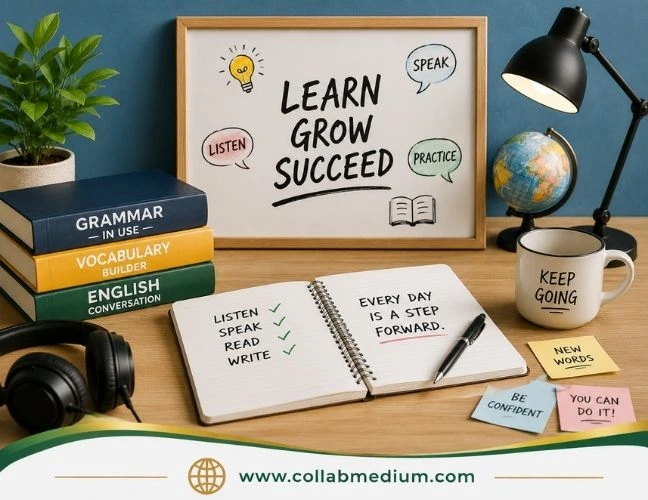
If you want to know how to learn English quickly and actually remember what you study, the answer is simple. You need daily practice, real conversations, and content that matches your current level. I have spent over ten years writing about online learning tools, and I always tell readers that how to learn English is less about grammar books and more about steady, repeated exposure. The best way to learn English combines listening, speaking, and short daily lessons instead of long study marathons. In this guide, I break down exactly how to learn English fast, which apps actually help, and the small mistakes that quietly slow most learners down in 2026.
Why Most People Struggle to Learn English
Here is the real problem. Most learners jump between five apps, three YouTube channels, and a grammar book, then quit within a month. According to the EF English Proficiency Index, adult learners often plateau at an intermediate level because they focus on rules instead of usage. I have watched this pattern for a decade in the content and edtech space. People search for how to learn English fast, buy a course, finish two lessons, and stop.
The truth is that fluency comes from repetition, not perfection. Your brain needs to hear and use the same words in different situations before they stick. That is why short, daily sessions beat one long weekend cram every single time.
How to Learn English Fast: A Step-by-Step Method
If you are serious about how to learn the English language fast, follow this order instead of jumping around randomly.
- Pick one core app and stick with it for 30 days. Switching tools every week resets your progress.
- Learn 10 to 15 new words a day, tied to a theme like travel, work, or food.
- Shadow native speakers by repeating short video clips out loud.
- Speak for five minutes daily, even alone, to build muscle memory in your mouth and jaw.
- Review old material weekly instead of only chasing new lessons.
This method works because it respects how memory actually forms. Spaced repetition, used by tools like Anki and Duolingo, is backed by decades of cognitive science research. A 2023 study on spaced practice found retention rates nearly doubled compared to single-session cramming. That is the science behind how to learn English fast without burning out.
Best Way to Learn English: Core Strategies That Actually Work
There is no single best way to learn English for everyone, but a few strategies show up again and again in research and in real learner results.
Immersion beats isolated study. Surround yourself with English content: podcasts during your commute, subtitles on your favorite shows, and English-language news apps.
Active recall beats passive reading. Quiz yourself instead of just re-reading notes. This single change is one of the best ways to learn English tricks that costs nothing and takes no extra time.
Mixing skills works better than isolating them. Combine listening and speaking in the same session, since real conversations demand both at once.
Setting a clear goal matters. Learners who prepare for a specific outcome, like an IELTS score or a job interview, tend to progress faster than those with vague goals.
If your daily routine involves long hours at a laptop anyway, it helps to have the right setup. Readers who are shopping for a reliable machine for online classes can check this guide to the best laptops for students, which covers battery life and screen quality for long study sessions.
How to Speak English Language With Confidence
Speaking is where most learners freeze up, even after years of study. If you want to know how to speak English fluently, the fix usually is not more vocabulary. It is more speaking practice under low pressure.
Start with these habits:
- Talk to yourself in English while doing chores or commuting.
- Record short voice notes and listen back for pronunciation gaps.
- Join a conversation exchange app and aim for two short calls a week.
- Focus on being understood, not on sounding perfect.
I have interviewed several ESL teachers over the years, and nearly all of them say the same thing. Students who speak English language out loud daily, even badly, improve faster than students who wait until they feel ready. Waiting for confidence before speaking usually works backward. Confidence comes after practice, not before it.
Best Apps for Learning English in 2026
Picking the right tool matters as much as picking the right method. Here is a quick comparison of platforms that consistently rank among the best apps for learning English this year.
| App | Best For | Price (2026) | Key Feature |
| Duolingo | Beginners, daily habit building | Free, $12.99/mo premium | Gamified streaks and short lessons |
| Babbel | Structured grammar and real-life dialogue | $13.95/mo | Conversation-focused courses |
| Cambridge English | Exam prep (IELTS, FCE) | Free resources, paid courses vary | Official practice tests |
| HelloTalk | Speaking with native speakers | Free, $8.99/mo VIP | Live chat and voice exchange |
| BBC Learning English | Free listening and grammar | Free | News-based lessons |
Duolingo alone reports well over 500 million registered users worldwide, which shows how much demand exists for bite-sized English lessons. Pairing one structured app like Babbel or Cambridge English with one conversation app like HelloTalk tends to produce the fastest results.
If you are building a browser-based study routine, a few extensions can also speed things up, from instant dictionary lookups to subtitle translators. This guide to productivity-boosting Chrome extensions covers several tools that work well alongside language apps for quick word lookups and focus timers.
How to Learn English Online: Free vs Paid Resources
One question I get constantly is whether you need to pay for lessons at all. The honest answer is that learning English online for free is absolutely possible, but paid tools often save time.
Free resources like BBC Learning English, YouTube channels, and Simple English Wikipedia give you unlimited practice material at zero cost. They work well if you have strong self-discipline and do not mind building your own study schedule. Many learners figure out how to learn English online without spending a cent, simply by combining free podcasts, subtitle-based shows, and language exchange communities.
Paid platforms add structure, feedback, and progress tracking. If you keep asking how to learn English fast and free resources feel scattered, a paid course can save you hours of searching for the right material. A good middle ground is using free apps for daily practice and investing in one paid resource, like a tutor or exam prep course, for feedback on your weak spots.
Either path works. What matters most is picking one system for how to learn English online and sticking with it for at least eight weeks before judging results.
Common Mistakes to Avoid When You Learn English
Even motivated learners fall into the same traps. Watch out for these:
- Studying only grammar rules. Grammar matters, but it should support conversation, not replace it.
- Avoiding mistakes instead of making them. Errors are part of how to learn the English language properly. Native speakers expect them from learners.
- Translating word for word. This slows down speaking and creates awkward sentence patterns.
- Skipping listening practice. Reading skills often outpace listening skills, which causes real confusion in conversations.
- Comparing your pace to others. Everyone learns English on a different timeline based on their native language and daily practice time.
Pro Tips From a Decade in Content and Digital Learning
After years of researching online education platforms for a living, a few lessons stand out.
First, consistency beats intensity. Fifteen focused minutes daily outperforms a single three-hour weekend session almost every time. Second, context sticks better than isolated flashcards, so learn phrases inside real sentences instead of single words. Third, track your progress weekly. Small wins, like finishing your first unscripted phone call in English, keep motivation high during the slow middle stretch of learning.
Finally, do not underestimate entertainment as a study tool. Watching shows with English subtitles, following English-language creators, or listening to audiobooks during chores all count as real practice. This is often the most sustainable and best way to learn English for busy adults who cannot commit to formal classes.
If someone asked me for one sentence on how to learn English successfully, it would be this. Treat it like a daily habit, not a subject you finish. Learners who understand how to learn English as an ongoing skill, similar to fitness, tend to stick with it far longer than those chasing a finish line. The goal is not to complete English. The goal is to keep using it until it feels natural in daily life, at work, and in casual conversation with friends.
FAQs
What is the fastest way to learn English on your own?
Combine daily active recall with immersion content like podcasts and shows. Speaking out loud daily speeds up fluency more than passive study alone.
How long does it take to become fluent in English?
Most adult learners reach conversational fluency in 6 to 12 months with consistent daily practice. Timelines vary based on native language and study time.
What are the best free apps for learning English?
Duolingo, BBC Learning English, and Cambridge English offer strong free resources. Pairing a free app with a conversation partner speeds up real-world speaking skills.
Can I learn English without taking formal classes?
Yes, many learners reach fluency through apps, immersion, and daily speaking practice alone. Consistency with small daily sessions beats occasional long study blocks for how to learn English fast, even without a classroom.