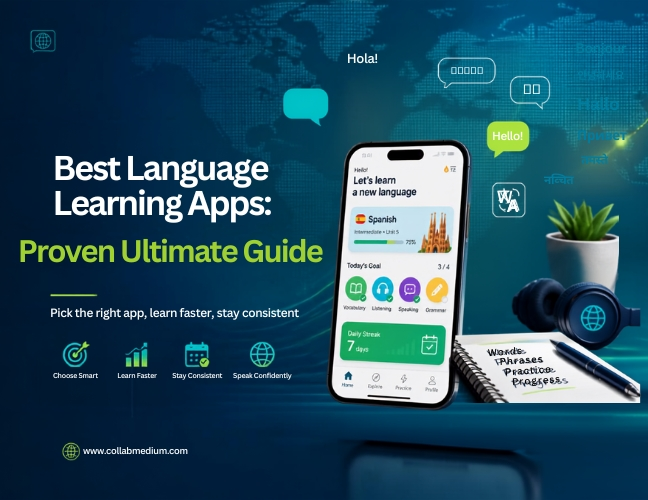
I have tested dozens of language courses over the years, both in classrooms and on my phone. Nothing beats the convenience of the best language learning apps when life gets busy. You open the app on your commute, squeeze in a lesson at lunch, and somehow still make progress.
Choosing from the best language learning apps feels overwhelming at first. The app stores are packed with options, and every one of them claims to be the fastest way to fluency. I have downloaded, tested, and eventually deleted more apps than I can count. This guide shares what actually works.
By the end of this post, you will know exactly what are the best language learning apps for your goals. We will also cover what are the best AI language learning apps, since artificial intelligence has changed how these tools teach.
Why Choosing the Right Language Learning App Feels So Hard
Language learning used to mean textbooks, classroom drills, and expensive tutors. Now it means scrolling through hundreds of results on the App Store or Google Play, all promising fluency in weeks. That promise rarely holds up.
According to Duolingo’s own 2023 language report, over 500 million people have registered on the platform worldwide. That kind of scale proves demand is massive. It also means the market is crowded, and picking from the best language learning apps requires real research, not guesswork.
I have talked to readers who bounce between three or four apps in a single month. They start strong, lose momentum, and switch again hoping the next app will stick. The problem usually is not motivation. It is picking a tool that does not match how they actually learn.
What Makes an App One of the Best Language Learning Apps
Not every app deserves a spot on this list. After years of testing, I look for a few specific traits before recommending anything.
- Structured curriculum: A good app builds skills in logical order instead of throwing random vocabulary at you.
- Speaking practice: Reading and listening only get you so far. The best language learning apps include real speaking exercises.
- Spaced repetition: This memory technique resurfaces words right before you would normally forget them.
- Engaging design: Gamification keeps people coming back. Streaks, badges, and friendly competition matter more than people expect.
- Offline access: Commuters and travelers need lessons that work without a signal.
The Core Problem: Most People Quit Too Early
Here is the uncomfortable truth about language learning. A Preply survey found that most language learners quit within the first three months. The best language learning apps in the world cannot fix a habit problem on their own.
I have seen this pattern repeatedly. Someone downloads an app, does five lessons in one enthusiastic weekend, and never opens it again. The app is not the issue. The daily habit is. Even the best language learning apps only work if you actually use them.
Another common issue is unrealistic expectations. Marketing promises like “fluent in three weeks” set people up for disappointment. Real language learning takes months of consistent practice, even with excellent tools.
Top Best Language Learning Apps Worth Downloading in 2026
Here is a breakdown of the top-rated options available right now, based on features, pricing, and real user results.
| App | Best For | Price | Available On |
| Duolingo | Beginners, gamified habit building | Free, Plus from $6.99/mo | App Store, Google Play |
| Babbel | Structured grammar and conversation | From $13.95/mo | App Store, Google Play |
| Rosetta Stone | Immersive, no-translation method | From $11.99/mo | App Store, Google Play |
| Busuu | Community feedback from native speakers | Free, Premium from $9.99/mo | App Store, Google Play |
| Pimsleur | Audio-based, great for commuters | From $19.95/mo | App Store, Google Play |
| Speak | AI conversation practice | From $19.99/mo | App Store, Google Play |
Pricing reflects standard subscription tiers as of 2026. Always check current rates on the App Store or Google Play.
Duolingo: The Most Popular Choice for a Reason
Duolingo remains the most downloaded of the best language learning apps for good reason. The gamified lessons feel like a game rather than homework. Streaks, leaderboards, and daily reminders keep casual learners engaged longer than almost any competitor.
The free tier is genuinely useful, which is rare in this space. Duolingo added AI-powered features recently, including conversational practice that adapts to your skill level. This shift toward AI is a big reason people now ask what are the best AI language learning apps instead of sticking with older, text-only tools.
Babbel: Best for Structured Grammar Learning
If Duolingo feels too game-like, Babbel offers a more traditional structure. Lessons build on real conversations you might actually have. Babbel focuses heavily on grammar explanations that Duolingo tends to skip.
Babbel’s courses are designed by linguists, and the app has published research showing measurable speaking improvement after just a few weeks of use.
Speak: The Rising Star Among AI Language Learning Apps
When people ask what are the best AI language learning apps, Speak comes up constantly in 2026. It uses AI-powered conversation partners that respond in real time, correcting pronunciation and grammar as you talk. This mimics real conversation far better than scripted dialogue trees.
Early users report faster speaking confidence compared to app-only alternatives without live AI feedback.
Best Free Language Learning Apps for Budget-Conscious Learners
Not everyone wants a subscription. The best free language learning apps still deliver real progress if you use them consistently.
Duolingo’s free tier remains the gold standard here. Busuu also offers a solid free version with community corrections from native speakers, though premium features unlock faster progress tracking.
Anki, a flashcard app built around spaced repetition, is completely free and widely used by serious language learners for vocabulary retention. It lacks the polish of paid apps but delivers real results for dedicated users.
Common Mistakes People Make When Choosing a Language App
- Downloading five apps at once. Spreading attention across multiple platforms slows progress. Pick one primary app and stick with it for at least a month.
- Skipping speaking practice. Many learners stay in the comfortable reading and listening zone. Real fluency requires speaking out loud, even if it feels awkward at first.
- Ignoring the free trial period. Most of the best language learning apps offer free trials. Use that window to test the teaching style before committing to a subscription.
- Expecting fluency without immersion. Apps alone rarely get you to full fluency. Combining an app with real conversation practice, podcasts, or shows in your target language speeds things up dramatically.
- Not tracking actual progress. Streaks measure consistency, not fluency. Periodically test yourself with a real conversation or a proficiency quiz to see genuine improvement.
Pro Tips From Years of Testing Language Apps
- Tip 1: Match the app to your learning style. Visual learners often prefer Babbel’s structured lessons. Auditory learners tend to love Pimsleur’s audio-first approach.
- Tip 2: Set a specific daily time. Learners who study at the same time each day build habits faster than those who squeeze in lessons randomly.
- Tip 3: Combine two tools. Many successful learners pair Duolingo for daily habit building with a conversation-focused app like Speak for real practice.
- Tip 4: Use offline downloads for commutes. Download lessons in advance so a bad signal never breaks your streak.
- Tip 5: Review the App Store and Google Play ratings, but read recent reviews. According to Sensor Tower’s 2024 mobile app report, language learning apps saw a 30% increase in downloads year over year, which means older reviews may not reflect current app quality.
Language Learning Beyond the App
Even the top-rated apps work better paired with outside practice. Watching shows with subtitles in your target language reinforces vocabulary in context. Joining a local conversation group builds real speaking confidence that apps alone cannot fully replicate.
If you want structured guidance beyond an app, resources like the American Council on the Teaching of Foreign Languages offer proficiency guidelines that help learners understand what real fluency milestones actually look like.
For more Articles :
Please visit : https://collabmedium.com/category/education/
Frequently Asked Questions
What are the best language learning apps for beginners?
Duolingo and Babbel rank among the best language learning apps for beginners. Duolingo offers gamified, bite-sized lessons, while Babbel focuses on practical conversation skills from day one.
What are the best AI language learning apps right now?
Speak and Duolingo’s AI features lead the best AI language learning apps category in 2026. Both use conversational AI to simulate real speaking practice with instant feedback.
Are the best free language learning apps actually effective?
Yes, free tiers from Duolingo and Busuu deliver real progress with consistent use. They work best for building vocabulary and daily habits, though paid tiers add deeper grammar and speaking tools.
How long does it take to become fluent using a language app?
Most learners need six months to two years depending on the language and daily practice time. Consistency matters more than which specific app you choose.